Starting a journal sounds ridiculously simple.
Get a notebook, find a pen and just write something.
Then you open to that first blank page and suddenly forget every thought you’ve ever had.
I’ve been there.
The good news is that journaling doesn’t require deep philosophical thoughts or three pages of writing every morning. You don’t even have to journal every day (although once you start, it’s hard not to).
A useful journaling routine is one that gives you a place to slow down, put your thoughts somewhere outside your head, and begin to understand yourself a little better.
If you’re new to journaling, or you’ve tried it before and couldn’t make it stick, this guide will walk you through how to start journaling without making it feel like another chore on your to-do list.
TL;DR: Journaling for Beginners
- Journaling is the practice of recording and exploring your thoughts, experiences, emotions, ideas, or goals.
- You don’t need to journal every day to benefit from it.
- Start with 5–10 minutes or even just a sentence or two.
- There is no single “correct” way to journal.
- Prompts can help when you don’t know what to write.
- Different journaling styles work for different needs, including gratitude, reflection, mental health, creativity, spirituality, and personal growth.
- Consistency matters more than the length of your entries.
- Your journal is for you. It doesn’t need to impress anyone.
What Is Journaling?
I see journaling as the practice of putting your thoughts, feelings, observations, experiences, or ideas into some form of written record you can come back to.
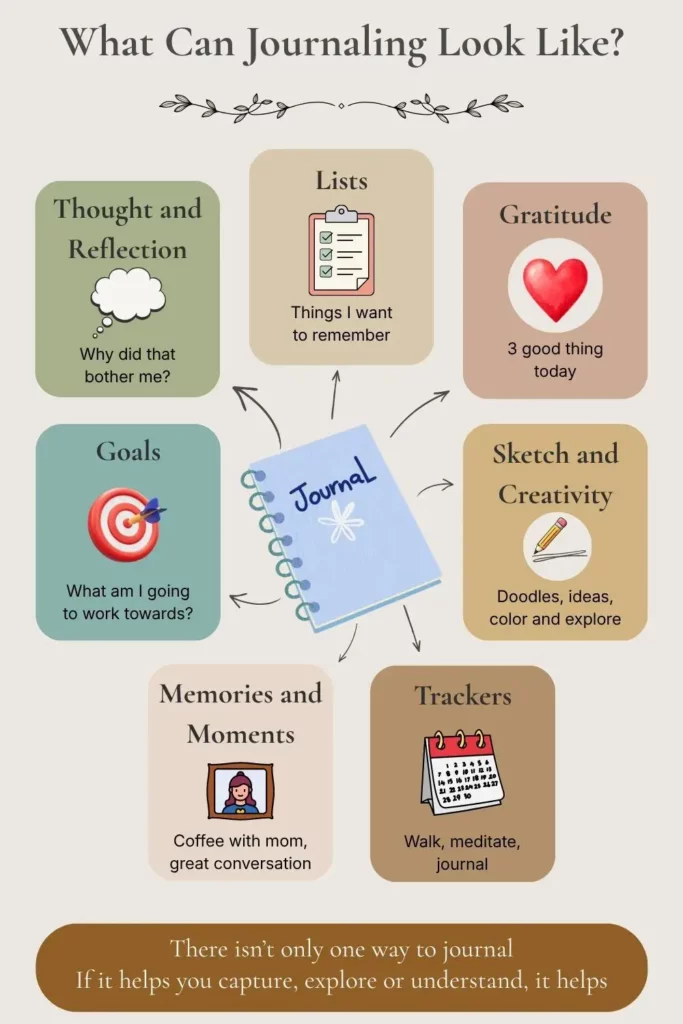
But journaling can also be a multitude of other things such as lists, sketches, photographs, quotes, trackers, diagrams, collages, or whatever else helps you capture what’s going on inside your head and in your life in that moment.
That’s part of what makes journaling so useful: there aren’t many rules.
You might write about something that happened during your day. You might work through an emotion you don’t completely understand. You could make a gratitude list, answer a journal prompt, plan a goal, reflect on a meditation session, or fill half a page venting about something that annoyed you.
It all counts.
A journal gives your thoughts somewhere to go.
And sometimes seeing those thoughts in front of you instead of continuously bouncing around in your head can help you understand them.
Why Start Journaling?
People journal for all kinds of reasons.
Some want an outlet for stress. Others want to remember their lives, become more self-aware, work toward goals, explore their creativity, or understand their emotions.
You don’t necessarily need one particular reason.
Your reason can be fluid and change as your practice does.
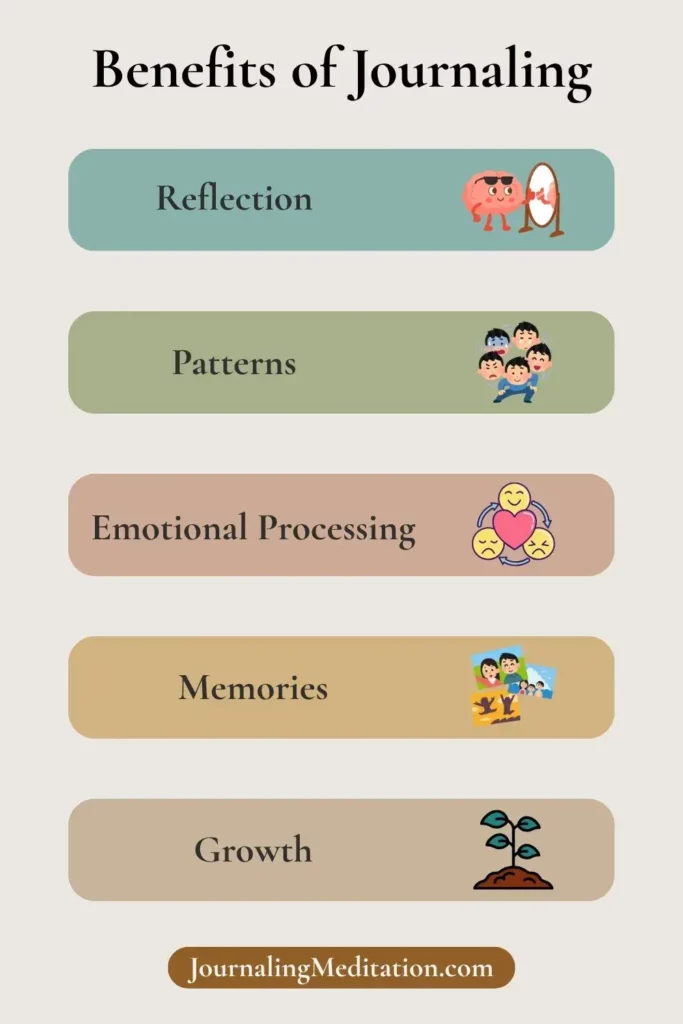
Journaling Creates Space for Reflection
Most of us spend a lot of time reacting to life and surprisingly little time reflecting on it.
Writing can help slow that process down.
Instead of jumping around from one thought, problem, or experience, journaling gives you a chance to pause and ask:
What actually happened?
How did I feel about it?
Why did I react that way?
What do I want to do next?
That little bit of space can be valuable.
Journaling Can Help You Recognize Patterns
One of my favorite things about keeping a journal is being able to look backward.
An individual journal entry captures a moment. But a collection of entries can reveal patterns.
You may start noticing certain situations repeatedly causing stress. Maybe the same goal keeps appearing. Or perhaps you’re in a better mood when you’re exercising regularly, spending time outside, meditating, or getting enough sleep.
Those connections aren’t always obvious when we’re going through our daily routines.
Your journal leaves you breadcrumbs.
If you’re curious about what’s happening beneath the surface, I’ve taken a deeper look at why journaling helps and what can make the practice more useful over time.
Journaling Can Help With Stress and Emotional Processing
Writing can also give difficult thoughts and emotions somewhere to live outside your head.
That doesn’t mean journaling magically solves every problem and makes them go away.
It does, however, provide a private place to describe what you’re experiencing without needing to explain or defend it to somebody else.
Sometimes I don’t even know what I think until I start writing.
That’s one of the reasons journaling can be so effective from simply thinking, or even ruminating about a problem.
If emotional awareness or stress management is your main reason for writing, my guide to journaling for mental health goes much deeper into that particular approach.
Journaling Can Help You Remember the Good Stuff, Too
Journaling isn’t only for problems.
You can document wins, funny moments, trips, conversations, ideas, things you’re grateful for, or completely ordinary days you don’t want to forget.
It’s easy to think we’ll remember these things.
We don’t. I know I don’t
A few sentences written today can become surprisingly meaningful years from now.
How to Start Journaling
Here’s where I think beginners sometimes make journaling harder than it needs to be.
You don’t need to create the perfect routine before you start.
Just start.
You can always refine your routine later.
1. Choose Where You’re Going to Journal
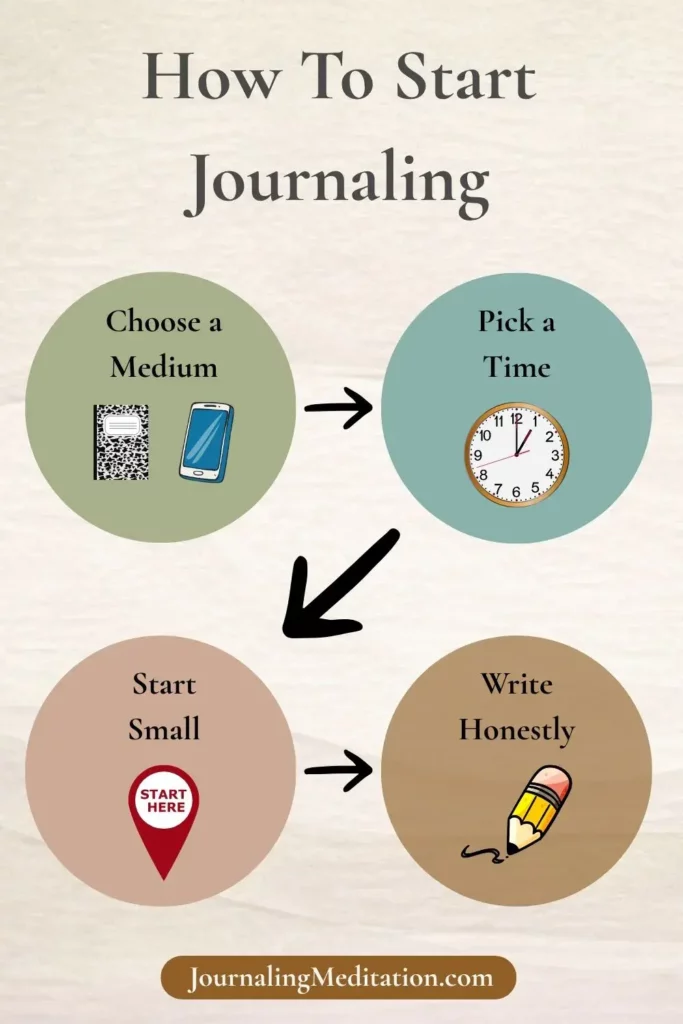
Your first decision is choosing the medium for your records.
A basic notebook works perfectly well.
You can also use:
- a traditional journal
- a guided journal
- a notes app
- a dedicated journaling app
- a document on your computer
- a digital tablet
There are advantages to both paper and digital journaling.
Writing by hand can feel slower and more intentional. Digital journaling is searchable, portable, and convenient.
The one thing that matters is to use whichever one makes you more likely to actually journal.
A $30 leather notebook that you’re afraid to mess up is useless compared to a 99-cent notebook you’ll actually write in.
2. Pick an Easy Time to Journal
You don’t have to journal at the same time every day, but associating journaling to something you already do can make consistency easier.
For example:
Morning: Journal with your first cup of coffee.
After work: Write for five minutes when you first get home.
After meditation: Record anything you noticed during your session.
Before bed: Reflect briefly on your day.
Try to make journaling fit your life rather than turning your life upside down to journal.
3. Start Small
Please don’t think that starting a journal means you now have to write three pages every morning for the rest of your life.
That’s a great way to turn something useful into homework.
Give yourself three minutes. Try for one paragraph. You can even start with one sentence a day.
If you naturally want to keep writing, keep going. If you’re finished after a minute or two, close the journal.
You showed up.
That’s enough and makes all the difference in feeling good about it.
4. Write Honestly, Not Impressively
No one should be reading this.
So you don’t need perfect grammar or some profound lesson you immediately learned from.
And you definitely don’t need every entry to sound like something you’d want another person to read.
Your journal is one of the few places where your writing can be messy, repetitive, contradictory, emotional, boring, funny, or completely unfinished.
Let it be.
What Should I Write in a Journal?
This is probably the biggest question beginners have.
The simple answer?
Write about what’s taking up space in your head.
If you want more ideas beyond the examples below, I’ve also put together a guide on what to write in a daily journal when you’re not sure where to begin.
If that feels a little too open-ended, try one of these prompts:
- What happened today?
- How am I feeling right now?
- What’s been on my mind lately?
- What am I worried about?
- What am I looking forward to?
- What went well today?
- What didn’t go well?
- What am I grateful for?
- What do I need right now?
- What am I avoiding?
- What would make tomorrow a little better?
You don’t need to answer all of them.
Pick one.
Then just try writing and follow wherever your pen (or fingers) goes.
Use Journal Prompts When You’re Stuck
Prompts are useful because they take the pressure away from having to decide what to write about.
Instead of facing an blank page, you now have somewhere to begin.
A prompt might be reflective:
What have I learned about myself this year?
Practical:
What’s one problem I can take a small step toward solving today?
Emotional:
What am I feeling that I haven’t acknowledged yet?
Or positive:
What happened recently that I don’t want to take for granted?
You also don’t have to stay on topic.
A prompt is a doorway, not a homework assignment.
So if answering it sends your thoughts somewhere completely different, follow them.
If prompts make journaling easier for you, my guide to using a journal with prompts includes more ideas and explains how to make prompt-based journaling part of your routine.
Different Types of Journaling
Once you’ve gotten comfortable writing, you may want to start experiment with different styles of journaling.
And you don’t have to choose one forever, either. These styles may change with your mood, and that’s ok.
I think of these more like tools. Different situations may call for different approaches. Like a hammer and screwdriver.
Daily Journaling
Daily journaling keeps a record of your experiences, thoughts, observations, and feelings as life happens.
Some entries might be deeply reflective and give you great insight on a thought or feeling.
Others might be supper simple like:
“Long day. I’m exhausted. Going to bed.”
That’s okay.
The value comes from creating a record and regularly checking in with yourself.

Gratitude Journaling
Gratitude journaling intentionally brings your attention to things you appreciate.
That could be major things like family, health, relationships, or opportunities, but it can also include tiny moments like:
A really good cup of coffee.
A dog losing its mind because you came home.
Five quiet minutes before everyone else woke up.
Gratitude journaling isn’t about pretending difficult things don’t exist. It’s about making sure the good things don’t get lost just because they’re familiar.
Journaling for Mental Health
Journaling can provide a private place to explore and evaluate emotions, stress, worries, recurring thoughts, and difficult experiences.
For me, one of its biggest strengths is giving the thought a place to be, outside of me.
Once something is written down, you can start to look at it differently.
That said, journaling is a self-reflection tool, not a replacement for professional mental-health care when you need it.
Shadow Work Journaling
Shadow work journaling helps us explore the parts of ourselves we may avoid, suppress, dislike, or not fully understand.
This can involve looking at emotional triggers, fears, recurring behaviors, insecurities, or reactions that seem stronger than the situation may warrant.
It’s a deeper form of self-reflection, so I wouldn’t worry about jumping into shadow work on day one.
Learn to become comfortable with honest journaling first.
Spiritual Journaling
Spiritual journaling creates space to explore beliefs, meaning, purpose, gratitude, prayer, meditation, personal values, or your relationship with something greater than yourself.
That can look completely different from one person to another.
Your journal doesn’t need to follow any particular religious or spiritual tradition unless you want it to.
Meditation Journaling
Meditation and journaling work particularly well together.
After meditating, you can keep track of:
- how long you meditated
- what type you used
- distractions you noticed
- physical sensations
- emotions that surfaced
- recurring thoughts or insights
- how you felt before and afterward
Over time, those entries can help you understand how your meditation practice is developing.
Creative Journaling
Not every journal needs to be an emotional excavation.
Creative journaling can include drawing, poetry, storytelling, brainstorming, collage, photography, quotes, lettering, or anything else that lets you express yourself.
Sometimes the best journaling practice is simply one you simply enjoy coming back to.
Do I Need to Journal Every Day?
No.
Daily journaling can be helpful because repetition builds a habit, but daily isn’t the only way to be consistent.
You could journal:
- every morning
- a couple times a week
- every Sunday
- after meditation
- when you’re stressed
- whenever something important happens
I think it’s better for someone to journal three times a week for a year rather than force themselves to journal every day for two weeks and quit.
Consistency should help support the practice, not be an obstacle.
How Long Should You Journal?
This is not homework, so there is no required length.
Three minutes can be enough.
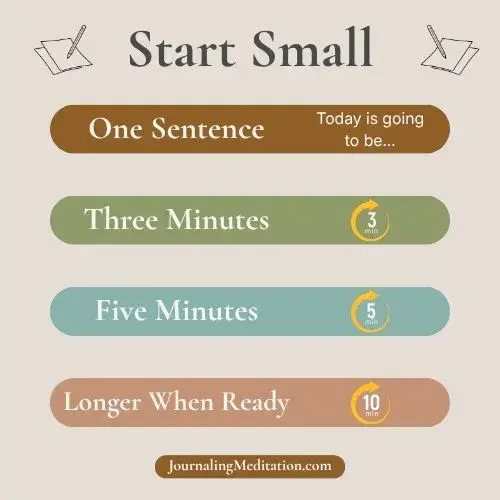
So can one page.
So can one sentence.
Some days you may sit down to write for five minutes and the next thing you know it’s forty minutes later and you’re wondering what happened.
Other days you may have absolutely nothing to say.
Both are normal.
If you’re beginning, I’d recommend setting the bar deliberately low.
Try 2-3 minutes.
You can always write longer.
What If I Don’t Know What to Write?
Write that.
Seriously.
Start with:
“I don’t know what to write today.”
Then ask yourself why.
Maybe you’re tired.
Maybe nothing feels important.
Maybe your brain just isn’t interested today.
Within a few sentences, you’ve usually found something.
You can also try these three simple questions:
What happened today?
How do I feel about it?
What’s next?
That’s enough for a journal entry.
What If Journaling Makes Me Feel Worse?
Journaling isn’t automatically helpful just because you’re writing.
Sometimes writing can turn into a magnifying glass focused on the same upsetting thoughts without gaining any perspective.
Pay attention to how the practice affects you.
If an entry becomes overwhelming, you can stop. Take a break, change the subject, go for a walk, meditate, or do something that brings your attention back to the present.
You can also shift the way you write.
Instead of asking:
“Why do I feel terrible?”
try moving toward a solution such as:
“What would help me right now?”
or:
“What’s one part of this situation I can move towards fixing?”
Reflection should help you explore your experience, not trap you inside it.
And if you’re dealing with persistent emotional distress or something that feels bigger than self-reflection can handle, journaling should complement professional support rather than replace it.
How to Make Journaling a Habit
This is where the perfect journal matters a whole lot less than making the practice easy to repeat.
Keep Your Journal Visible
Put it somewhere you’ll see it, out in the open.
On your nightstand, beside your coffee maker or on your desk.
Or maybe even near your meditation space.
A journal hidden in a drawer is very easy to forget exists.
Attach Journaling to an Existing Habit
Instead of relying on motivation alone, attach journaling to something that is already happening.
After I make coffee: I write for five minutes.
After I meditate: I write down what I noticed.
Before I go to bed: I write one sentence about the day.
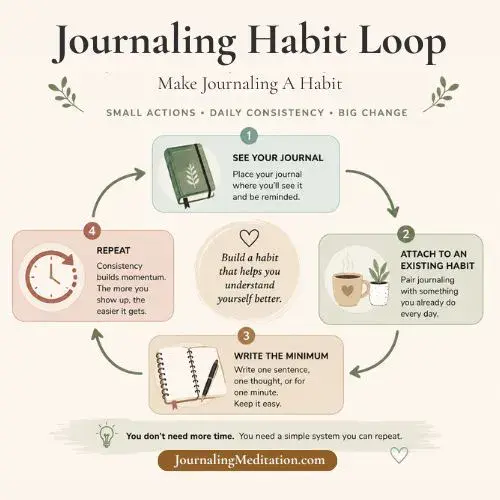
The existing routine becomes your reminder.
Lower the Minimum
Give yourself an absurdly achievable minimum.
One sentence.
That’s it.
You’ll often write more once you’ve started.
But even if you don’t, you’ve kept your promise with the practice.
Miss a Day Without Making It a Thing
You WILL miss a day.
Or maybe a week.
Maybe even longer.
That’s ok. Your journal isn’t sitting there judging you.
And you don’t need to fill in everything you missed or write a three-page apology to your notebook.
Open to the next page.
Put down today’s date.
Continue.
Common Journaling Mistakes Beginners Make
There aren’t many real rules in journaling, but there are a few ways we can accidentally make it harder on ourselves.
Trying to Make Every Entry Meaningful
Some journal entries will change how you see existence.
Some will be about what you ate for lunch.
So, some days seem more profound than others. That’s life.
Don’t demand an epiphany every time you pick up a pen.
Writing for an Imaginary Audience
If you constantly imagine someone else reading your journal, you may start editing yourself if you already haven’t.
Try to write for the person who actually needs the journal:
You.
Turning Journaling Into Another Obligation
A routine helps.
Guilt doesn’t.
If your journaling practice starts feeling like another task you’re failing at, make it smaller. Just shoot for that one sentence.
Comparing Your Journal to Someone Else’s
Social media can make journaling look like a performative art project exclusively for people with perfect handwriting and 84 matching highlighters.
Yours can look terrible.
Mine does, with scribbles and scratches.
The journal still works.
Buying Too Much Before You Begin
It’s crazy how much you can spend preparing to simply write things down.
Fancy journals, pens, stickers, markers, apps, templates…
Those things can absolutely make journaling more enjoyable.
But none of them actually creates the practice for you.
Start with what you have.
Figure out what you enjoy along the way.
Journaling and Meditation
Journaling and meditation approach self-awareness from different directions, which is one reason they work so well together.
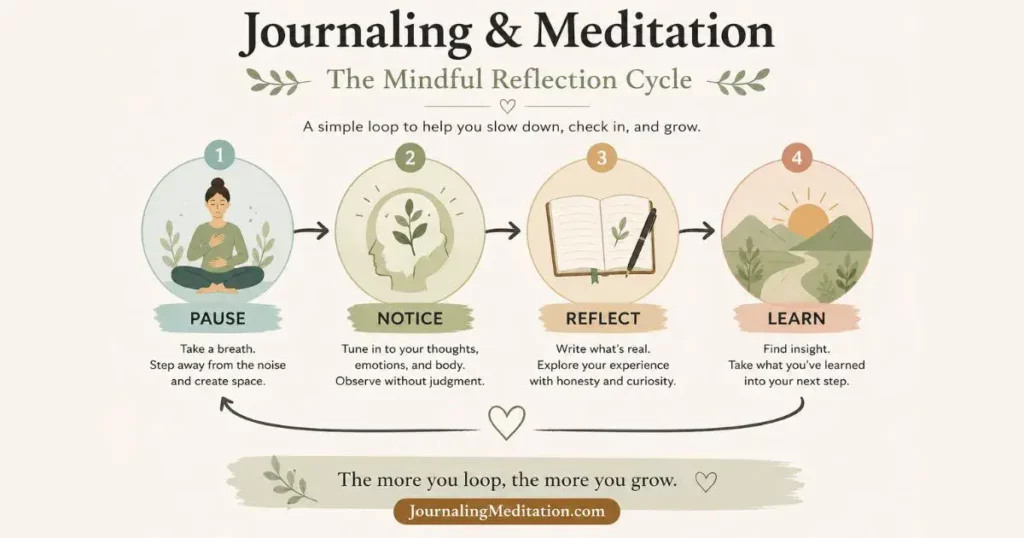
Meditation is an opportunity to observe.
Journaling gives us somewhere to explore what we’ve observed.
You might meditate for five or ten minutes, then write about what came up.
If you’re unsure what to reflect on after a session, meditation journal prompts can give you a more structured place to begin.
Or journal first to clear some mental clutter before sitting down to meditate.
Neither practice has to depend on the other.
But together, they can create a useful cycle:
Pause + Notice + Reflect + Learn
That’s really the heart of Journaling Meditation.
If meditation is the side of that cycle you’re newer to, my meditation for beginners guide walks through the practice from the ground up.
And, if you’d like a simple routine that combines both practices, try my 5-4-3 journaling and meditation morning routine.
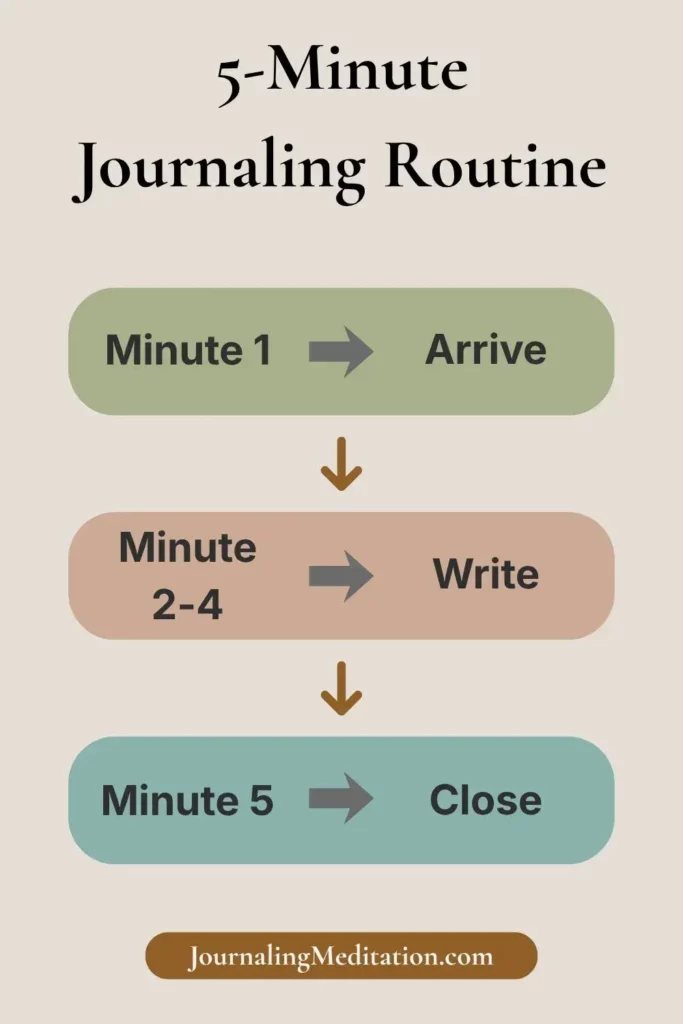
A Simple 5-Minute Journaling Routine for Beginners
If you’ve read this far and still aren’t sure where to begin, try this today.
Minute 1 — Arrive
Sit down, take a breath, and notice how you’re feeling.
Minutes 2–4 — Write
Answer:
“What’s taking up the most space in my mind right now?”
Don’t edit.
Just write.
Minute 5 — Close
Finish with:
“One thing I need today is…”
That’s it.
You’ve just journaled.
Tomorrow you can go through this routine again or try something completely different.
Your Journal Can Change With You
Your journaling practice from today (if you start) probably won’t look like the same practice a year from now.
Good.
That means it’s evolving with you.
You may begin by recording your day and eventually become interested in gratitude journaling.
Maybe meditation leads you toward a meditation journal.
Perhaps you discover shadow work, spiritual journaling, creative journaling, goal setting, or some method I haven’t even mentioned.
Your journal doesn’t need a permanent identity.
It just needs to remain useful to you.
Final Thoughts: Just Start Writing
If there’s one thing I want you to take away from this journaling for beginners guide, it’s this:
You don’t need to become “a person who journals” before you start journaling.
You just become one by writing.
Grab whatever notebook you have around or open a blank Google docs in your Drive.
Write the date.
Then write one honest sentence about where you are right now.
And then tomorrow, write another.
Over time, those individual pages can become something much bigger: a record of where you were, what you’ve experienced and learned, how you’ve changed, and maybe even where you’re headed next.
Your first entry doesn’t need to be deep.
It just needs to be there to start.
FAQ: Journaling for Beginners
What should a beginner write in a journal?
Try starting with what’s happening in your life and how you feel about it. You can write about your day, something you’re worried about, something you’re grateful for, a goal you’re working toward, or a question you’ve been thinking about.
If you’re stuck, start with: “What’s taking up the most space in my mind right now?”
How do I start journaling if I’ve never done it before?
Choose a notebook or digital tool and set aside five minutes. Write the date and then try to describe what’s currently on your mind.
Don’t worry about punctuation, grammar, length, or whether what you’re writing is important.
The easiest way to learn how to journal is to journal.
What are the three basic steps of journaling?
I like to keep it simple:
- Notice what’s happening internally or around you.
- Write honestly about what you notice.
- Reflect on anything the entry might reveal.
You don’t need to come up with an answer every time.
Sometimes noticing is enough.
How often should beginners journal?
Start with a frequency you feel you can realistically keep up.
That could be five minutes each morning, three times per week, after meditation, or once a week.
Daily journaling can help create a habit, but you don’t need to journal every day for the practice to be worthwhile.
Is it better to journal in the morning or at night?
Neither is universally better.
Morning journaling can help you identify your thoughts, intentions, and priorities before the day starts and gets busy.
Evening journaling gives you the chance to reflect on what happened and how you felt about it.
Try both and see which one fits you best.
Should I use journal prompts?
Journal prompts can be extremely useful when you’re a beginner because they give you place to start.
You don’t need to use them for every entry, though. As journaling becomes more comfortable, you may find yourself naturally knowing what you want to explore.
Can I journal on my phone?
Absolutely.
Paper has advantages, but the best journaling method is the one you’ll actually use.
If your phone is always with you and makes it easier to write consistently, use it.
What if I stop journaling for a while?
Start again.
You don’t have to explain the gap, back track on missing entries, or start a brand new journal.
Turn the page, write today’s date, and keep going.
A break doesn’t take anything away that you got from the practice before your break.
Your Turn
If you’re starting your first journal, I’d love to know what’s bringing you to it.
Are you looking for more self-awareness? Less mental clutter? A way to manage stress? A place to keep track of your life? Or are you just curious about what might happen if you start writing?
Please, share your experience in the comments. And if you’ve been journaling for a while, tell me the one thing you wish someone had told you when you started.
You might be exactly the person another beginner needs to hear from. And thanks for reading!