
Updated 4/26
If I’m being honest, shadow work is one of those things I avoided for a long time.
Not because I didn’t believe in it. But because I wasn’t sure if I wanted to see what was actually there.
Most of us spend years building a version of ourselves that feels good enough (if we’re lucky). Productive. Calm. Seemingly put together. Shadow work gently (and sometimes not so gently) asks:
What’s underneath all of that?

And that’s where journaling can really help.
I’ve found that writing things down creates just enough distance to explore those uncomfortable thoughts without getting completely pulled back into them. It turns something that’s just so abstract into something you can actually work with.
So if you’re curious, but also a little hesitant, you’re in the right place.
This guide is designed to help you start shadow work journaling in a way that feels grounded, safe, and doable.
If you’re not sure whether shadow work is something you need, you might want to start with the signs you need shadow work first.
Some of the links in this post are affiliate links through Bookshop.org, which supports independent bookstores. If you choose to purchase through them, I may earn a small commission at no extra cost to you.
TL;DR: How to Start Shadow Work Journaling
If you want the short version, here’s how I’d begin:
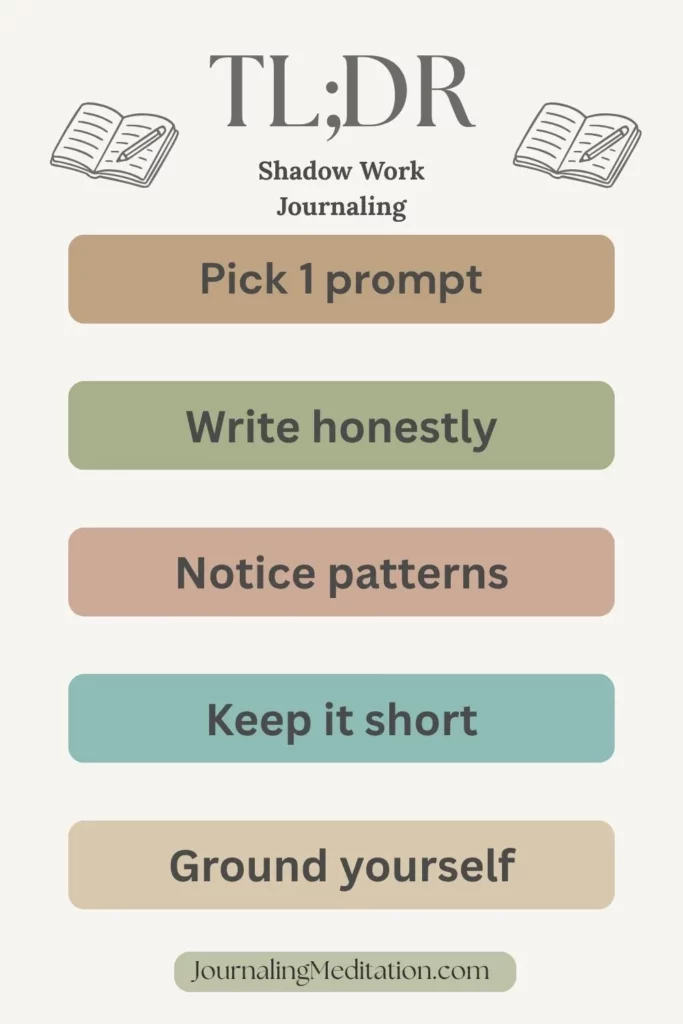
- Start with one easy prompt, not a long list
- Write honestly without editing yourself
- Look for patterns, not perfect answers
- Keep sessions short (10–20 minutes)
- Always ground yourself afterward (walk, breathe, pause)
If consistency is the hard part, following a simple structure (like a guided journaling plan) can make this process feel a lot less overwhelming and sustainable.
What Is Shadow Work Journaling?
At its core, shadow work is about exploring the parts of yourself you tend to ignore, suppress, or avoid.
These might include:
- Emotions like anger, jealousy, or shame
- Patterns like people-pleasing or self-sabotage
- Old beliefs you picked up without realizing it
None of this makes you “bad.” It just makes you human. And exploring them should be human nature.
Shadow work journaling is simply the process of discovering and writing about those unfamiliar and unknown parts so you can start to understand them instead of unconsciously reacting to them.

I like to think of it this way:
You’re not trying to fix yourself. You’re just trying to understand yourself.
And that shift changes everything.
Is Shadow Work Safe?
Let’s talk about this honestly.
Shadow work can bring up strong emotions. That’s kind of the point. But it also means you need to approach it with some care.
A few things I always remind myself:
- Start by creating a safe space for shadow work
- You don’t have to go deep right away, nor should you
- You can stop at any time
- You don’t need to force yourself to revisit traumatic memories to “do it right”
- If something feels overwhelming, it’s okay to step away
If you’re looking for a gentler place to begin, keeping a journal for mental health can be a more grounding way to build emotional awareness before diving deeper into shadow work.
Even more so, ifyou’re dealing with trauma, intense anxiety, or anything that feels heavy and out of control, it’s worth considering support from a therapist or mental health professional.
Shadow work journaling is a tool. A powerful one. But not a replacement for real support when you need it.
How to Prepare for Shadow Work Journaling
One mistake I made early on was treating shadow work like a quick journaling session.

It’s not.
You don’t need anything fancy, but a little preparation goes a long way.
Here’s what helps:
- Choose a quiet space where you won’t be interrupted
- Set a time limit (10–20 minutes is plenty to start)
- Have water nearby (you’d be surprised how grounding this is)
- Do something calming first (a few deep breaths, soft music or even a short meditation)
- Plan something for after (walk, stretch, or just sit quietly)
You want to ease into the experience as opposed to just jumping into it.
How to Start Shadow Work Journaling (Step-by-Step)
If you’re new to this, keep it simple. You don’t want to traumatize yourself out of the gate.
If you’re also new to journaling itself, my Journaling for Beginners guide covers the fundamentals of what to write, different ways to journal, and how to build a practice that feels natural before adding something deeper like shadow work.
Step 1: Pick One Topic
Start with something light-to-moderate. Definitely not your deepest wound.
Examples:
- Feeling judged
- People-pleasing
- Feeling irritation toward someone
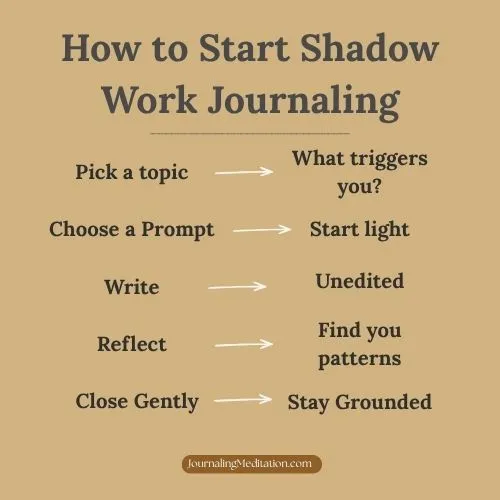
Step 2: Use One Prompt
Don’t overwhelm yourself with a giant list of prompts.
Pick one question and stay with it.
Step 3: Write Without Editing
This is the uncomfortable part.
Let the messy, honest answers come out, even if they don’t sound “nice.” Honestly, that’s you getting into the meat of it.
Step 4: Look for Patterns
After writing, gently reflect:
- When have I felt this before?
- What unnoticed belief might be behind this?
- What am I trying to protect?
Step 5: Close Gently
Don’t just slam your journal shut and walk away.
Try something simple like:
“Right now, I am safe. I can come back to this later.” And gently end the session.
That small step can make a big difference in the long run.
Beginner Shadow Work Prompts
Instead of dumping 50 prompts on you, I’ve grouped a few that actually work well for beginners.
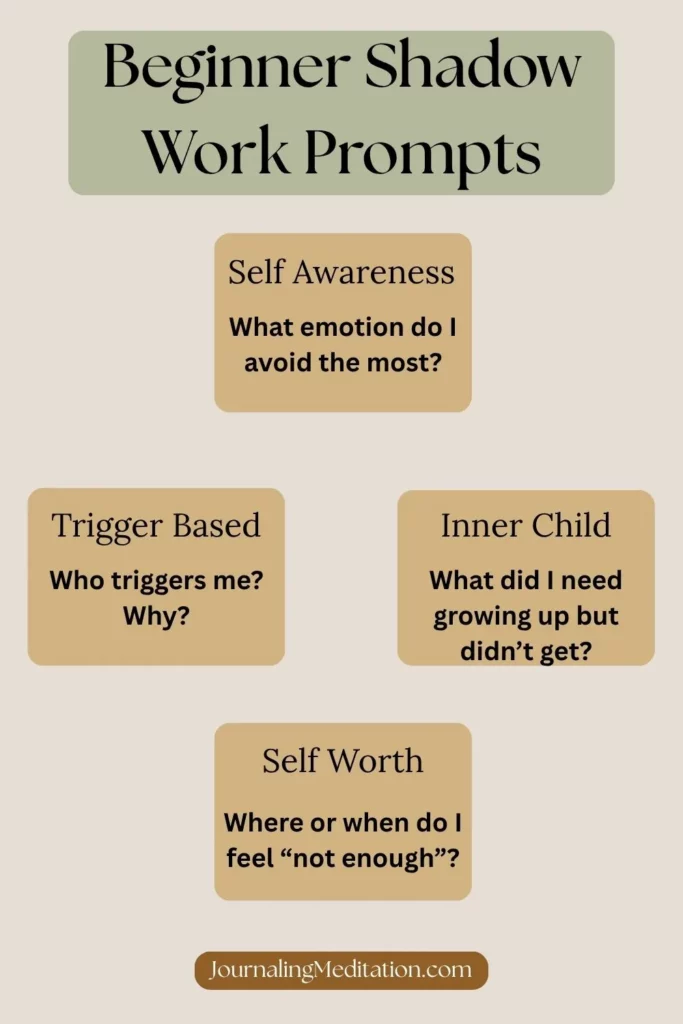
Self-Awareness Prompts
- What emotion do I avoid the most?
- What criticism affects me more than I think it should?
- What do I pretend doesn’t bother me?
Trigger-Based Prompts
- Who triggers me? Why?
- What situation makes me defensive?
- What am I afraid people might find out about me?
Inner Child Prompts
- What did I need growing up but didn’t get?
- What did I learn to hide to feel accepted?
- What part of me still wants reassurance?
Self-Worth Prompts
- Where or when do I feel “not enough”?
- What would change if I stopped trying to prove myself?
Shadow Work Exercises for Beginners
If prompts feel a little abstract or too unfamiliar, these exercises can help as well.
1. Trigger Tracking
Write down:
- What happened
- What you felt
- What you told yourself about it
Then ask:
What might this tell me about myself?
2. Letter to Your Hidden Self
Start with:
“Dear part of me I’ve been avoiding…”
You might be surprised by what comes out.
3. The Mirror Exercise
Think about a trait that bothers you in someone else.
Then ask:
Where might this exist in me, even just a little?
This one can be very uncomfortable. But it’s powerful and reveals a lot..
4. Compassionate Reframe
Take a harsh thought like:
“I’m too sensitive.”
And gently reframe it:
“My sensitivity might be showing me where I need some attention.”
If I’m being honest, the hardest part for me wasn’t starting shadow work. It was staying consistent with what to do next.
If consistency with writing itself is the problem, these journaling tips for building a regular practice can help you make showing up feel more manageable.
I’d write one day, skip a few, then feel like I had to “start over.”
That’s actually why I created a simple 45-day shadow work journaling structure to help take the guesswork out of it and make the process feel more manageable and fluid.

If you want something a bit more guided, you can check it out here:
Shadow Work Journal
What to Do After a Shadow Work Session
This part is more often skipped than it should be.
After journaling, do something to “bring you back”:
- Take a short walk
- Drink water
- Sit quietly for a few minutes
- Do a short grounding exercise
- Write down one simple takeaway
You don’t need to analyze everything right away.
Let it settle. Then you can sort through if needed.
Common Shadow Work Mistakes
A few things I’ve learned (sometimes the hard way) that can be discouraging:
- Doing too much all at once
- Treating prompts like an interrogation
- Expecting instant change and growth
- Skipping grounding entirely
- Trying to “fix” every emotion
Shadow work isn’t about how fast you can get through everything. It’s about awareness.
Journals and Tools That Can Help
You don’t need anything special to start. A simple notebook works perfectly if you’re prepared to write freely.
That said, some people find structure helpful.
If you prefer something guided, you might want to check out:
- Prompt-based journals
- Reflection-focused workbooks
- Simple daily journaling templates
If you like browsing thoughtful options, Bookshop.org is a great place to explore journaling books while supporting independent bookstores. Look for titles that focus on:
- self-reflection
- emotional awareness
- guided journaling
Just don’t fall into the trap of thinking the “perfect journal” is what makes this work.
It’s not.
You are.
As mentioned before, a simple notebook is more than enough to get started.
And your journal doesn’t have to be exclusively for shadow work. If you want to use it for everyday reflection too, here are some ideas for what to write in a daily journal.
But if you prefer even a bit more structure, guided journals can help you stay consistent, especially in the beginning.
When Shadow Work May Not Be Enough
This is important.
If journaling brings up:
- intense distress
- panic
- overwhelming memories
- thoughts of harming yourself
Please don’t try to handle that alone.
Shadow work is meant to increase awareness, not cause harm.
There’s strength in getting support when you need it. 988lifeline.org
Shadow Work Journaling FAQ
✍️ What should I write in a shadow work journal?
Start with honest answers to simple prompts. You don’t need to go deep immediately.Just get your feet wet.
🌱 How often should I do shadow work?
1–2 times per week is more than enough to start.
⚖️ Is shadow work the same as therapy?
No. It can support self-awareness, but it’s not a replacement for professional help.
🌊 Why do I feel emotional after journaling?
Because you’re processing things you may have been avoiding or even suppressing. That’s normal, but go at your own pace.
Final Thoughts: Start Small and Stay Honest
If you take anything from this, let it be this:
You don’t have to go all-in on shadow work to benefit from it.
Start with one prompt.
Give yourself 10 minutes.
And be honest. But also be gentle.
That’s it.
And if you’ve tried shadow work journaling before, or you’re just starting, I’d genuinely love to hear:
👉 What part feels most intimidating right now?
👉 Or what part are you most curious about?
Drop a comment and let’s talk about it.