One of the most common reasons people put off creating a meditation space is the thought that they need an unreasonable amount of space to do it right.
A spare room. A certain aesthetic. A certain amount of space.
None of that is true.
A 3×3 foot corner, used consistently and put together with intention is more powerful than a beautifully decorated room with no real practice behind it.
What turns a space into a sanctuary isn’t its size or decorations. It’s the practice.
🌿 The One Rule That Changes Everything
Before you worry about anything like lighting, cushions or salt lamps, there’s one thing that matters more than all of them combined:
Keep your space associated with calmness.
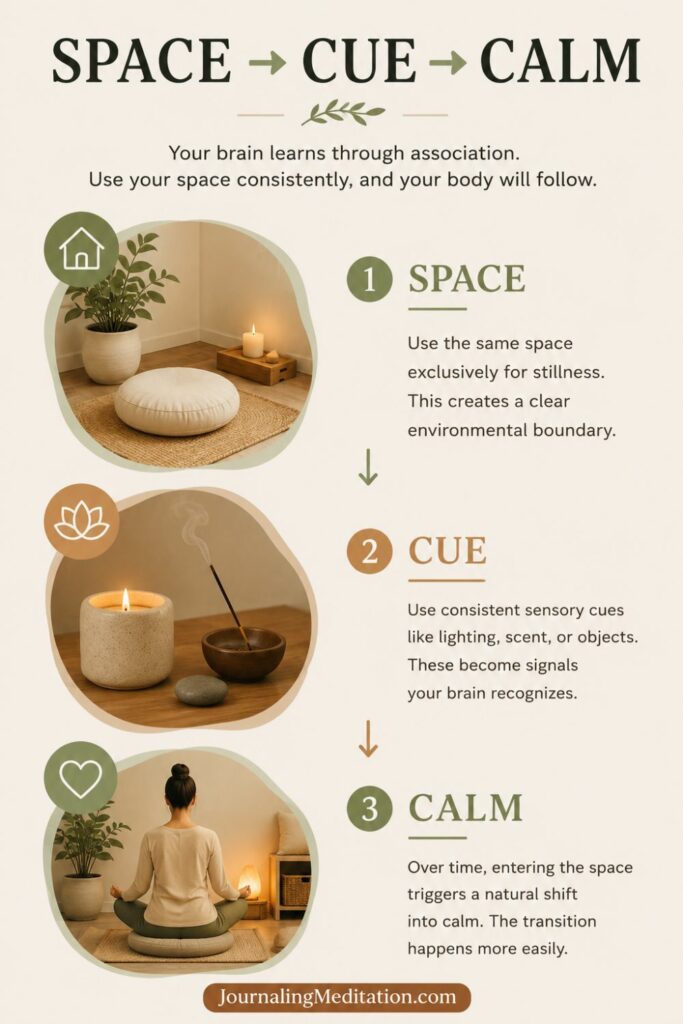
Your brain learns through association. When a space is used for different purposes like working, doom scrolling or watching TV, then it stays in a state of alertness or tension every time you go back into it. There’s no clear signal to lower the cortisol.
But when a single corner is used exclusively for stillness, your nervous system begins to recognize it. Entering the space becomes part of the practice. The shift starts before you’ve consciously begun.
This is why a small, dedicated meditation corner will consistently be of more use than a large room with no intention behind it.
📍 How To Choose Your Location
Most people choose their meditation spot by default; whatever space is available, closest, or least inconvenient.
This is the first and most common mistake.
When choosing your location, ask one question: Does this spot separate me from the busyness of my day?
It doesn’t need to be a separate room. What it needs to be is distinct. A corner with its back to the rest of the room, a quiet nook beside a window or a peaceful spot on a balcony… all of these can be great spots to start with.
What to avoid:
- Somewhere near your desk or any work-related items
- Areas directly in front of bright windows
- Anywhere your phone hangs out
- Spaces in the way of high-traffic areas
Some of these associations with particular areas can be harder to undo than most people anticipate.
✨ How To Define a Small Space Within a Larger Room
You don’t need walls to create a boundary.
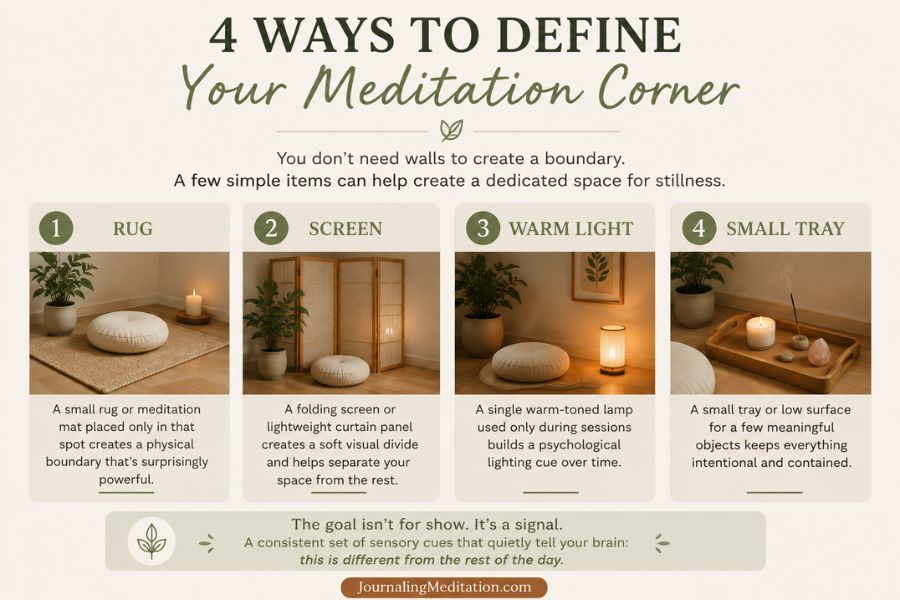
A few simple, low-cost items can help create your meditation corner and make it feel genuinely separate from the rest of the room:
- A small rug or meditation mat placed only in that spot. The physical boundary it creates can be surprisingly effective
- A folding screen or lightweight curtain panel for a soft visual divide
- A single warm-toned lamp used only during sessions. This can build a psychological lighting cue over time
- A small wooden tray or low surface for a couple of meaningful objects such as a candle, a smooth stone or incense.
That’s genuinely all it takes.
The goal isn’t for show. It’s a signal.
A consistent set of sensory cues that quietly tell your brain: this is different from the rest of the day.
🧘 Before and After: Same Apartment. Different Space.
Consider two setups in the same bedroom:
Before: A cushion on the floor near the desk, within view of a laptop and a charging phone. Bright overhead light. No scent. No boundary. Sitting down now feels like an act of willpower.
After: The cushion has moved to a quiet corner near the window. A small rug defines the space. The overhead light is off. A salt lamp fills the corner with warm amber. The same incense burns every session. The desk and phone are out of sight.

Nothing about the apartment changed. But everything about the space did.
⏳ How Long Before It Starts to Work?
Some people can notice a shift within a couple of weeks with consistent daily use.
The space begins to do some of the work before you’ve even settled. It helps bring a subtle but real sense of calm that comes over you simply from entering the corner.
The longer and more consistently you use your meditation space setup, the stronger that effect becomes. You’re not just building a habit. You’re conditioning your nervous system to associate a specific environment with a specific internal state.
Start small. Stay consistent. And let the space grow with you.
For more tips on building a home meditation space that holds your practice, whatever size or budget you’re working with, read the full guide → How to Create a Meditation Space That Actually Helps You Slow Down
💬 What’s the biggest challenge you’ve faced creating a dedicated meditation space at home? Share below — whether you have a spare room or a two-foot apartment corner, your experience is valuable to this community.