
Updated 5/26
To be completely honest, gratitude journaling sounded a little… pointless to me at first.
Write down what you’re grateful for every day?
It felt like I’d just end up writing the same three things over and over and calling it “growth”.
But I thought, “Hey, they have to know better than I do”. So for a while, that’s exactly what I did. And no growth.
Then something shifted when I stopped trying to be positive and started to just pay attention instead.
And that’s when I noticed gratitude journaling actually started working.

Not something I forced myself to do, but as a way to notice things I may have otherwise missed.
If you’ve ever felt like gratitude journaling sounds good but doesn’t quite feel right in practice, this guide is for you.
Some of the links in this post are affiliate links through Bookshop.org, which supports independent bookstores. If you choose to purchase through them, I may earn a small commission at no extra cost to you.
TL;DR: How to Start Gratitude Journaling
If you want the simple version, here’s what I’d recommend:
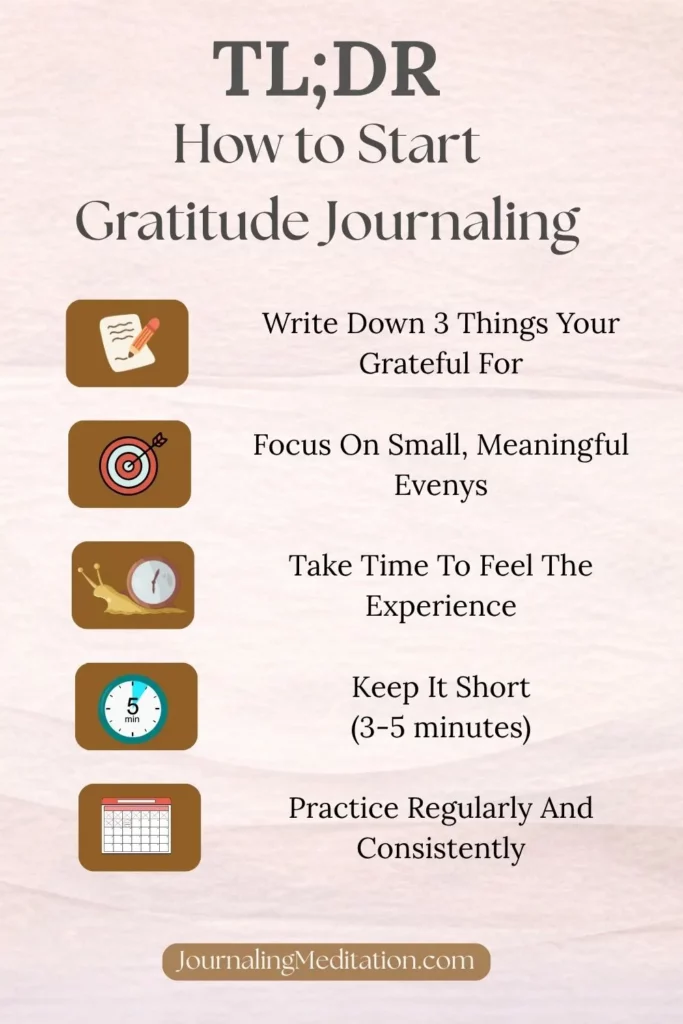
- Write down 3 specific things you’re grateful for
- Focus on small, real moments (not just big ones)
- Spend a minute actually feeling the experience
- Keep it short (3–5 minutes is enough)
- Be consistent. Not perfect
If it ever starts to feel forced, that’s usually a sign to explore something in practice, not just push through with positivity.
What Is Gratitude Journaling?
Gratitude journaling is the practice of writing down things you’re grateful for. But more importantly, it’s taking the time to notice them in a more intentional way.
It’s not just jotting down:
“I’m grateful for my family.”
It’s being specific and slowing down enough to write:
“I’m grateful for that conversation I had this morning where I actually felt I was heard.”
That small change from general to specific is where the purpose really starts to show up.
In my experience, gratitude journaling works best when it feels like appreciation, not something you feel obligated to do.
Why Gratitude Journaling Doesn’t Work (Sometimes)
This is the part most articles may skip. And it’s a big reason why people usually quit.
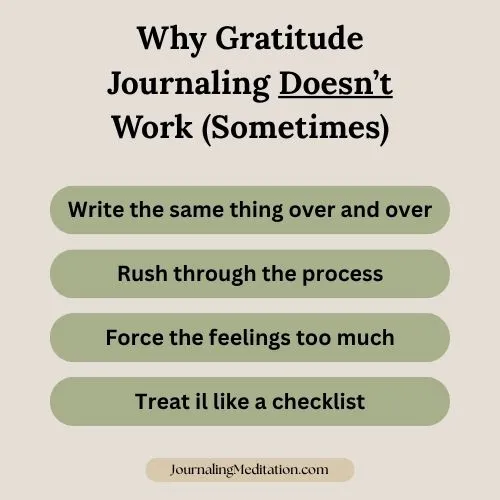
Gratitude journaling doesn’t feel good when:
- You write the same repetative, generic things every day
- You rush through it like a task
- You try to force yourself to feel something you don’t
- You treat it like a checklist instead of a reflection
- Your distracted with overthinking
I’ve been there and done all of these.
And every time, it doesn’t work.
What changed things for me wasn’t doing more, it was doing it differently:
- Slowing down
- Being specific
- Letting it be simple
If it ever feels fake, that’s usually a sign that something just isn’t aligning right, not a failure.
The Real Benefits of Gratitude Journaling
You’ll see a lot of information out there about the benefits. And most of them are technically true.
But here’s what I’ve actually noticed from doing it on a regular basis:
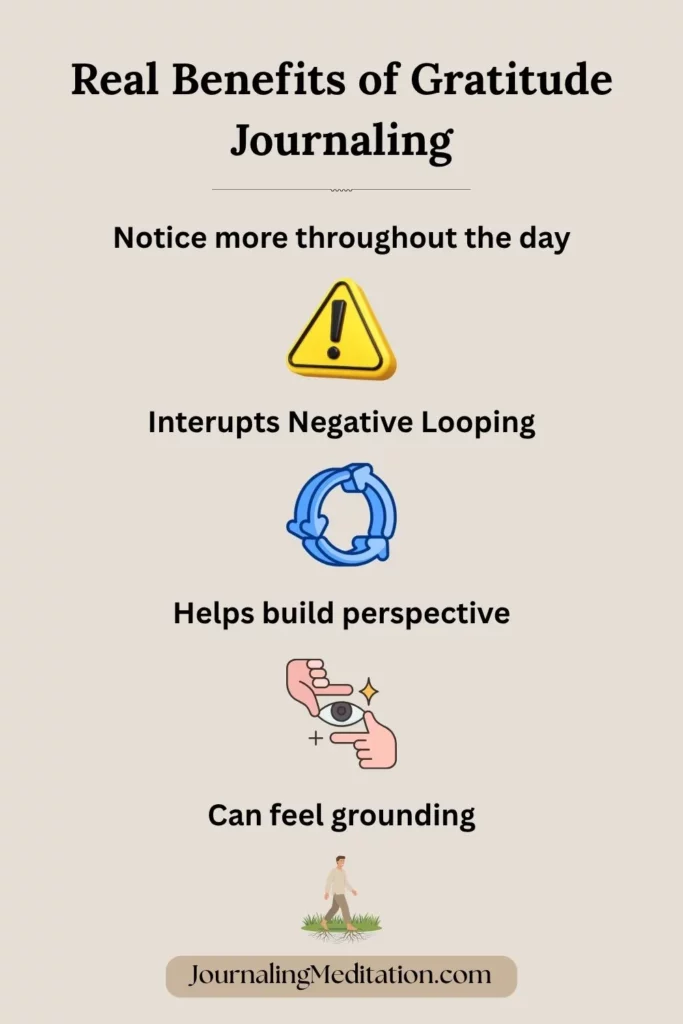
1. You start noticing more during the day
It’s subtle, but once you get used to writing things down, you start catching small moments as they happen.
2. It helps break negative loops
Don’t get me wrong You’re not ignoring problems, you’re just refocusing your attention.
Even if you’re having a stressful day, you can still find something worthy to stop and notice.
This is also one reason keeping a journal for mental health can feel so grounding during emotionally overwhelming seasons.
3. It builds perspective over time
Looking back on entries, even short ones, will help give you a clearer sense of what is truly important to you.
That same process of looking for patterns is one reason I find journaling for self-discovery so useful when I want to understand what keeps showing up in my thoughts and experiences.
4. It feels grounding (when done right)
Not because everything works out perfectly, but because you’re more aware of what’s here and now.
How to Start Gratitude Journaling (Step-by-Step)
This is where most people start to overcomplicate things. And it’s easy to do. Just remember, you don’t need a perfect system. You just need to show up.
If you’re completely new to journaling, my Journaling for Beginners guide covers the fundamentals first, including what to write, different ways to journal, and how to build a practice you can actually stick with.
Here’s what I’ve found works best:
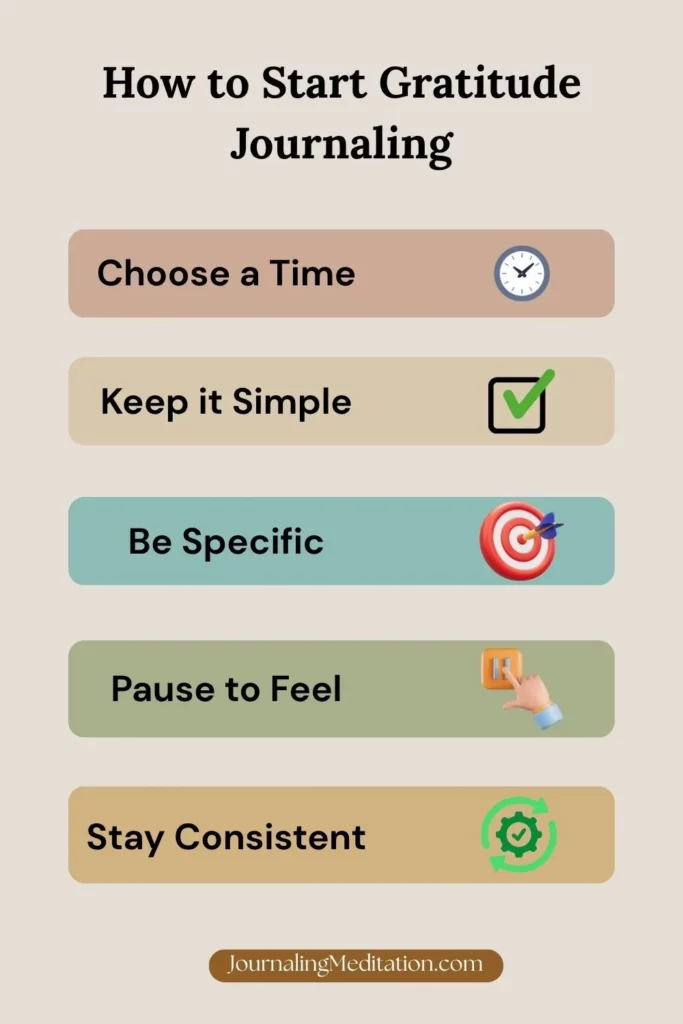
Step 1: Choose a time that fits your day
Morning helps set the tone for the day.
Night helps you reflect.
There’s no “best” way other than the one you’ll stick with.
Step 2: Keep it simple
Start with just 3 things.
You don’t need a long list to get the benefits. If you struggle, start with 1.
Step 3: Be specific
This is the most important part.
Instead of:
“I’m grateful for my job”
Try something like:
“I’m grateful I finished that task today without overthinking it”
Step 4: Pause for a moment
Even 10–20 seconds to feel what you wrote makes all the difference.
Step 5: Stay consistent
3–5 minutes a day is enough.
Being consistent beats depth in the beginning. Just keep showing up.
If showing up regularly is the hard part, these journaling tips for building a consistent practice can help make the habit easier to maintain.
A Real Example (Generic vs Meaningful)
This might help the concept stick.
Generic:
- I’m grateful for my family
- I’m grateful for my home
- I’m grateful for my health
More meaningful:
- I’m grateful for that quick check-in text I got today
- I’m grateful I had a quiet moment this morning before everything started
- I’m grateful I handled that situation better than I used to
It’s the same idea but with a completely different impact.
Gratitude Journaling Prompts
If you’re not sure what to write, these can help. And if you want to branch out beyond gratitude, I have more ideas for what to write in a daily journal.
Beginner Prompts
- What made today a little better than expected?
- What did I enjoy without planning?
- What felt easy today?
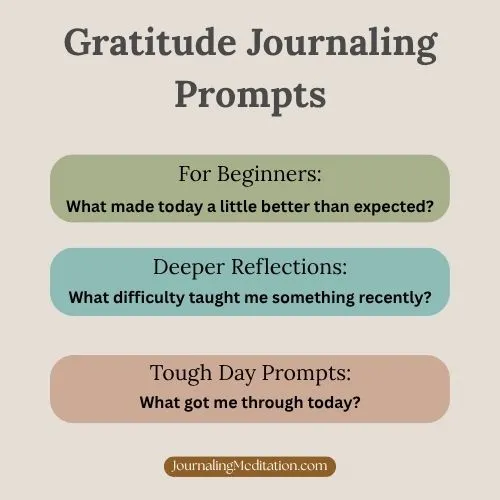
Deeper Reflection Prompts
- What difficulty taught me something recently?
- What am I taking for granted right now?
- When did I feel most present this week?
Tough Day Prompts
- What got me through today?
- What didn’t go as badly as I thought it would?
- What’s one small thing I can still be thankful for right now?
A Simple 30-Day Gratitude Journaling Approach
If consistency is the challenge, structure helps. Try this set up:
Week 1: Awareness
Just notice small things each day.
Week 2: Specificity
Go deeper into details and moments.
Week 3: Reflection
Look at patterns. What keeps showing for you?
Week 4: Integration
Start noticing gratitude during your day, not just after.
You don’t need to be perfect. You just need to keep showing up.
If you’re anything like me, consistency is the true challenge. The struggle of not knowing what to do next can be real.
Morning vs Night Gratitude Journaling
Both work, it just depends on what you want or need.
Morning journaling
- Sets a calming tone for the day
- Helps you start with intention
- Works well if your days feel rushed
Night journaling
- Helps you process the day
- Encourages reflection
- May feel more natural for some people
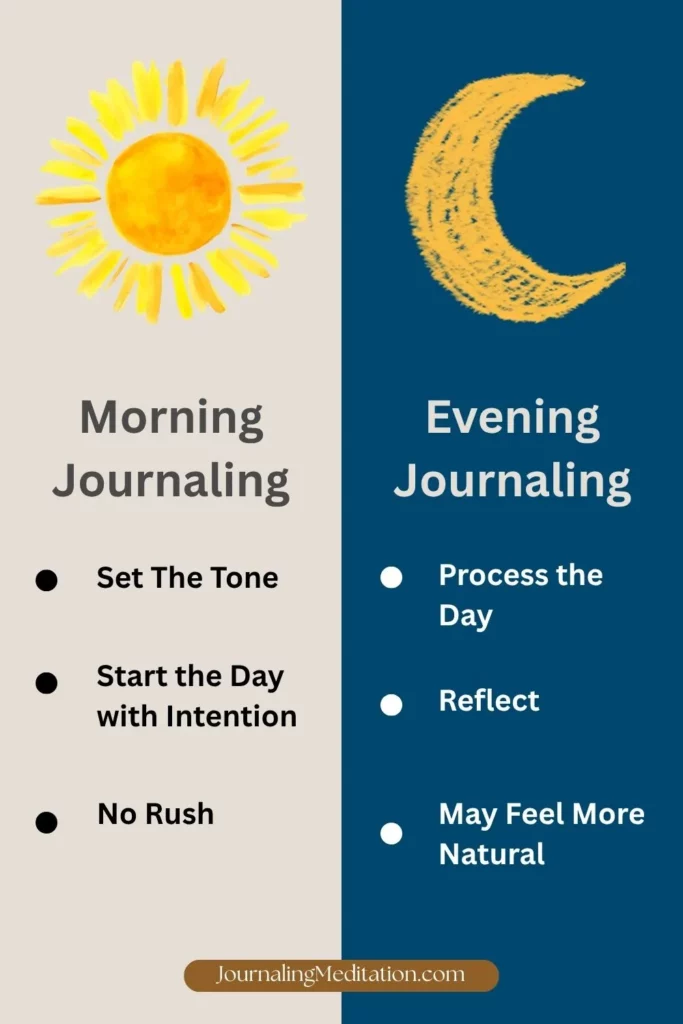
Personally, I tend to lean toward mornings. I like the help in setting the tone for the day. But I have an evening journal as well for those times I need to let go of the day. The best choice is the one you’ll actually keep doing.
Combining Gratitude Journaling with Meditation
This is one of the simplest ways to make the practice feel deeper without adding much time.
Try this:
- Sit quietly for 2–3 minutes
- Focus on your breath
- Then write your gratitude entries
If you enjoy combining the two practices, a meditation journal gives you a place to track both your meditation experiences and the reflections that come afterward.
That short pause helps you slow down enough to actually feel what you’re writing.
You can also use one of these 5 minute mindfulness exercises before writing when you need a little help settling into the present moment.
Common Gratitude Journaling Mistakes
These are easy pitfalls to fall into, and I’ve done all of them at some point:
- Writing the same things without thinking
- Rushing through it like a checklist
- Trying to “force” gratitude
- Expecting immediate results
- Overcomplicating the process
If it starts to feel mechanical, you’re trying too hard. Keep it simple.
That may be all you need to fix things.
What to Write About When You Feel Stuck
This is where most people quit.
If you ever think:
“I don’t know what else to write…”
You’re not the only one.
Sometimes the best shift is just changing the way you see things just a little bit.
For example, instead of looking for something big and monumental, look for:
- small interactions
- quiet moments
- things that didn’t go wrong
If you want more ideas, I put together a list of unexpected things to be grateful for, even on tougher days.
Gratitude Journaling Variations
For kids
Keep it simple and visual:
- drawings
- short sentences
- one thing per day
For beginners
Remove pressure:
- 1 or 2 entries is enough
- messy is ok
- focus on consistency over perfection
Journals and Tools That Can Help
A simple notebook is more than enough to start.
But if you prefer a bit more structure, guided journals can help, especially in the beginning.
If you like browsing different options, Bookshop.org is a great place to explore thoughtful journaling books while supporting independent bookstores.
That said, the tool matters less than the habit.
For Deeper Introspection:
If you want to explore deeper emotional patterns, shadow work journaling can take this a step further.
Shadow Work Journaling: A Beginner’s Guide with Prompts, Exercises, and Safety Tips
Gratitude Journaling FAQ
📓 What should I write in a gratitude journal?
Start with small, specific moments from your day. You don’t need to go deep right away.
⏱️ How often should I practice gratitude journaling?
Daily is ideal, but even a few times per week can make a big difference.
🌱 Does gratitude journaling really work?
It can, especially when you focus on awareness of what is truly important to you rather than forcing positivity.
🧠 Can gratitude journaling help with stress or anxiety?
It can help shift attention and create space from constant stress, but it’s not a replacement for professional support.
🤔 Why does it sometimes feel fake?
Usually because the entries are too general. Try being more specific and grounded in real moments.
Final Thoughts: Keep It Simple and Real
Gratitude journaling doesn’t need to be perfect to be helpful. It just needs to be honest.
Start small, keep it simple and pay attention.
That’s really it.
And I’m curious. Does gratitude journaling come naturally to you, or does it feel a little forced sometimes?
Drop a comment and let me know. I’d love to hear how it’s been for you.