Updated 5/26
There’s a reason so many people start journaling when things start to feel overwhelmingly difficult in life.
Sometimes it’s to help get through feelings of stress.
Sometimes after burnout.
Sometimes it might be during anxiety, emotional intensity, or periods where your thoughts just feel too loud to hold them inside anymore.
That’s how journaling started becoming more meaningful for me, too.
At first, I thought journaling was supposed to help me “figure everything out.” But over time, I realized it was doing something more profound and honestly, more helpful.
It was helping me slow down enough to notice what I was actually thinking and feeling.
Not perfectly.
Not all at once.
But gradually.
And that’s what journaling for mental health really is at its core. Not fixing yourself, but understanding yourself a little bit better.
If you’ve been curious about getting into journaling to support your mental and emotional well-being, this guide will help you start in a way that feels realistic, grounded, and sustainable.
Some of the links in this post are affiliate links through Bookshop.org, which supports independent bookstores. If you choose to purchase through them, I may earn a small commission at no extra cost to you.
TL;DR: How Journaling Can Support Mental Health
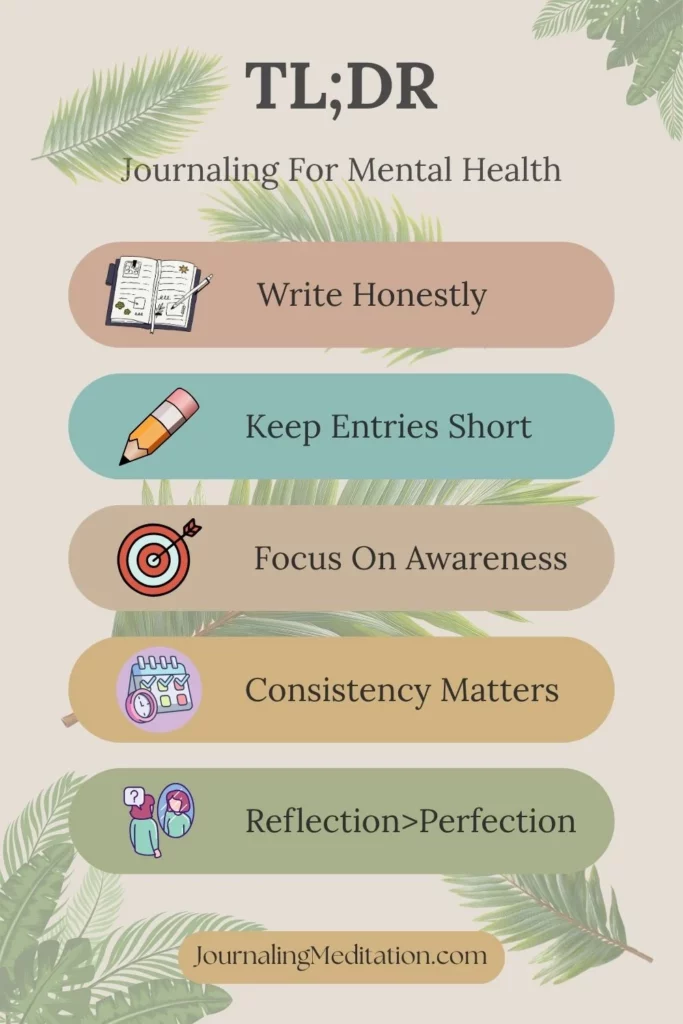
If you want the short version, here’s what matters most:
- Write honestly, not perfectly
- Keep entries short if needed
- Focus on awareness. Not “fixing” yourself
- Consistency matters more than time
- Reflection helps more than venting alone
And most importantly? Your journal doesn’t need to be top of the line to be helpful. Even a simple notebook can be enough.
What Does “Journaling for Mental Health” Actually Mean?
Journaling for mental health is the practice of writing as a way to process thoughts, understand emotions, notice patterns, and help create a little more mental clarity.
That can look different for everyone.
For some people, it’s:
- writing through anxious thoughts
- reflecting on emotional triggers
- tracking moods and habits
- slowing down racing thoughts
For others, it’s simply:
- having a safe place to be truthful and honest
One thing I’ve noticed is that people often assume journaling has to be “deep” or needs something significant to matter.
It doesn’t.
Some of the most helpful entries I’ve ever written were simple observations like:
“I think I’ve been more stressed than I realized.”
That kind of awareness matters.It helps bring you into the now.
It’s also important to be clear: Journaling can support emotional well being and self-awareness, but it’s not a replacement for professional mental health care.
Think of it more like:
- a supportive practice
- a reflection tool
- a way to slow down and process what’s happening
The Real Benefits of Journaling for Mental Health
There are plenty of studies and articles that point out the benefits of journaling, but I think it’s more helpful to focus on what it actually feels like in practice.
Here are some of the biggest changes people will often notice over time:
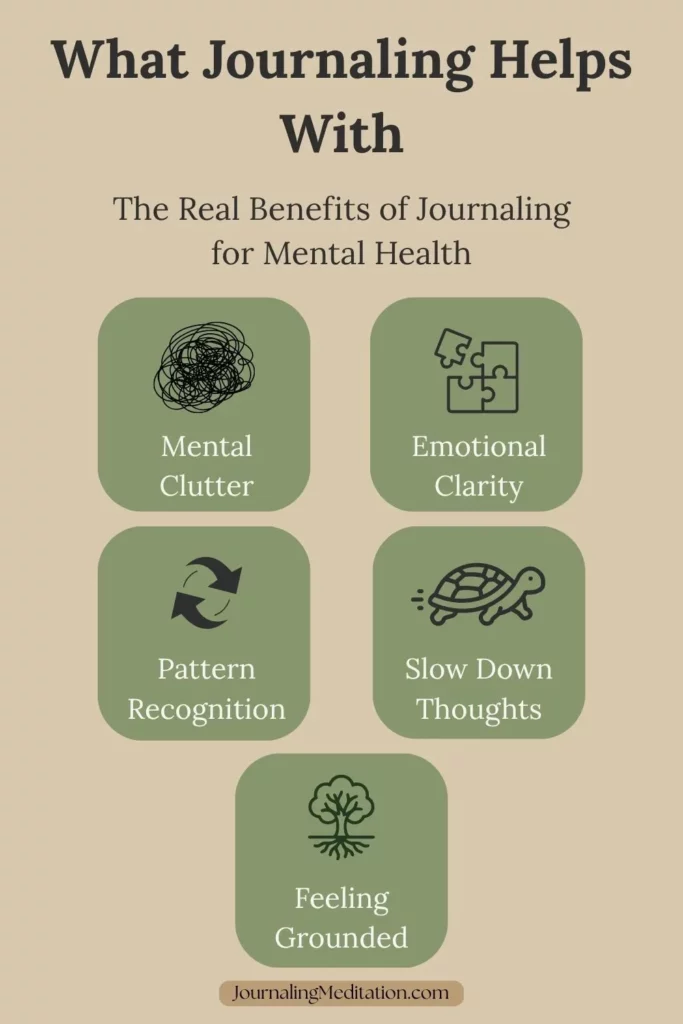
1. Emotional clarity
Sometimes thoughts feel overwhelming simply because they’re just, all over the place.
Writing helps slow them down enough to have time to notice and look closer at them.
You start to see patterns like:
- what keeps repeating
- what triggers stress
- what emotions keep recurring
That awareness alone can feel like a burden’s been lifted.
2. Reduced mental clutter
I’ve noticed that heavy thoughts can feel heavier when they’re bottled up inside all day.
Journaling creates a little outlet for relief.
Instead of:
- replaying everything over and over in your head
You’re giving those thoughts somewhere to go.
3. Better pattern recognition
One of the most underrated benefits of journaling is how clearly patterns start to show up over time.
You may begin noticing:
- stress triggers
- unhealthy emotional habits
- situations that drain you
- things that regularly help you feel grounded (there are good patterns, too)
This is where journaling becomes less about “venting” and more about learning and understanding yourself.
4. Slowing down anxious thought spirals
Journaling doesn’t magically get rid of anxiety.
But it can help interrupt the mental looping that comes with anxiety.
Sometimes writing things down helps create a little distance between you and the thought itself. That small pause matters more than most people realize.
5. Feeling more grounded
Even short journaling sessions can encourage:
- slowing down
- checking in with yourself
- reconnecting with what’s actually going on emotionally and mentally
That’s especially helpful during stressful times.
Why Journaling Helps Some People Feel Less Overwhelmed
When thoughts are kept bottled, they tend to mix together.
Stress. Worry. Frustration. Self-criticism.
Everything starts adding up .
Writing creates separation.
Instead of being stuck with:
“Everything feels bad.”
You start to begin noticing:
- what feels stressful
- what feelings or emotions could be causing it
- what particular situations keep draining you
That change from vague overwhelm to a better understanding is where journaling becomes really helpful.
I’ve also noticed something else: sometimes journaling helps simply because it makes you pause.
Even five quiet minutes with a notebook can help break the constant input and mental noise most of us deal with all day.
Different Types of Mental Health Journaling
Not every journaling method works for everyone. And that’s normal
One of the best things you can do is experiment a little. Try different types to see what feels most supportive for you.
Gratitude journaling
Gratitude journaling helps bring your attention to moments of appreciation, awareness, and perspective.
When done honestly, not forced, it can feel grounding and calming.
If you want to explore this more deeply, I recently put together a full guide to gratitude journaling and how to start it realistically.
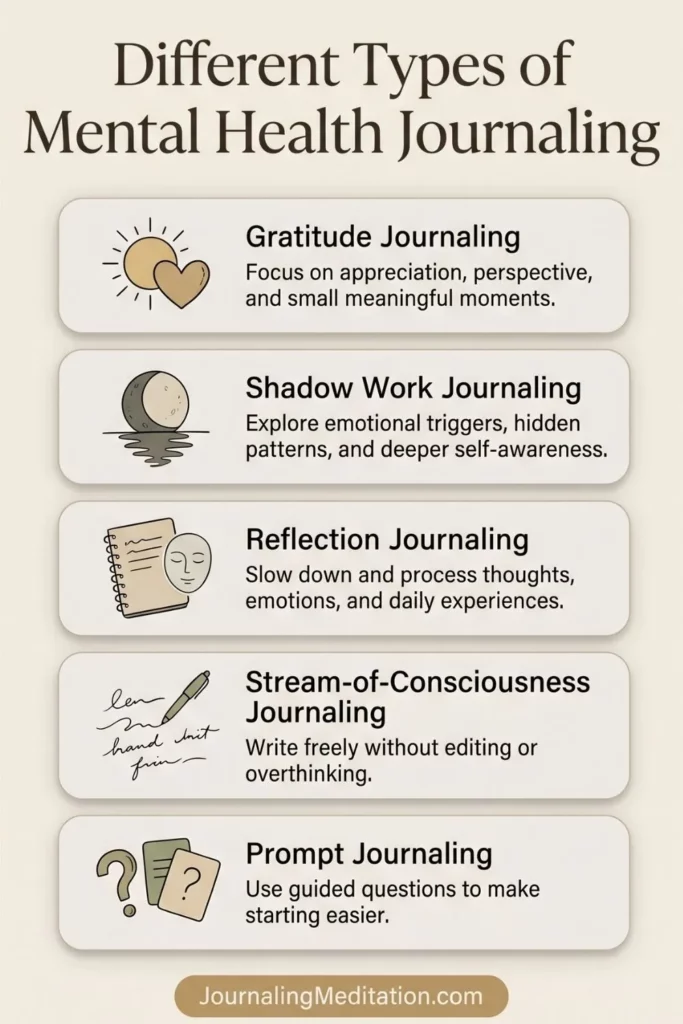
Shadow work journaling
Shadow work journaling focuses more on emotional triggers, hidden patterns, self-reflection, and deep internal exploration.
This style tends to feel more emotionally intense, but it can also create meaningful self-awareness over time.
I also created a complete shadow work journaling guide if you want to explore that approach further.
Stream-of-consciousness journaling
Sometimes called a “brain dump,” this style involves writing no stop for a designated amount of time without worrying about structure or aesthetics.
This can help when:
- your mind feels cluttered
- you’re emotionally overwhelmed
- you don’t know where to start
The goal for this type of writing isn’t form or penmanship. It’s about release.
Reflection journaling
Reflection journaling is great for slowing down and being more intentional.
Instead of venting, you ask:
- What am I feeling?
- Why might this be happening?
- What patterns keep repeating?
This style of writing can help build deeper emotional awareness over time.
Prompt-based journaling
Prompts can be especially helpful for beginners.
They reduce pressure and give your thoughts somewhere to start, even if you have no idea where to begin.
You don’t need dozens of prompts either.
Sometimes that one good question or concept is more than enough.
How to Start Journaling for Mental Health
This is where most people might overcomplicate things.
You do not need:
- the perfect journal
- a complicated routine
- long entries
- profound insights
You just need to start.
If you’re completely new to the practice, my Journaling for Beginners guide covers the fundamentals, including what to write, how often to journal, and how to build a routine you can stick with.
Step 1: Remove the pressure
Your journal is not for anyone else. It is for you and you alone.
You don’t need to sound like you know what is going to happen, be super productive, or force feeling anything.
Honesty is more important than depth.
Step 2: Start small
Five minutes is all you need.
Even a few sentences is enough.
People often quit journaling because they expect too much from themselves too quickly.
Keep it simple.
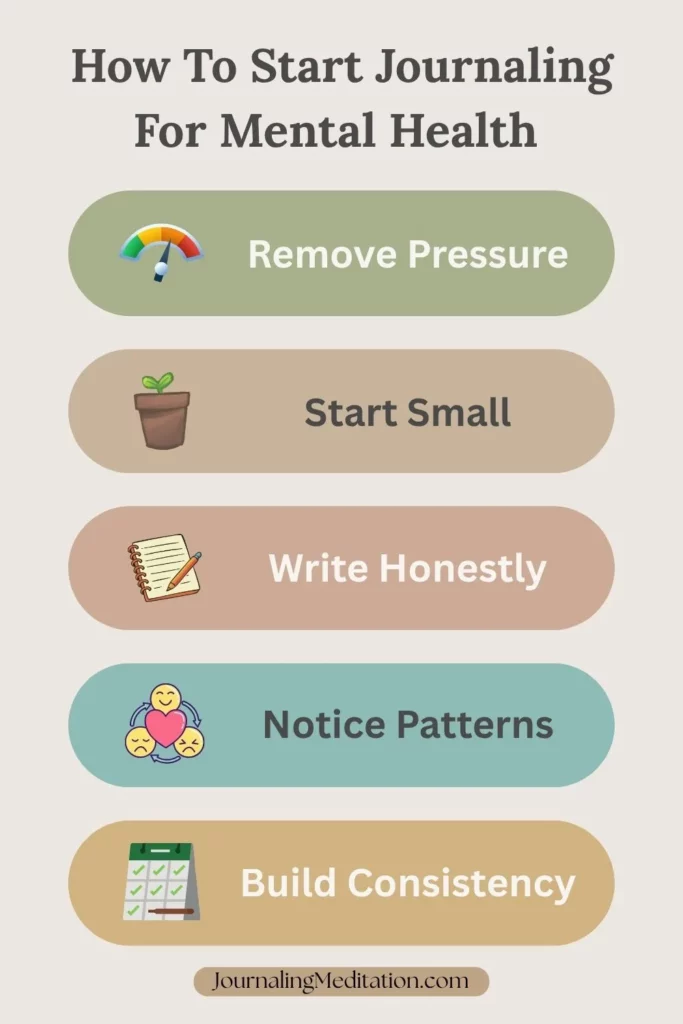
Step 3: Write honestly
This is more important than anything else.
Don’t ask:
“What should I write?”
But instead approach inquisitively:
“What do I feel is actually true right now?”
That one shift changes everything.
And if that question still leaves you staring at a blank page, I have plenty of practical ideas for what to write in a daily journal to help you get started.
Step 4: Focus on patterns
Over time, look for:
- emotional triggers
- recurring thoughts
- habits
- stress signals and cycles
Your journal becomes much more useful when you start noticing patterns instead of documenting insignificant moments.
Step 5: Build consistency slowly
Consistency matters more than how deep or intense your session was.
But, you also don’t need to journal every day forever.
Finding a realistic routine that fits you beats the perfect one you forget about after a week.
If consistency is the part you struggle with, these journaling tips for building a regular practice can help you find a routine that’s easier to maintain.
Journaling Prompts for Mental Health
If you’re not sure where to begin, prompts can help with some direction.
Stress prompts
- What’s taking up most of my mental energy right now?
- What situation keeps replaying in my mind lately?
- What feels heavy to carry today?
Emotional awareness prompts
- What emotion have I been avoiding recently?
- What do I need more of emotionally right now?
- What’s been making me feel disconnected?
Reflection prompts
- What patterns keep repeating in my life lately?
- What situations tend to drain me most?
- What usually helps me feel grounded again?
Grounding prompts
- What feels stable or safe today?
- What small thing helped me breathe easier recently?
- What’s one thing I can let go of tonight?
Prompts can also go beyond managing stress. If you want to explore your patterns, values, and motivations more deeply, a daily journal with prompts for self-discovery can give your writing a different direction.
Journaling for Stress and Anxiety
This is one of the most common reasons people start journaling.
And honestly, it makes sense.
Stress tends to create mental clutter.
Anxiety tends to create looping thoughts.
Writing things down can help externalize some of that internal pressure. Not by making problems disappear, but by helping you process them more clearly.
One thing I’ve personally noticed is that anxious thoughts often feel bigger when you really don’t know where they’re coming from.
Once they’re written down, they become:
- more specific
- easier to examine
- less emotionally tangled
That doesn’t solve everything, but it can reduce some of the intensity.
It’s also important to mention:
Journaling can sometimes trigger tense emotional feelings, too.
If writing increases spiraling thoughts or emotional overwhelm, try:
- short entries
- focusing on grounding prompts
- switching journaling styles
- taking breaks when needed
Reflection vs Rumination (This Matters More Than People Think)
This is one of the most important distinctions in mental health journaling.
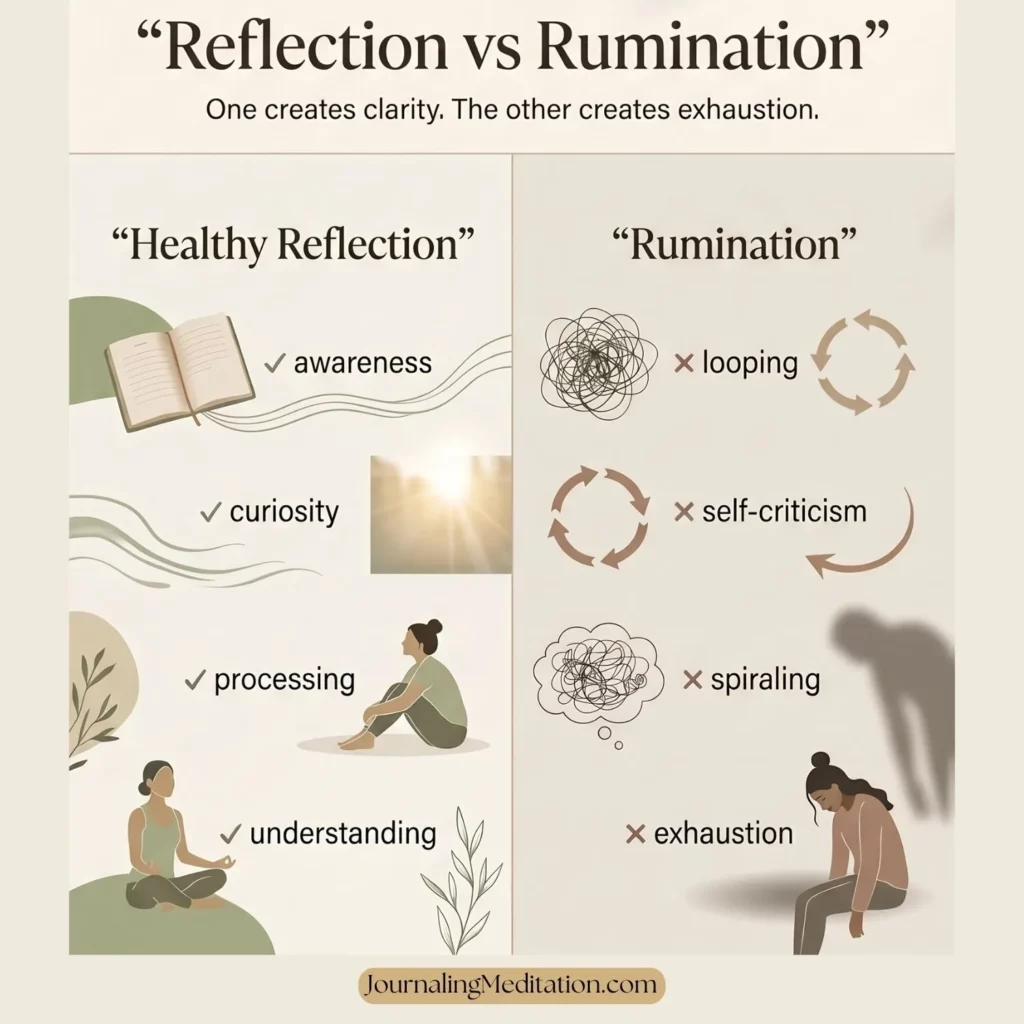
Healthy reflection helps you:
- see and understand patterns
- process emotions
- gain awareness
Rumination usually feels like:
- replaying situations endlessly
- self-criticism
- emotional spiraling
One tends to create clarity while the other tends to create exhaustion.
A helpful question to ask yourself is:
“Do I feel slightly clearer after writing? Or more trapped inside the same loop?”
That answer tells you a lot.
If journaling starts feeling like the same thing over and over, it may help to:
- shorten entries
- try grounding prompts
- give gratitude journaling some attention
- focus more on observation than interpreting
What to Do When Journaling Feels Heavy or Overwhelming
This happens more often than people talk about.
Sometimes journaling brings things to the surface that you weren’t fully aware of before. Which means you definitely weren’t prepared for it.
That can be emotionally intense and exhausting.
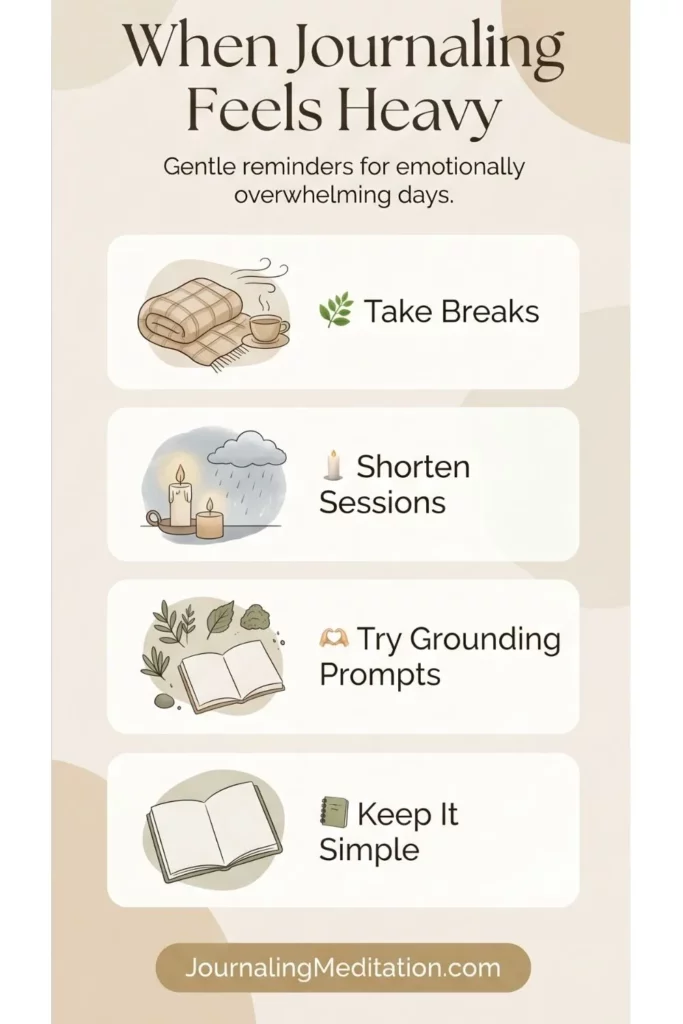
If that happens and you want to bring it back down a notch:
- take breaks
- shorten sessions
- switch to lighter prompts
- focus on grounding and self-care
If you need something outside of journaling first, these grounding techniques use breath, your senses, your body, and your surroundings to help bring your attention back to the present.
You don’t need to force deep emotional processing every time you write.
Some days, simple entries are all you need.
And if journaling is always feeling emotionally overwhelming, reaching out for professional support may be helpful, too.
Combining Journaling with Mindfulness or Meditation
This combination works surprisingly well because mindfulness helps create the pause journaling often needs.
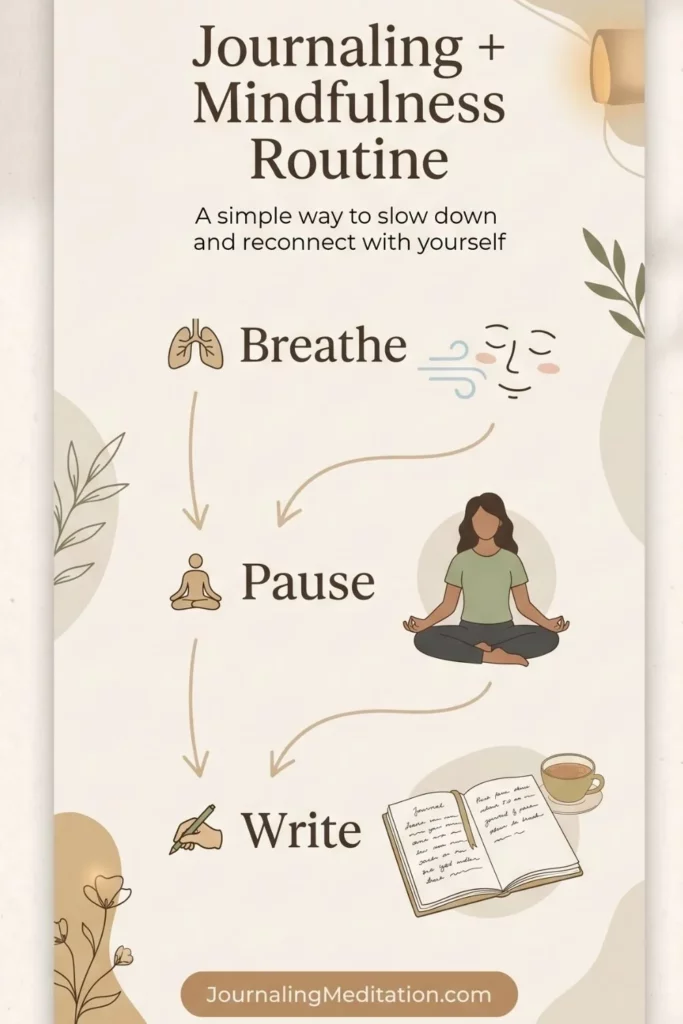
A simple routine might look like:
- Sit quietly for 2–3 minutes
- Focus on your breathing
- Notice how you feel emotionally
- Then begin writing
You can also try one of these 5 minute mindfulness exercises before writing if you want a little more structure than simply sitting quietly.
Even a short moment of stillness beforehand can make journaling feel calmer and more intentional.
If meditation itself is new to you, my Meditation for Beginners guide explains how to start without making the practice more complicated than it needs to be.

Common Mental Health Journaling Mistakes
A few things tend to “hurt” journaling and make it less helpful over time:
- trying to “fix” yourself through writing
- overanalyzing every emotion
- forcing daily entries
- turning journaling into homework
- expecting instant results
- comparing your journaling practice to someone else’s
The healthiest journaling routines are:
- flexible
- honest
- sustainable
Not perfect.
Journals and Tools That Can Help
You don’t need a fancy setup or expensive journal to start.
A basic notebook works perfectly well.
That said, some people find guided journals or prompts helpful, especially when keeping it consistent seems to be the hardest part.
If you enjoy exploring journaling books and tools, Bookshop.org has some thoughtful options while also supporting independent bookstores.
The most important thing isn’t the journal itself, but creating a space where you can slow down and be honest with yourself.
Journaling for Mental Health FAQ
🧠 Can journaling help mental health?
It can support emotional awareness, stress management, and reflection, but it’s not a replacement for speaking with a professional when needed.
📓 What should I write about when I feel overwhelmed?
Start simple. Write about what feels the most burdensome right now or what’s taking up the most of your thoughts.
⏱️ How often should I journal?
Consistency matters more than how much you write. Every day is ideal, but even a few times per week can be helpful.
😟 Can journaling increase anxiety sometimes?
Yes. Deep reflection can occasionally be emotionally triggering. If that happens, take a break. Try grounding prompts, shorter entries, or lighter journaling styles.
🌱 What’s the best journaling method for beginners?
Prompt-based journaling or simple reflection journaling can be easier when you’re starting out because they give you some direction instead of leaving you staring at a blank page. If you’re still figuring out which approach works for you, my beginner’s guide to journaling walks through several different methods and how to get started.
🧘 Is journaling better with meditation?
They work well together because mindfulness helps slow things down before writing.
Final Thoughts: Journaling Is About Awareness, Not Perfection
Journaling for mental health doesn’t need to be complicated and deep to be meaningful.
Sometimes the most important thing is simply:
- slowing down
- noticing what’s happening internally
- creating space to process honestly
That’s enough.
You don’t need perfect entries, breakthroughs or need to “figure yourself out” overnight.
Awareness builds slowly, and even small moments of reflection can matter more than you think.
I’m curious. Has journaling helped you feel more grounded or emotionally aware during stressful times in life?
I’d genuinely love to hear your experience.