
If you’ve ever been curious about using a guided shadow work journal to deepen your self-awareness and emotional healing, you’re in the right place. In this post, I explain what a guided shadow work journal really is, how it works, why it matters, and how you can begin your own journey with confidence. Whether this is your first time hearing about shadow work or you’re already familiar with the shadow, this guide will give you structure, clarity, and actionable steps.
(This post contains affiliate links. If you make a purchase through these links, I may earn a commission at no extra cost to you.)
By the end, you’ll also learn how to choose (or create) a journal format that supports deep reflection; including a downloadable PDF I created for ease of use.
TL;DR
- A guided shadow work journal provides structured prompts and a safe, private space for exploring your subconscious. It’s a powerful tool for self-awareness, emotional healing, and personal growth.
- Journaling helps bring unconscious beliefs, fears, and suppressed emotions into conscious awareness, enabling integration rather than suppression.
- You can begin with a physical notebook, a digital tool, or a guided PDF. Whichever feels most comfortable and will keep you practicing.
- Consistency matters more than frequency; start gently, pair it with grounding or mindfulness practices, and give yourself compassion.
- If you’re ready to begin, a guided journal (like this PDF) can remove the confusion and help you start right away.
What Is a Guided Shadow Work Journal?

What Is Shadow Work?
Shadow work refers to the process of addressing and exploring what’s sometimes called the “shadow self”: the parts of our psyche that we bury deep down, ignore, or disown. These can include fears, insecurities, unprocessed trauma, limiting beliefs, and parts of ourselves we consider “unacceptable.”
According to some psychological perspectives, our shadow isn’t something to get rid of. It’s part of us. The goal of shadow work is integration: acknowledging, understanding, and accepting our shadow in a healthy way.
What Makes It “Guided”?
A guided shadow work journal takes the guesswork out of this introspective journey. Rather than staring at a blank page and wondering what to write, a guided journal gives structured prompts and exercises to lead you gently into self-exploration.
This guidance can help reduce feeling overwhelmed, especially when confronting difficult emotions or painful patterns. It can act as a “container” for self-reflection, making shadow work less intimidating. Many users find that guided prompts give them the “permission” and the direction to go deeper than they might on their own.
Why Journaling Is an Ideal Tool for Shadow Work
Journaling offers a private, safe space where you can express your inner world without judgment. Writing slows down racing thoughts, helps untangle emotions, and offers a unique perspective into your inner workings over time. Many professionals point to journaling as a powerful way to discover patterns, track progress, and make unconscious thoughts conscious.
In short: with a guided journal, you get structure + safety + depth. A powerful combination for inner healing.

Benefits of Using a Guided Shadow Work Journal
Using a guided shadow work journal can offer a range of benefits across mental, emotional, and spiritual well‑being. Here are some that many practitioners (including myself) frequently witness:
- Mental Clarity & Self‑Awareness: By writing out thoughts, feelings, and triggers, you develop insight into patterns and unconscious beliefs. This self-awareness can help you understand why you react a certain way, often revealing root causes behind recurring behaviors.
- Emotional Healing & Integration: Shadow work often brings up painful memories, shame, or unexpressed emotion. A journal lets you process these safely and privately. Over time, acknowledging and integrating these shadow parts can reduce inner conflict and bring healing.
- Empowerment & Freedom from Patterns: When hidden beliefs and unconscious fears come into light, you gain the power to choose differently. This can help break cycles of self-sabotage, people-pleasing, or other limiting behaviors.
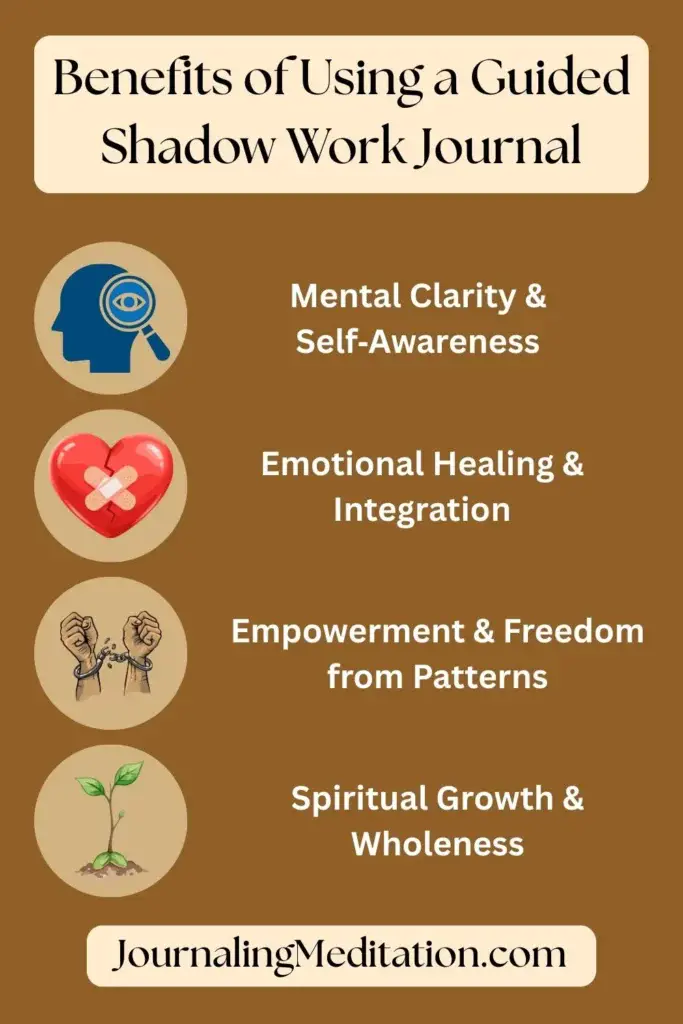
- Spiritual Growth & Wholeness: Shadow work encourages embracing all parts of yourself, even the “dark” ones. This kind of self-acceptance fosters wholeness and authenticity which can lead to greater self-compassion, inner peace, and alignment with your true self.
Using a guided journal helps make these benefits more accessible because it offers structure and consistency. Two things that raw self-reflection sometimes misses.
How to Start a Guided Shadow Work Journal
📜 Step 1: Choose the Right Journal Format
You have a few options when it comes to format. The “right” one depends on your preferences and lifestyle.
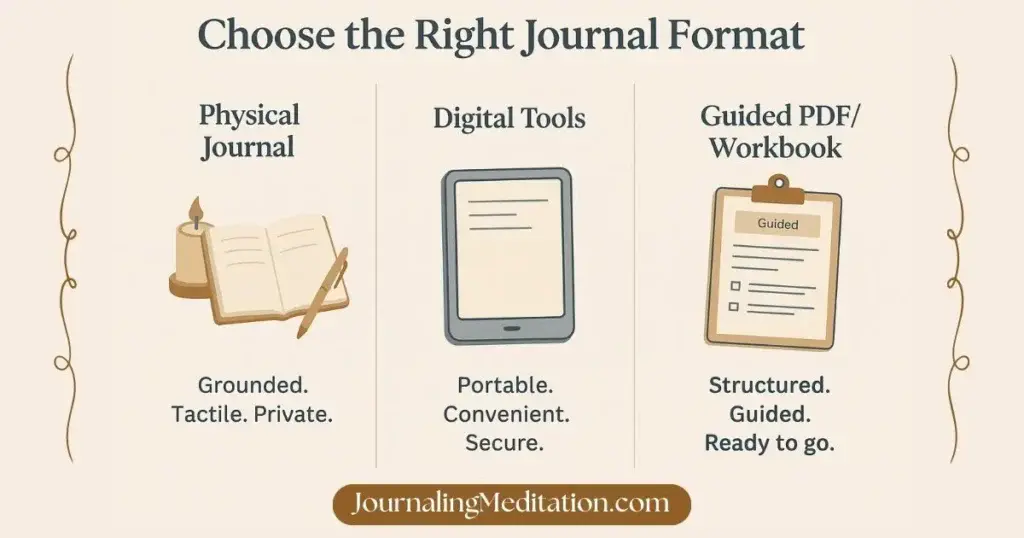
- Physical journal: A traditional notebook or workbook can feel grounding and tactile. Many people find writing by hand more emotionally connecting.
- Digital tools: Apps, note-taking software, or even a text document works well if you prefer convenience, portability, or privacy (password protected).
- Guided PDF/workbook: For many, starting with a pre-made guided shadow work journal (with prompts, structure, and space for reflection) may be the easiest way to begin.
If you want a ready-made tool: I created a guided shadow work journal PDF designed for exactly this purpose. The prompts are thoughtfully structured to lead you into self-discovery and emotional healing, whether you’re new to shadow work or familiar with inner‑work practices.
🧘 Step 2: Set a Safe, Supportive Environment
Before diving into your journal:
- Choose a quiet, private space where you feel safe.
- Consider doing a brief grounding or mindfulness exercise . Deep breathing, a short meditation, or a body scan can help center yourself.
- Remind yourself: This journal is your own space. There’s no need for perfection or judgment. Be curious, gentle, and compassionate with yourself.
🖋️ Step 3: Start with Gentle Prompts
Especially if this is your first time, begin with prompts that cultivate curiosity rather than deep emotional excavation. Examples of starter prompts include:
- “What emotions do I avoid, and why?”
- “What part of myself do I hide from others and what am I protecting?”
- “When did I first feel ashamed or small, and what beliefs were born from that moment?”
A guided journal (like the PDF available) gives you a structure to follow so you’re not left wondering where to begin.
💖 Step 4: Practice Regularly, but with Compassion
- Start with journaling just 3-5 minutes a day, or whatever feels good. Consistency matters more than frequency.
- Pair shadow work journaling with mindfulness or meditation to help integrate any insights or emotional releases.
- Give space for rest and self‑care. Shadow work is powerful, and sometimes intense. It’s okay to stop, reflect, and come back when you feel ready.
Common Challenges (and How to Work With Them)
Shadow work isn’t always comfortable. Here are some common hurdles with ways to navigate them gracefully.
Emotional Overwhelm
Sometimes writing about painful memories or repressed emotions can feel overwhelming or triggering. To manage this:
- Ground yourself before and after journaling (breathing, stretching, grounding meditation).
- Don’t be afraid to signal to yourself. If emotions get too intense, close the journal, take a break, and return later when you feel more comfortable.
- Consider sharing the process with a trusted therapist or coach. Guided shadow journaling can be supportive, but it’s not a replacement for professional help when needed.
Resistance or Avoidance
It’s common to resist certain prompts or avoid writing what hurts. But this resistance can itself be meaningful. Instead of bypassing it:
- Journal about the resistance. Ask: “What part of me doesn’t want to write this? Why?”
- Offer yourself compassion. Shadow work isn’t about shame, It’s about acceptance.
Getting Stuck or Repeating Patterns
Sometimes you might feel stuck, write the same things, or hit a plateau. To refresh the process:
- Rotate between prompt types: childhood reflection, coping behaviors, inner child work, future‑oriented questions, values and beliefs, etc.
- Try different mediums: write by hand, type in a digital journal, record voice-notes, or even doodle.
- Incorporate body‑based practices (like mindful movement or breathwork) or meditation alongside journaling to help shift energy.
Sample Prompts to Get You Started
Here are a few prompts pulled from commonly recommended shadow work questions to help you begin.
- What part of myself have I disowned to be accepted by others?
- What emotion am I most afraid to express or acknowledge and why?
- What triggers cause strong reactions in me, and what do those reactions tell me about unhealed parts of myself?
- What childhood belief about myself am I still holding onto, even if it no longer serves me?
- If my shadow could speak, what would it say to me right now?
If you’re looking for more, this guided shadow work journal PDF contains many more structured prompts designed for gradual deepening over time.
Why a Guided Shadow Work Journal PDF Is a Great Start
- A PDF workbook removes the barrier of “where do I begin?” You simply open the journal and follow the prompts.
- It offers structure and safety, which helps especially if this is your first time doing shadow work.
- You can choose when, where, and how you practice: journaling on paper, typing on a device, or splitting across multiple sessions.
- Because it’s downloadable and portable, you can work at your own pace, which matters, since shadow work should be a gentle, unhurried practice.
If you’re ready to begin, you can find the guided shadow work journal PDF here 👉 Download the Guided Shadow Work Journal PDF.
FAQ’s
If you’re new to this practice or just not sure yet, the following common questions (and answers) may help. Many are taken from what people search when they begin exploring shadow work journaling.
📝 What is a guided shadow work journal?
A guided shadow work journal is a structured workbook (physical or digital) that provides prompts, questions, and exercises designed to help you explore and integrate parts of your “shadow self.” It gives you a safe, private space for deep emotional reflection rather than facing a blank page and wondering where to begin.
❓ Is shadow work journaling safe or dangerous?
- Generally safe when approached with care. Shadow work can bring up strong emotions, so it’s important to create a grounded, supportive environment.
- Not a substitute for therapy. If you have unresolved trauma or mental health conditions, consider combining journaling with support from a licensed professional.
- Take breaks and be gentle with yourself. Shadow work is a process; you don’t have to do it all at once.
🕰️ How often should I do shadow work journaling?
There’s no one-size-fits-all real answer. Many people start with 2–3 times per week, but what matters most is consistency and intentionality of working through.
Invitation to Start and Join the Conversation
If you’ve been curious, why not give it a try? The first prompt doesn’t need to be perfect. Write what comes to mind. No one has to read it. Explore gently and notice what comes up.
If you want a supportive, thoughtfully structured way to begin your journey — consider using the guided shadow work journal PDF. It’s designed to meet you where you are and walk with you step by step.
Download it here → Guided Shadow Work Journal PDF
Your Turn: Reflect & Share

What’s one inner question or fear you’ve been avoiding? the one that keeps surfacing but you haven’t yet given space to explore?
If you feel called to, drop that question into the comments below. You might just inspire someone else to begin their own healing journey.
Can’t wait to read your reflections. ✨