When a meditation practice isn’t working, most people assume the problem is the technique.
They try a different breathing method. A different app. A different style.
But the technique is rarely the problem.
For most beginners, the real problem is their environment. And until that changes, no technique will make the practice feel natural.
🌿 Your Space Is Already Working On You
Whether you’ve thought about it or not, your meditation space is already influencing your practice. For better or worse.
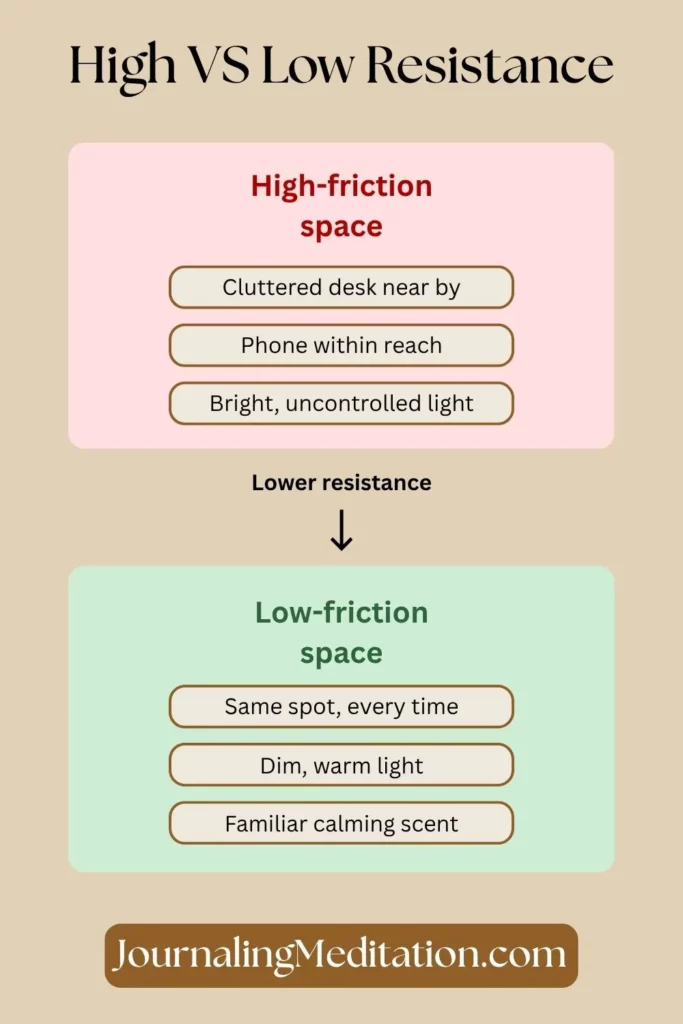
A cluttered corner near your work desk keeps your nervous system in task mode. A chair facing the sun in a window creates a distraction before you’ve even closed your eyes. A room where your phone sits within reach keeps part of your brain on standby.
None of these things are catastrophic. They’re quiet. But they raise the resistance between you and your practice just enough that skipping a session might feel easier than starting one.
And over time, the friction wins.
🧬 Why Consistent Space Conditions the Brain
Your brain is constantly taking note of environmental cues and adjusting your physiological state in response.
The same way you feel hungry when you walk into a kitchen, or sleepy when you dim the lights at night, also affects how quickly you can shift into a meditative state.
When you meditate in the same space consistently, your brain begins to associate that environment with the calmness. The cushion, the scent, the warmth of a soft lamp become triggers.

Over weeks of regular practice, just entering your meditation setup begins to soften mental noise before you’ve made any conscious effort at all.
A dedicated meditation space tells your nervous system through sensory cues it recognizes that this is a place for stillness. The space begins the work before you’ve taken a single conscious breath.
✨ What a Calm Meditation Space Actually Needs
You don’t need a completely dedicated room. You don’t need a large budget. All you need is:

- A consistent spot used only for meditation
- Warm, dim lighting that signals your brain to slow down
- One calming scent used every single session
- A comfortable seat your body actually wants to come back to
- Minimal visual clutter within your sightline
That’s it. A small, intentional corner used daily will outdo a beautiful room with no consistent practice behind it every single time.
🧩 One Question Worth Asking Before You Change Anything Else
Before you try a new technique, sit with this:
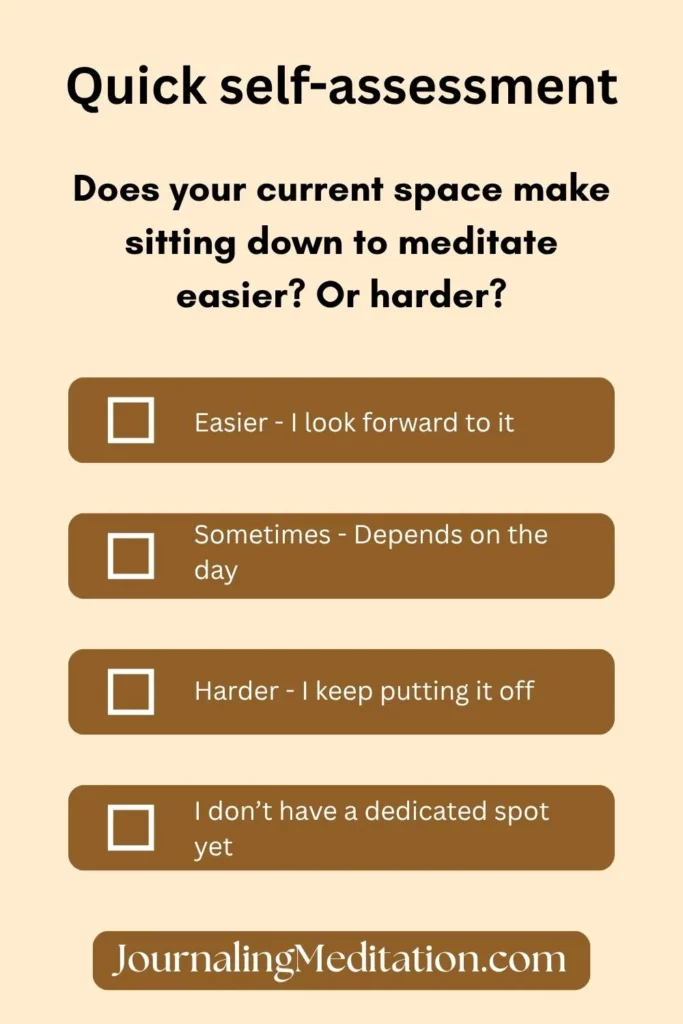
Does my current space make sitting down easier? Or harder?
The answer might be the most useful thing you discover this week.
Ready to build a home meditation setup that actually helps your practice? Read the full guide here: 10 Tips To Creating A Calm Meditation Space
💬 What does your current meditation space look like? Share in the comments! Your experience might help someone else find their way to a more consistent practice.