Updated 6/26
Have you ever noticed how some spaces are condusive to calm while others make it nearly impossible to focus?
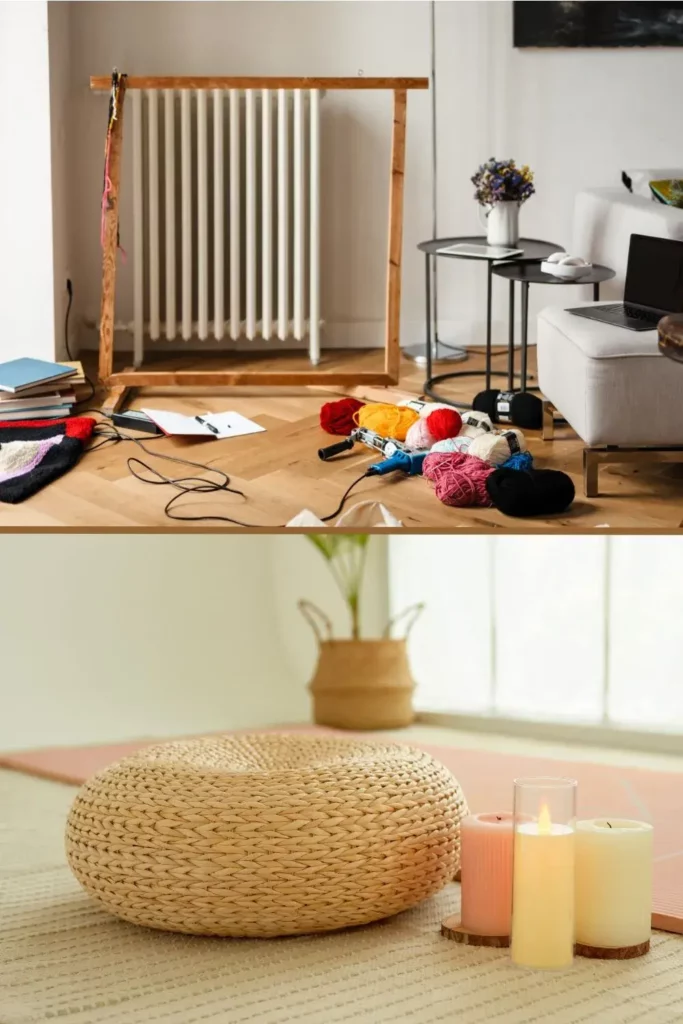
You walk into a cluttered room, phone buzzing away with notifications, the television’s on in the background and there’re a dozen unfinished projects pulling at your attention. Even if you want to meditate, slow down, or spend a few quiet minutes journaling, it can feel like you’re fighting your surroundings every step of the way.
That’s one reason creating a meditation space can be so helpful.
Now, before you picture an all out meditation room with expensive cushions, candles, and perfectly arranged statues, let me stop you there.
A meditation space doesn’t need to be “impressive”.
In fact, the best meditation spaces are often quite simple.
Whether it’s a corner of a bedroom, a comfortable chair near a window, or a small area dedicated to mindfulness and journaling, having a space that encourages you to pause can help make it easier to build a consistent practice.
In this guide, I’ll walk you through how to create a meditation space that supports mindfulness, meditation, journaling, and self-reflection. All without overcomplicating the process or outcome.

TL;DR: Creating a Meditation Space Without Overcomplicating It
Creating a meditation space doesn’t require an entire room or expensive equipment. A small, comfortable area that helps minimize distractions is often more than enough.
- You don’t need a dedicated meditation room
- Small spaces can work beautifully
- Comfort matters more than aesthetics
- Reducing distractions helps support mindfulness
- Journaling and meditation pair naturally together
- Consistency matters more than perfection
- Your meditation space should be for you, not to impress others
If you only take away one thing from this guide, let it be this: the best meditation space is the one you’ll actually use. A simple, safe space that helps you slow down when you’re ready to is far more useful than a picture-perfect room that barely gets used.
Why Your Environment Matters More Than You Think
Most of us spend our days constantly being stimulated.
Notifications.
Emails.
Social media.
Television.
Background noise.
To-do lists.
By the time we sit down to meditate, our minds can be carrying the weight of the whole day.
Your environment can’t get rid of stress completely, but it can certainly make a difference how easy it is to step away from it when you need to.
I see a small meditation space as a way to create a subtle signal to your brain:
-This is where I slow down.
Over time, that association can become pavlovian.
Much like a bedroom helps signal sleep or a desk might remind you of work, a meditation space can become a cue for mindfulness, reflection, and calm.
What Actually Makes a Good Meditation Space?
A good meditation space has very little to do with how it looks on Instagram.
It really just comes down to a few basic things:
Comfort
If you’re physically uncomfortable, staying present is going to be impossible.
This doesn’t mean you need something fancy or expensive to meditate on. A chair, blanket, floor pillow, or even a comfortable spot on the couch works just fine.
Simplicity
The fewer distractions there are trying to get your attention, the easier it is to get into the moment.
A meditation space doesn’t need to be empty.
It just shouldn’t feel busy.
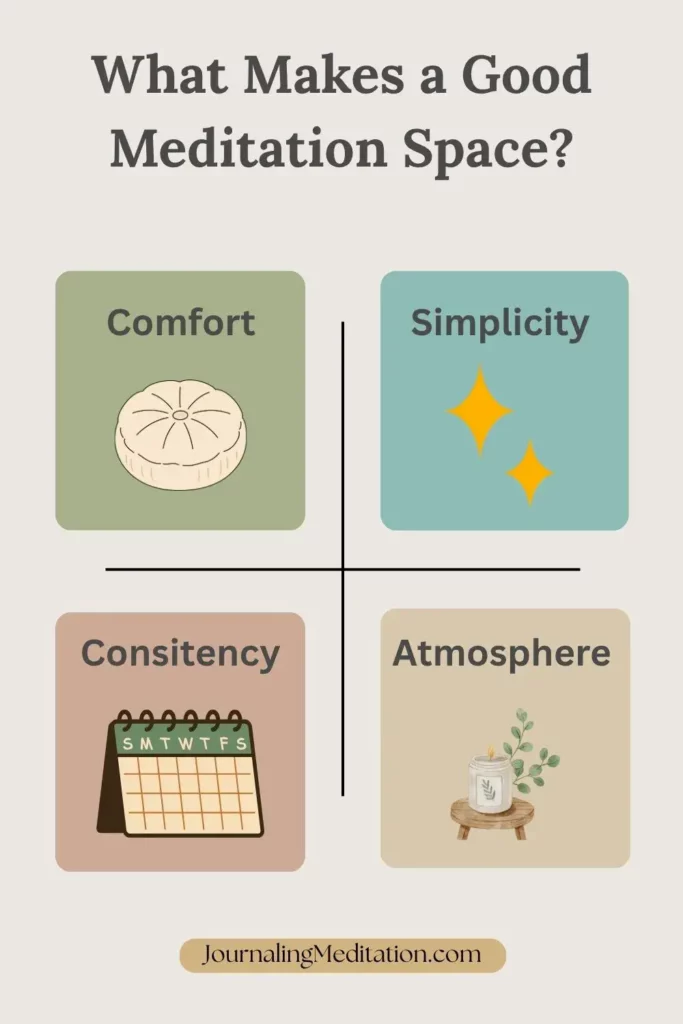
Consistency
Using the same space regularly helps create a mental association with slowing down. Add a scent, and the association increases substantially.
The more often you return to that spot, the more familiar and supportive it will become.
Emotional Atmosphere
This might be overlooked the most.
A good meditation space feels welcoming.
It’s not intimidating or for anyone else.
Just comfortable enough that you actually want to spend time there.
You Don’t Need a Perfect Meditation Room
This is something I wish more people understood.
You do not need a dedicated meditation room.
But if you do have an entire room available, these meditation room design ideas can help you turn it into a comfortable, functional space without overdoing it.
Many people never create a meditation practice because they think they need:
- extra space
- special equipment
- a perfectly quiet session
- ideal circumstances
I hate to break it to you, but mindfulness rarely happens when everything is perfect.
If you live in:
- an apartment
- a busy household
- a shared living situation
- a small home
you can still create a meaningful meditation space.
Sometimes all it takes is:
- a chair by a window
- a quiet corner
- a small shelf
- a floor cushion
- a bedside setup
The goal isn’t perfection.
The goal is creating the condition that your environment helps support your practice instead of constantly distracting from it.
Realistic Meditation Spaces for Real Life
Let’s be honest.
Life is messy.
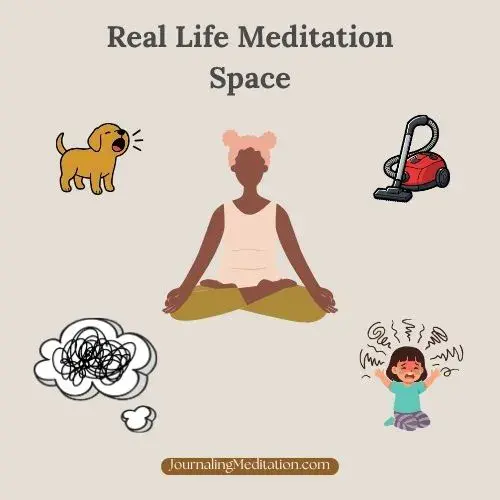
Kids make noise.
Pets make messes.
Neighbors exist.
Schedules change.
Waiting for the perfect opportunity can mean waiting forever.
One of the most helpful mindset shifts I made was realizing that a meditation space doesn’t have to eliminate every distraction.
It only needs to reduce it enough so that slowing down becomes easier.
Some days your meditation session might be interrupted by:
- a barking dog
- household noise
- racing thoughts
- interruptions
That’s okay.
Mindfulness isn’t about controlling everything around you.
It’s about learning to work with what is there rather than constantly fighting against it.
A realistic meditation space should support that approach.
Simple Meditation Space Ideas for Small Homes
Small homes are an opportunity to embrace creativity.
Remember. You don’t need a large area to create a meaningful mindfulness environment.
Meditation Corner
A small corner can be surprisingly effective.
Add:
- a chair or cushion
- soft lighting
- a journal
- a blanket
That’s often enough.
Bedroom Meditation Space
Many people will naturally gravitate toward their bedroom because it’s already associated with rest.
A corner near a window or bedside chair can work perfectly. That’s it..
Living Room Mindfulness Space
Shared spaces can still support meditation.
For some, just keeping a journal ready and meditation cushion nearby creates enough intention to make the practice easier.
Fold-Away Meditation Space
This is particularly useful for smaller homes and can be more effective than you think.
And I’ll show you my solution I created later in this article.
Your meditation tools can be stored away when not in use and brought out only when needed. You have a dedicated central place for everything.
Creating a Multi-Purpose Mindfulness Space
This may be my favorite approach. And it expands on the fold-away meditation space beautifully.
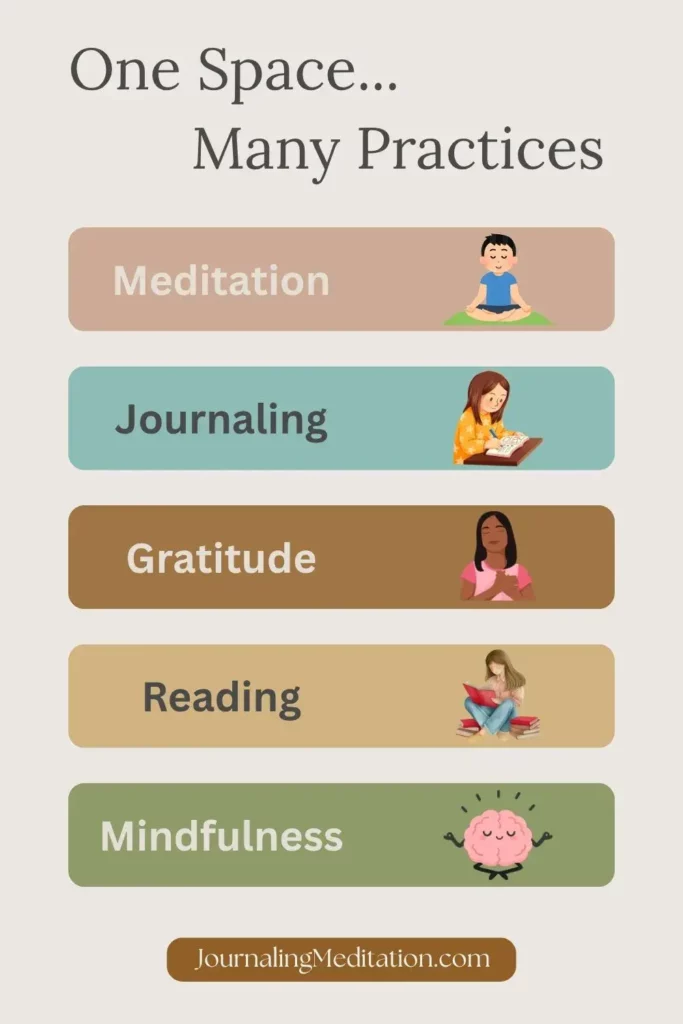
Instead of a space just for meditation, many people benefit from creating a space that supports other practices as well.
For example:
- meditation
- journaling
- gratitude practice
- reading
- mindfulness exercises
can all be done in the same surrounding.
This is especially useful when space is limited.
A dedicated mindfulness cabinet, fold-away station, or organized corner can serve multiple purposes without taking over an entire room.
The goal isn’t breaking away from life to pursue your practice.
It’s to integrate mindfulness into your daily life more naturally.
My Meditation and Journaling Cabinet Solution
As I spent more time building both a meditation and journaling practice, I realized I was constantly disheveled looking for my stuff from different places around the house.
My journal was on a bookshelf in the living room.
Then grab a pen off my desk.
Meditation tools were tucked away in a drawer.
Sometimes I’m not sure where I put them away.
And books were scattered throughout the house.
It wasn’t a huge problem, but it created friction.
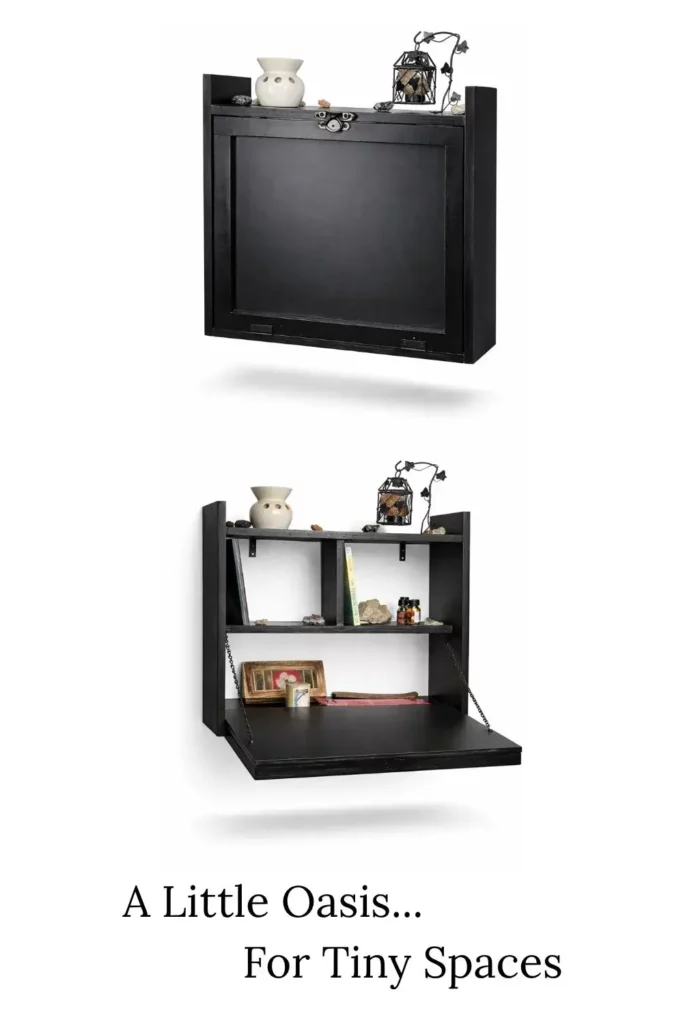
Over time, I started creating a dedicated meditation and journaling cabinet where everything could live in one place.
My journals, reflection cards, mindfulness books, salt lamp and other tools all have a home inside a single organized space.
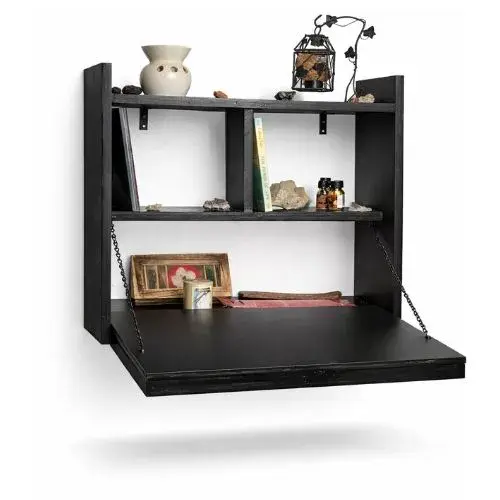
What I like most isn’t the cabinet itself. (Although I’m pretty proud of it)
It’s what the cabinet represents.
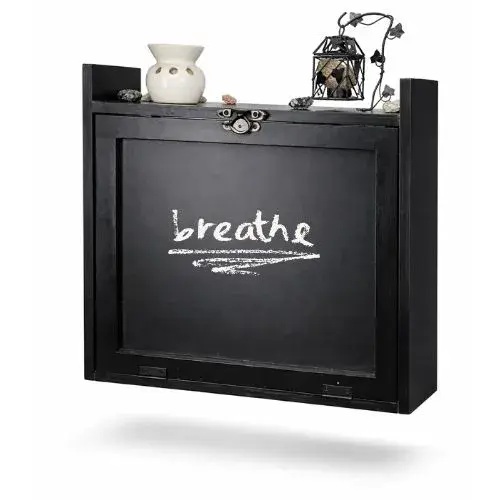
When I open it, I’m intentionally stepping away from distractions and into a space designed for reflection, mindfulness, and personal growth.
Conversely, when I’m done, I gently close the cabinet to signify the close of my session.
For people living in apartments, shared homes, or smaller spaces, a dedicated mindfulness cabinet can be the difference between practicing mindfulness or not.
Sometimes creating calm isn’t about finding more space.
It’s about using the space you already have more intentionally.
Journaling and Meditation Spaces Together
Meditation and journaling complement one another extremely well.
Meditation helps you:
- slow down
- observe
- become present
Journaling helps you:
- process
- reflect
- explore what came up during meditation
If the journaling side of that combination is new to you, my Journaling for Beginners guide covers how to start, what to write, and how to build a simple practice that fits into your life.
Combining the two practices in the same environment can help make both more consistent.
For example:
You might spend five minutes focusing on your breath before opening a gratitude journal.
Or you may finish a meditation session and write about thoughts, emotions, or patterns you noticed.
If you like doing that regularly, keeping a meditation journal gives those post-meditation observations a dedicated place to live.
This works especially well with:
because each practice benefits from a calm and intentional environment.
Lighting, Sound, and Atmosphere
The feeling, or atmosphere of a meditation space can be influenced by what you have in that space.
Again, keeping it simple usually works best.
Natural Light
Natural light can help create a calming environment without requiring much else.
A chair near a window can completely change the feel of a space.
Warm Lighting
If natural light isn’t available, warm lamps often feel softer and more relaxing than harsh overhead lighting like fluorescents.
Sound
Some people prefer complete silence.
Others might enjoy:
- nature sounds
- ambient music
- meditation music
- white noise
There’s no universal approach.
A combination might work well for you, too, so go ahead and experiment.
Scents
Candles or essential oils can be extremely helpful in facilitating calmness in your practice. Scent can help trigger memory and eventually induce calmness quicker when the practice is associated with the scent.
But as always, they’re optional, not required.
Texture
Blankets, pillows, and generally soft materials can help create a sense of comfort and relaxation.
Minimal Meditation Tools That Actually Help
A very common misconception about meditation is that you need to buy a lot of things.
It doesn’t.
If you’re just getting started, so you should only need:
- a comfortable place to sit
- a timer
- a journal
And that’s it.
Other items that can be helpful:
- meditation cushions
- blankets
- headphones
- guided meditation apps
- calming music

But remember:
The tool does not make the practice.
You showing up does.
And if you’re still figuring out the practice itself, my Meditation for Beginners guide walks through how to start without making meditation more complicated than it needs to be.
Meditation Space Mistakes to Avoid
A lot of beginners accidentally make meditation harder than it needs to be.
Overcomplicating the Setup
Simple is better. Just remembering that little phrase can save you headaches down the road. Your breath is all you really need.
Buying Too Much
You don’t need all the new meditation accessories to begin. Again, keep it simple and your practice will follow.
Waiting for the Perfect Space
The perfect space rarely arrives. That’s why I developed my own. But you really don’t need any of that.
Start where you are.
Prioritizing Appearance Over Function
A beautiful room isn’t helpful if you never use it. And honestly, my meditation practice is pretty personal, so doing it for someone else isn’t going to make it better for me.
Expecting the Space to Create the Habit
The environment helps. It can help remind you that you haven’t taken your time yet today.
But you still have to show up.
Creating a Meditation Habit Through Environment
When intended, your surroundings can support consistency in so many ways.
One of the easiest strategies is creating visual cues.
For example:
- leaving your journal visible
- keeping your meditation cushion accessible
- placing mindfulness tools where you’ll see them
These small reminders can help make it easier to start. And the easier a habit is to start, the more likely you are to continue it.
You can also try pairing meditation with regular routines.
For example:
- meditate after making coffee
- journal before bed
- practice mindfulness after a walk
These connections can make a consistent practice easier than just relying on motivation.
What I Learned Creating My Own Meditation Space
One thing I’ve learned is that creating a meditation space isn’t really about the space itself.
It’s more about finding a way to foster a practice that helps you slow down.
When I first started exploring meditation and journaling, I just assumed I needed more room, more equipment and more time.
What actually helped most was creating a space that was simply easy to use.
A place where my journal was nearby and where sitting down felt comfortably natural.
A place that encouraged reflection instead of distraction.
As my practices grew, I eventually began developing a dedicated meditation and journaling cabinet. Not because I needed something elaborate, but because I wanted a simple way to keep everything together, yet separate, if that makes sense.
The project ended up teaching me something I didn’t expect.
The best part wasn’t the storage.
It was the intentionality.
Having a dedicated space for my journals, tools, books and all the other little things removed small barriers that often got in the way of being consistent.
Instead of searching for what I needed, everything was already waiting for me.
That made it easier to show up.
It also added a certain structure. My practice began when I opened the cabinet and had a definitive ending from closing it.
Finally, the experience also reinforced something I think many people overlook:
You don’t need an entire room to create a mindfulness practice.
You just need a space that feels inviting enough to come back to regularly.
For some people that can simply be a chair by a window. And for others, maybe it’s a corner of a bedroom.
For me, creating a dedicated meditation and journaling cabinet was my way to build a calm, intentional space within a small, busy home.
The more I simplified things, the easier it was to come back to it.
And that’s ultimately what matters. Consistency.
Combining Meditation Spaces with Daily Rituals
Again, one way to make a meditation space feel more meaningful is by connecting it with something you’re already doing.
Those might include:
Morning Quiet Time
A few minutes of breathing, meditation, or journaling before the day begins.
Tea or Coffee Rituals
Enjoying a warm drink while reflecting or practicing mindfulness.
Evening Wind-Down
Creating a calming transition between the day and sleep.
Gratitude Practice
Writing a few things you’re grateful for.
These practices can help make a meditation space more than just a location and turn it into an experience.

Meditation Space FAQ
🏡 Do I need a separate meditation room?
No. Some of the most effective meditation spaces are in bedrooms, living rooms, offices, or small corners of a home.
🪑 Can I meditate in a small apartment?
Absolutely. A chair, cushion, or quiet corner is often enough. Or you can check out my “little oasis for tiny spaces”.
📓 What should I put in a meditation space?
Start with the intention of comfort. A place to sit, soft lighting, and maybe a journal and that should be all you need.
📖 Can journaling and meditation happen in the same space?
Yes. In fact, they can often go together quite beautifully. Some may journal then meditate while others meditate first. It truly is your preference.
🕯️ Does lighting matter for meditation?
It can. Softer lighting tends to create a calmer atmosphere, but it’s not required. But you also want to avoid harsh fluorescents like at the office.
🌿 How do I make my meditation space feel calming?
Minimize distractions, prioritize comfort, and focus on creating a space that feels encouraging rather than perfect.
Final Thoughts: Your Meditation Space Doesn’t Need to Be Perfect
The best meditation space isn’t the most expensive, elaborate or the one that looks the most impressive online.
The best meditation space is the one that helps you come back consistently.
Whether that’s a small corner, a comfortable chair, or a simple mindfulness cabinet, what matters most is that it supports the practice you want to build.
Start small, keep it simple and allow it to grow over time.
And remember: the purpose of a meditation space isn’t to practice perfection.
It’s to make time for yourself a little easier.
I’d love to hear from you in the comments: what does your ideal meditation space look like right now, even if it’s just a small corner of a room? And thanks for reading!