If you’ve ever thought about journaling but felt stuck the moment you opened a blank page, a guided mindfulness journal might just be the answer. A guided mindfulness journal combines the benefits of mindfulness (presence, nonjudgmental awareness, acceptance) with the practice of journaling. Instead of leaving you to guess what to write, it provides prompts, questions, or structure that can give you a clear beginning for reflection. This guided format takes away the overwhelm and helps you to just start, even if you only have five minutes to spare.

TL;DR / Key Takeaways
- A guided mindfulness journal makes journaling accessible by providing structure and prompts. This is perfect if a blank page feels intimidating or you don’t know where to start.
- Mindful journaling combines present‑moment awareness with reflective writing. This can help reduce stress, boost self-awareness, and support mental well‑being.
- You can use a pre-made guided journal (physical or digital) or create your own! Both can work, as long as prompts invite honesty and curiosity.
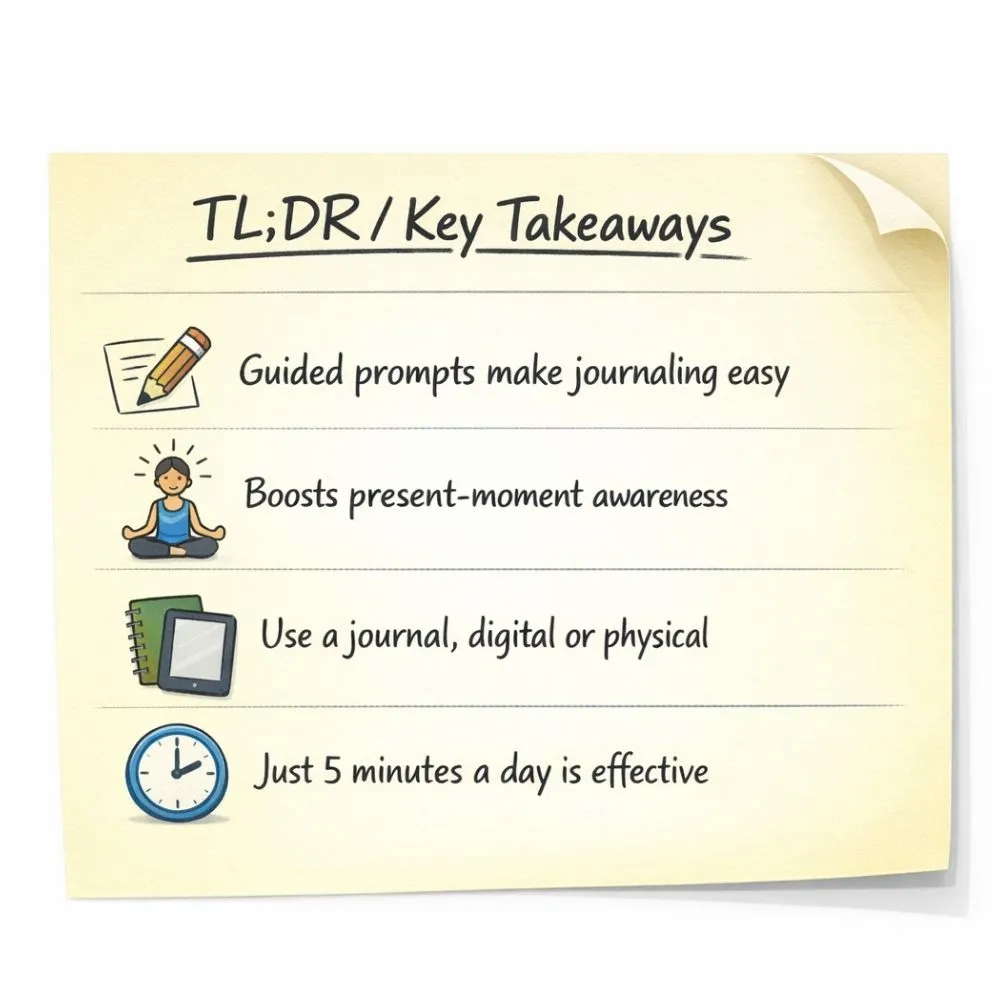
- Consistency matters more than perfection. Even short daily entries can shift your mindset, ground you in the present, and build a sustainable mindfulness habit.
In this post, we’ll walk through why guided mindfulness journaling works, how to use it, who benefits most, and even how to make your own! Plus, some focused prompts to get you started. ✍️
Why Mindfulness Journaling Works (Especially When It’s Guided)
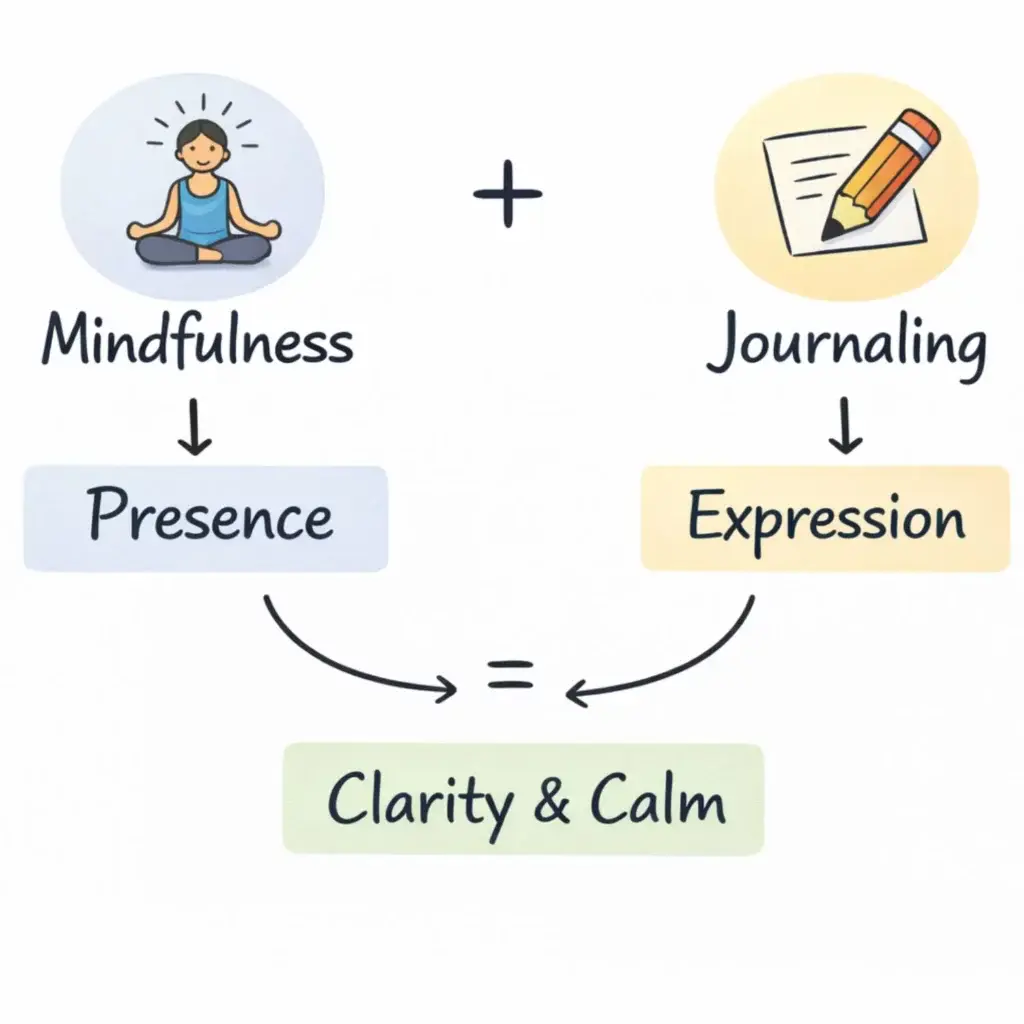
Mindfulness is the state of being present, aware and without judgment. It has been shown to support mental and emotional well‑being. Journaling also adds another beneficial layer: by putting thoughts and feelings to paper, you create a space for reflection, clarity, and release. For only you.
What many people find intimidating about journaling is staring at a blank page. That’s where guided journaling really shines. By presenting prompts, a guided journal removes the “what do I write?” conundrum and replaces it with an opportunity to lean into awareness and introspection. Over time, even brief entries can help you begin to notice patterns in your thoughts, emotions, and behaviors.
What Makes a Journal “Guided”?
Common Elements of a Guided Mindfulness Journal
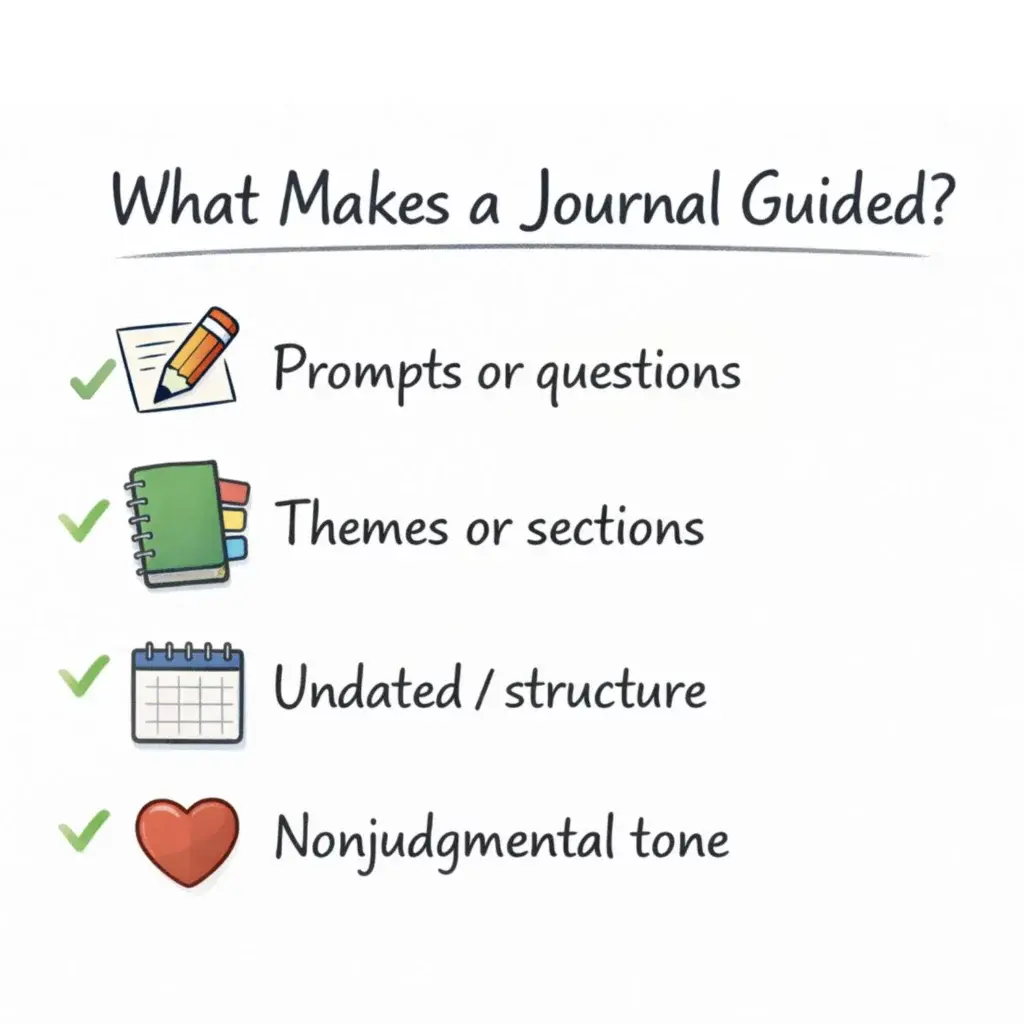
A journal can be considered “guided” when it includes things like:
- Prompts or questions to encourage reflection: “What am I feeling right now?” or “What is one thing I’m grateful for today?”
- Themes or sections: These can be daily check‑ins, emotional reflections, gratitude, self‑compassion, or long-term growth exercises.
- Structure and consistency: For example, undated pages so you don’t feel guilty about missing a day, or rotating prompts to avoid repetition.
- Invitations to be honest and nonjudgmental: It’s a space for allowing all emotions, not just the “positive” ones.
Compared to a blank journal, a guided journal feels more like a gentle conversation with yourself. One that understands feelings, honors awareness, and supports self‑compassion and growth.
Who Can Benefit from a Guided Mindfulness Journal?
A guided mindfulness journal is extremely versatile. Here are some of the people who may find it especially helpful:
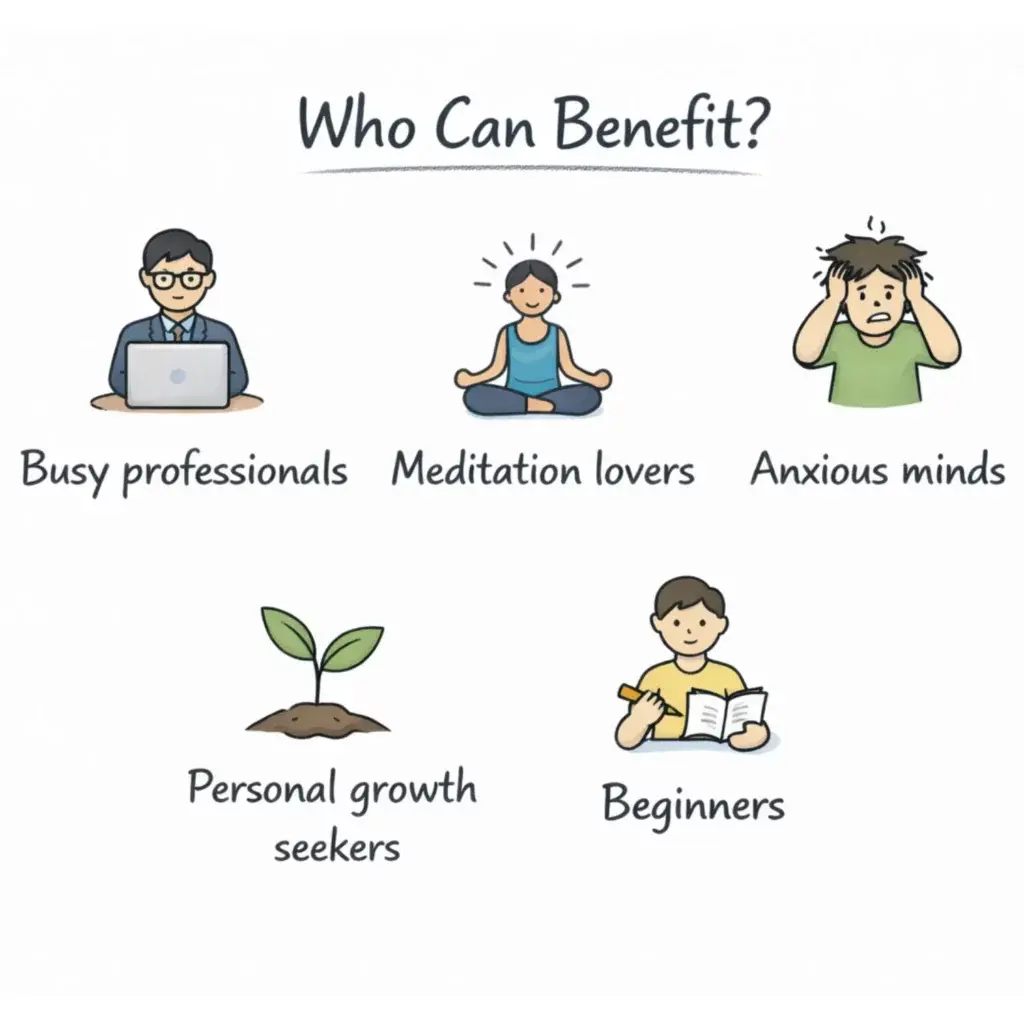
- Beginners: If you’ve never journaled, guided prompts offer a clear starting point and help you build the habit without overthinking.
- Busy people: Even five minutes of writing can help ground your mind, calm stress, and bring clarity when life feels hectic.
- People navigating stress, anxiety, or emotional overload: Journaling with awareness helps process feelings safely and cultivate self-compassion.
- Anyone seeking self‑understanding or growth: Through regular reflection, you can spot patterns, values, triggers and then gently realign with what matters most.
- Existing meditation or mindfulness practitioners: Pairing a journal with meditation or mindful practices deepens awareness in a profoundly positive way.
If any of these resonate with you, a guided mindfulness journal may just be what you need as a powerful companion for your inner journey.
How to Use a Guided Mindfulness Journal (Without Overthinking It)
Create the Right Setting
- Choose a quiet, comfortable spot where you feel safe and undistracted. A cup of tea, soft lighting, or a candle can help signal to your brain that it’s time to reflect.
- You don’t need a lot of time. Even just 5 minutes works. The goal isn’t long, dawn out entries; it’s awareness, presence, honesty.
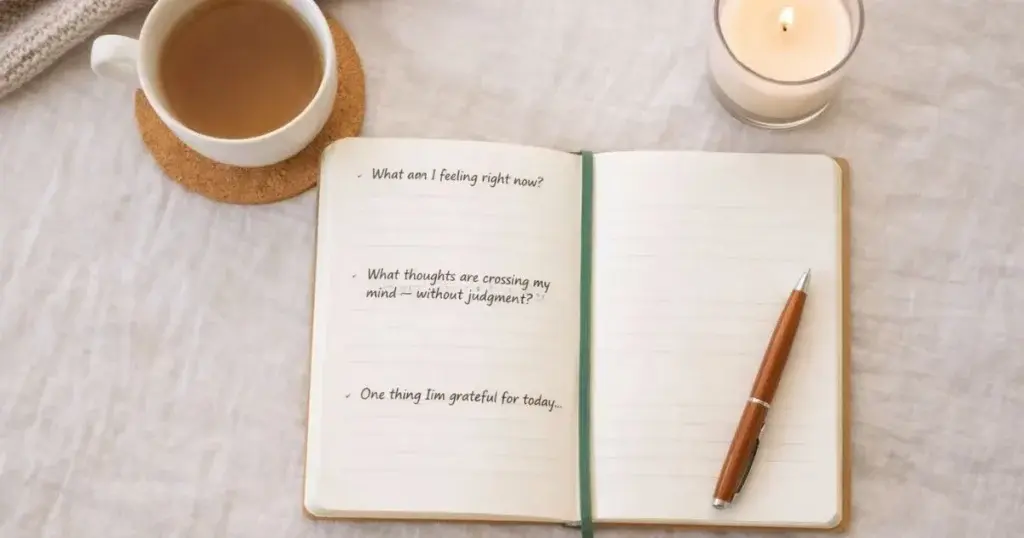
- Pair the journaling with a simple mindfulness ritual if you like. Begin with a few deep breaths, a short meditation or a personal grounding practice. This helps set a calm tone before writing.
Establish a Simple Habit
- Pick a time that fits your daily rhythm: morning intentions, midday check-ins, or evening reflections. Write whenever feels natural and sustainable for you.
- Use the prompts as gentle invites. Not rigid demands. If a prompt doesn’t feel right or comfortable one day, skip or adapt it. The point is presence, not perfection.
- Reflect on what comes up. No need to “solve” anything. Let each entry be a moment of simply observing thoughts, feelings, or subtle inner shifts we may not notice otherwise.
Example Entry Structure
Here’s a sample way you might structure a quick guided journal entry:
- “What am I feeling right now?”
- “What thoughts are arising, without judgment?”
- “One thing I’m grateful for today (big or small).”
- “One thing I’m noticing about my body / energy / mood.”
Over time, this consistency builds awareness, helps you track emotional patterns, and feeds a habit of gentle self‑inquiry.
My Favorite Guided Mindfulness Journals (Tried + True)
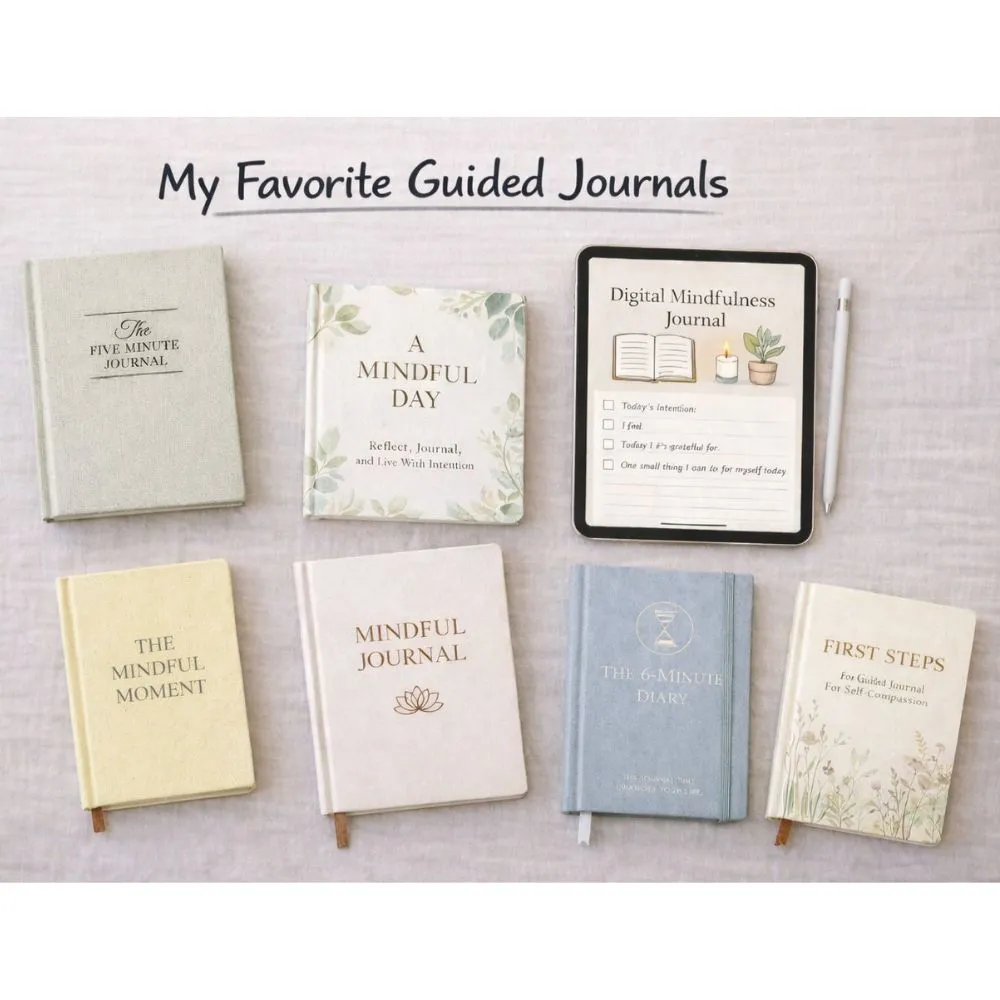
If you want a ready-to-use guided journal rather than creating your own, there are great options out there. Many guided journals balance structure and flexibility; offering structured prompts while leaving room for authenticity and reflection.
Check Out This Article For Helpful Journaling Tools!
Some of the most loved journals include prompts for gratitude, daily reflection, self-care, emotional awareness, and overall growth. Their pages may be undated so you can journal at your own pace. They may rotate themes to stay fresh and invite both positive and challenging emotions with self‑compassion.
Whether you go physical or digital, the core idea is the same: a guided structure to help you turn awareness into writing and writing into growth.
Create Your Own Guided Journal (If You’re Feeling Crafty)
Don’t see “the perfect journal” or just want something completely personal? No problem. You can easily turn a blank notebook into a guided mindfulness journal.
Here’s how to get started:
- Start with an intention: “This journal is my safe space for awareness and honest reflection.”
- Choose or write down 5-10 prompts that resonate with you (see the next section for ideas).
- Make space for reflection, without pressure: maybe five to six lines per question, or free space if you prefer.
- Keep it flexible. Skip prompts when they don’t feel right and them later.
- Revisit often: Since awareness evolves, prompts may hit differently over time.
Example prompts to try:
- What am I feeling right now – physically and emotionally?
- What thoughts are circling in my mind?
- What is one thing I’m grateful for today – and why does it matter to me?
- What is one need or longing I have right now?
- If I could speak to my future or past self, what would I say?
- What small action can I take today that aligns with my values?
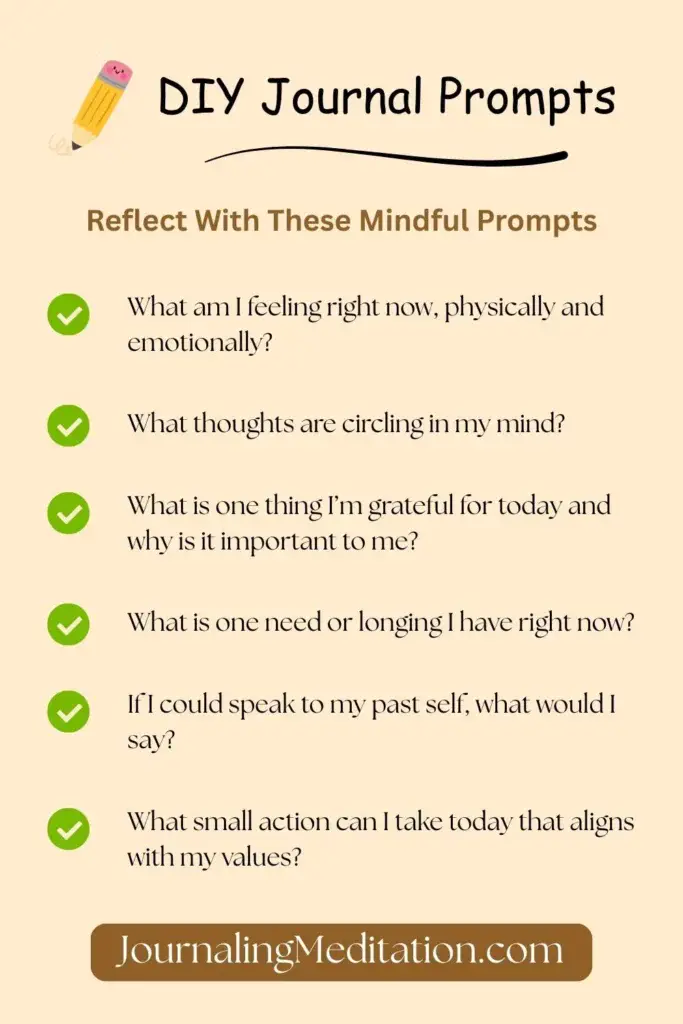
These questions, simple yet deep, can help guide you toward more mindful reflections, inner clarity, and a stronger connection to yourself.
The Real Gift of a Guided Mindfulness Journal
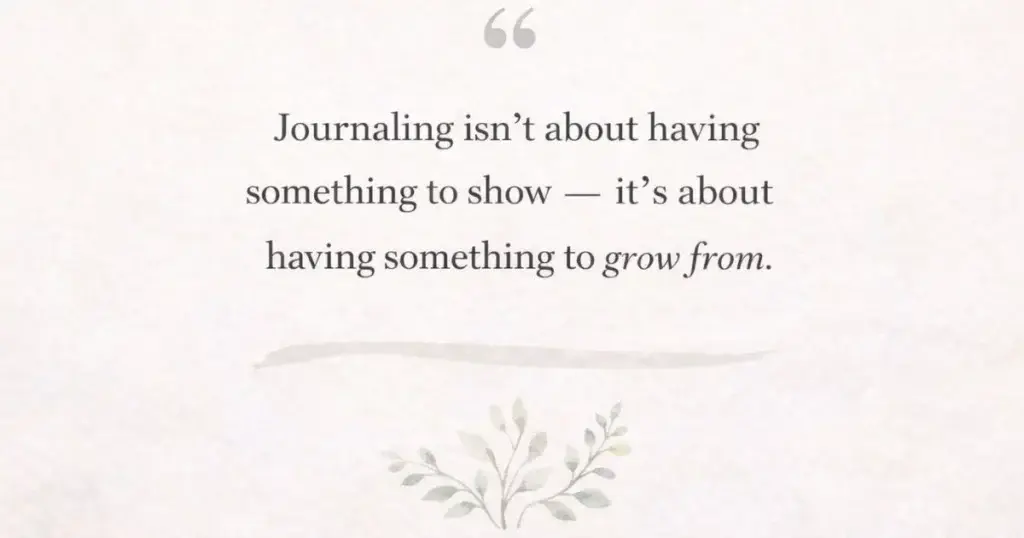
I’ve often thought that journaling isn’t about having something to show – it’s about having something to grow from. A guided mindfulness journal is that kind of soil: structured enough to support you, gentle enough to let you be you.
Over time, small, consistent entries become a map of your inner world. You see your moods, your triggers, your growth. You will learn to meet yourself with kindness, curiosity, and acceptance. And in doing so, you’ll become a habit of presence that carries beyond your entries.
Whether you’re brand new to journaling or a seasoned writer, I encourage you to try this: start small, stay curious, and let each prompt be a step toward deeper awareness.
FAQ – People Also Ask (PAA) about Guided Mindfulness Journals
Here are some common questions people have when it comes to using a guided mindfulness journal. And straightforward answers to help you out.
Why this FAQ section? Because many folks searching for guided mindfulness journal want quick answers to practical questions and I want this post to address them clearly.
📓 What is a guided mindfulness journal?
A guided mindfulness journal is a journal that uses prompts, questions, or structured entries to support mindful reflection. It’s a practice that combines the principles of mindfulness (presence, awareness, non‑judgment) with the act of journaling.
Rather than leaving you left alone to stare at a blank page, a guided journal gives you a starting point, inviting you to explore emotions, values, gratitude, inner thoughts, and personal patterns with curiosity and compassion.
🧠 What are the benefits of using a guided mindfulness journal?
- Reduces stress and anxiety: Writing helps organize thoughts and understand emotions, while mindful reflection encourages calm awareness.
- Builds self-awareness & emotional insight: By observing feelings, thoughts, and experiences over time, you may notice patterns, triggers, and opportunities for growth.
- Supports mental well‑being and personal growth: Journaling can help you align with your values, process emotions, and cultivate self‑compassion. This can all contribute to long-term balance and clarity.
📅 How often should I use a guided mindfulness journal to get benefits?
There’s no strict rule. And that’s part of the point. The beauty of a guided mindfulness journal is that it adapts to you. That said:
- Even just a few times a week for just a few minutes a day can be meaningful. Consistency counts more than volume, so shoot for a regular schedule above all.
- Use it when you feel overwhelmed, stuck, or want clarity, but also in quiet moments when nothing seems urgent.
- Treat it as a gentle ritual, not a task. Over time, you may find a rhythm that naturally supports your mind and mood.
What Do You Think?
If you decide to try a guided mindfulness journal, how will you start? Morning pages, bedtime reflections, or maybe a weekly check‑in?
Drop a comment below with what time feels right for you, or share a prompt you’re curious to try. Let’s build this mindful journaling community together and thanks for reading! 🧘♀️