Updated: May 2026
If you’ve ever tried meditation and thought:
“I can’t stop thinking.”
“I must be doing this wrong.”
“Why is this harder than what everyone makes it out to be?”
…you’re not alone.
That really can be how meditation feels for a lot of beginners at first.
I think one of the biggest misconceptions about meditation is that it’s supposed to instantly make you feel calm, peaceful, and completely free of thoughts. But for most, the beginning feels more like sitting with a mind that just seems to get louder the quieter you get.
And that’s normal.
But meditation is not about becoming a perfectly calm person overnight. And it’s not about shutting your brain off or forcing yourself into some peaceful state you can never maintain.
Truth is, meditation is really about learning how to simply notice what’s going on in the mind without getting caught up in every thought, distraction, or emotion that may show up.
That takes practice.
The good news is you don’t need the perfect meditation space, super long sessions, expensive equipment, or years of experience to start building a meditation habit that actually helps and sticks.
You just need some simple guidance to begin.
This guide will help walk you through exactly that.
TL;DR: How to Start Meditation Without Overcomplicating It
Starting your own meditation routine can be easier than you think.
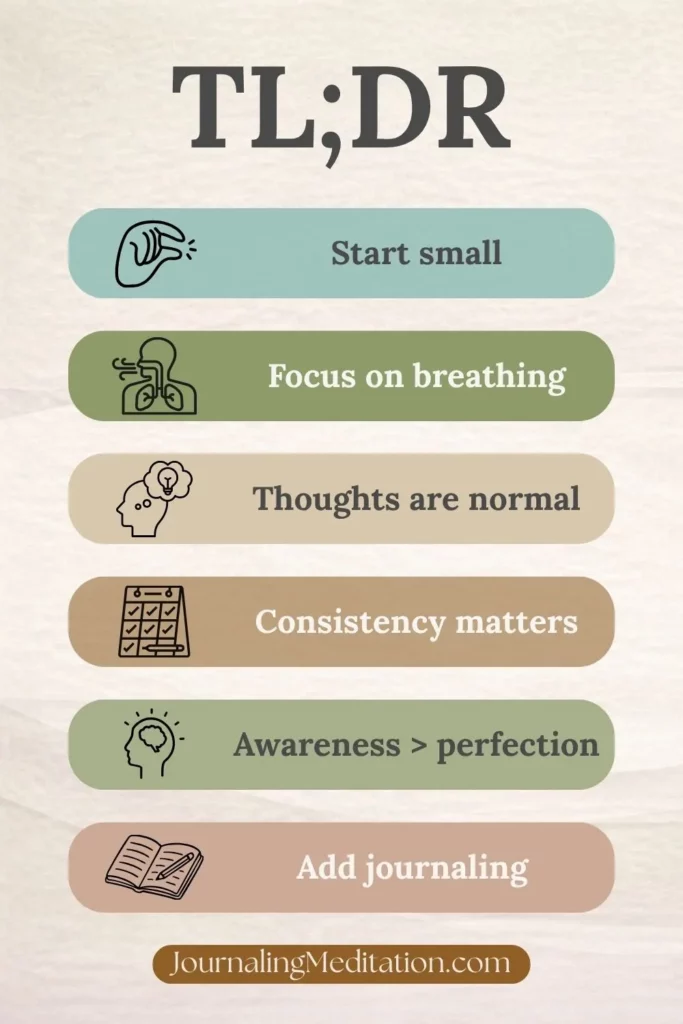
- Start with just a few quiet minutes
- Your mind does not need to become completely blank
- Focusing on your breathing is enough to begin
- Consistency matters more than long sessions
- Distraction and wandering thoughts are completely normal
- Meditation is about awareness, not perfection
- Pairing meditation with journaling can deepen reflection and mindfulness
Even a few intentional minutes can create more awareness, calm, and clarity than most beginners expect.
What Meditation Actually Is (And What It Isn’t)
Meditation can easily be misunderstood.
A lot of people imagine it as:
- “emptying your mind”
- becoming instantly peaceful
- sitting perfectly still without thinking
But that’s not really how it works.
Meditation is more about awareness than emptiness or silence.
It’s the practice of gently bringing your attention back to the present moment whenever your mind wanders, which it absolutely will, and often.

Sometimes that attention might be pulled toward:
- physical sensations
- sounds
- emotions
- thoughts passing through your mind
The goal isn’t to just stop thoughts from happening.
The goal is training yourself to notice them without getting caught up in them.
It’s important to understand the difference because many beginners think: “If I’m still thinking, I’m failing.”
You’re not.
Thinking is what minds do and you’re not going to stop it. Meditation simply teaches you how to notice those thoughts without attaching to them.
Why Meditation Helps Many People Feel Calmer
Meditation doesn’t magically remove stress from your life, but it can make a difference in how it affects you.
Your responsibilities, difficult emotions, and unanticipated struggles don’t disappear just because you sit quietly for a few minutes.
What meditation can do, though, is change how you respond to all of that internal noise.
For many people, meditation creates:
- a needed pause
- a little breathing room or space
- a chance to slow down and process
I’ve noticed that even short meditation sessions can help me recognize how scattered or overstimulated I’ve become without realizing it. Some people pray. I meditate. But you can certainly do both!
Some things in modern life keep most of us “on” almost all the time:
- notifications
- constant information
- stress
- overthinking
- multitasking
Meditation interrupts that cycle. And it doesn’t need to be long to be effective.
And over time, many people start noticing benefits like:
- feeling more grounded
- reduced stress
- better emotional awareness
- improved focus
- less mental clutter
- more patience with themselves
That doesn’t mean meditation feels relaxing every single time. Sometimes it feels uncomfortable, especially in the beginning. And you will also feel restless as well as emotional.
Those moments are there to help build awareness.
If you’re curious about what’s happening behind some of these effects, I take a closer look at the science of meditation and what researchers have learned about the mind and body.
Common Beginner Meditation Misconceptions
One thing I wish more beginners would understand is that struggling with meditation is not proof that you’re “bad” at it.
Most people start with unrealistic expectations which always leads to disappointment.
“I need to stop thinking.”
Probably the most common misconception.
Meditation is not the absence of thoughts. It’s being aware of the thought without doing anything about it.
Your mind wandering is part of the practice, not a reason to blame yourself or think you’re failing.
“I need long sessions for meditation to work.”
You don’t need to meditate for 45 minutes every morning to benefit from meditation.
Honestly, beginners usually do better starting with:
- 2 minutes
- 5 minutes
- 10 minutes max
Showing up for yourself consistently matters much more than how long you meditate.
“Meditation should feel peaceful every time.”
Sometimes meditation feels calm.
Sometimes it just shows you how stressed, distracted, or emotionally overwhelmed you actually are.
Both experiences are normal.
“I need a perfect meditation setup.”
A quiet room can help, but you don’t need:
- expensive cushions
- An intricate lighting set-up
- a dedicated meditation studio
You can meditate where you are with what you have:
- in a chair
- on your couch
- on the floor
- during a walk
- in your car before work
Simple works, too. Sometimes best.
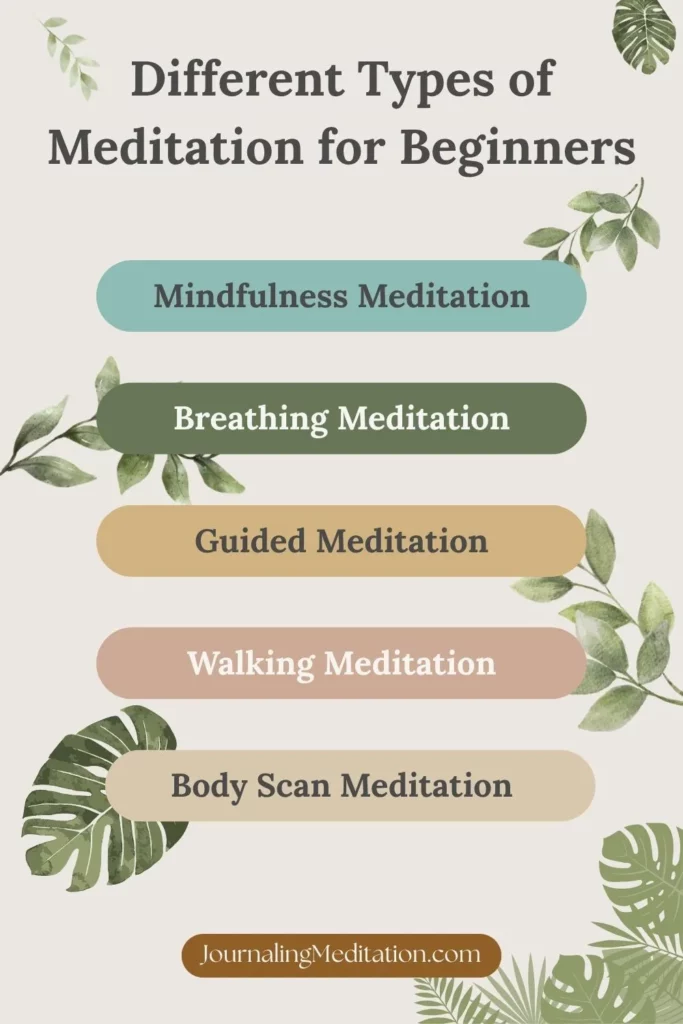
Different Types of Meditation for Beginners
Meditation doesn’t have to look one certain way and there isn’t a one-size-fits-all style.
There are several beginner-friendly types of meditation, and trying different types can help you find what feels most natural or what works best for you.
Mindfulness Meditation
This is one of the simplest and most approachable forms of meditation.
The practice usually involves:
- focusing on your breath
- noticing thoughts
- gently returning attention to the present moment
It sounds simple. And it is. But that doesn’t mean it’s easy. The good news is that it changes with practice.
Mindfulness meditation is often a great place for beginners to start because there’s very little pressure to be perfect.
Breathing Meditation
Breathing meditation focuses specifically on your breath.
You might:
- count breaths
- notice inhales and exhales
- pay attention to how breathing feels physically
This style works especially well when:
- Extremely stressed
- feeling scattered
- you need grounding quickly
Simple breathing awareness can be surprisingly calming. Next time you’re caught up in something overwhelming, try to remember to just take a deep breath. You’ll be amazed at how effective something so simple can be.
Guided Meditation
Guided meditation is the practice of listening to someone lead a session.
This can feel much more approachable for beginners because:
- there’s structure
- there are instructions for you attention
- you don’t feel completely alone
Guided meditation apps, YouTube, and audio meditations can all be helpful places to start.
Unguided Meditation
Unguided meditation is just more self-directed.
You simply sit with your breath and awareness without direction or instruction.
Some people eventually prefer this because it feels:
- simpler (no equipment needed)
- less distracting
- more personal
But guided meditation is often easier at first.
Walking Meditation
Meditation doesn’t always require sitting still.
Walking meditation is just what it sounds like but you do it while being aware and paying attention to:
- movement
- breathing
- surroundings
- physical sensations
This can be helpful if you feel fidgety during traditional seated meditation.
Body Scan Meditation
Body scan meditation involves bringing awareness slowly through different parts of your body in a methodical process.
This style can help:
- reduce physical tension
- increase body awareness
- support relaxation before sleep
This meditation is often used in stressful situations.
How to Start Meditating (Step-by-Step)
A positive meditation practice becomes much more accessible when you stop trying to turn it into the perfect experience.
Here’s a simple beginner-friendly process.
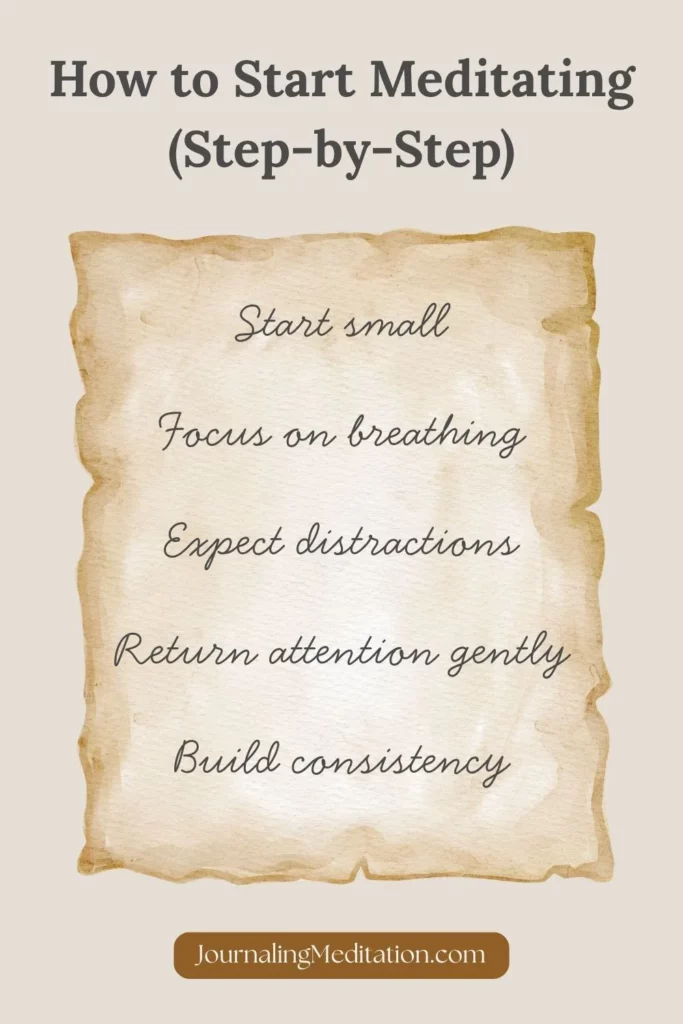
Step 1: Start Small
You don’t need to jump into long sessions right away.
Try starting with:
- 2 minutes
- then 5 minutes
- eventually, maybe 10 minutes
The goal is building practice, not mastery.
Small, consistent sessions are more effective than overwhelming yourself and quitting after three days.
Step 2: Focus on Your Breathing
Your breath can be your anchor and something you can return your attention to time and time again. It gives your attention a home.
Try simply noticing:
- the inhale
- the exhale
- the sensation of breathing
That’s enough.
You don’t need complicated techniques to begin.
Step 3: Expect Distractions
Your thoughts will wander.
You’ll suddenly remember:
- emails
- random conversations
- things you forgot to do three weeks ago
This is completely normal.
And it’s important to understand that meditation is not about stopping distractions thoughts.
It’s about gently noticing when your attention wandered and bringing it back to the present moment without blame or judgment.
Step 4: Gently Return Your Attention
This is really the core of meditation.
- notice the distraction
- return your attention
- repeat
The simple part (not easy) is you just do this over and over.
Not forcefully and not aggressively.
Gently.
Step 5: Build Consistency Slowly
Meditation works best as a steady, consistent practice rather than an intense short-term “meditation cram”.
Just a few quiet minutes once a day is enough to begin building awareness.
You do not need to become someone who meditates for an hour every morning to benefit from meditation.
What to Do When Your Mind Won’t Slow Down
This is one of the biggest frustrations beginners will experience. You sit down to meditate and suddenly your brain feels louder than ever.
That doesn’t mean meditation isn’t working.
Often, it simply means you’re finally noticing how active your mind already was.
If your thoughts feel overwhelming during meditation:
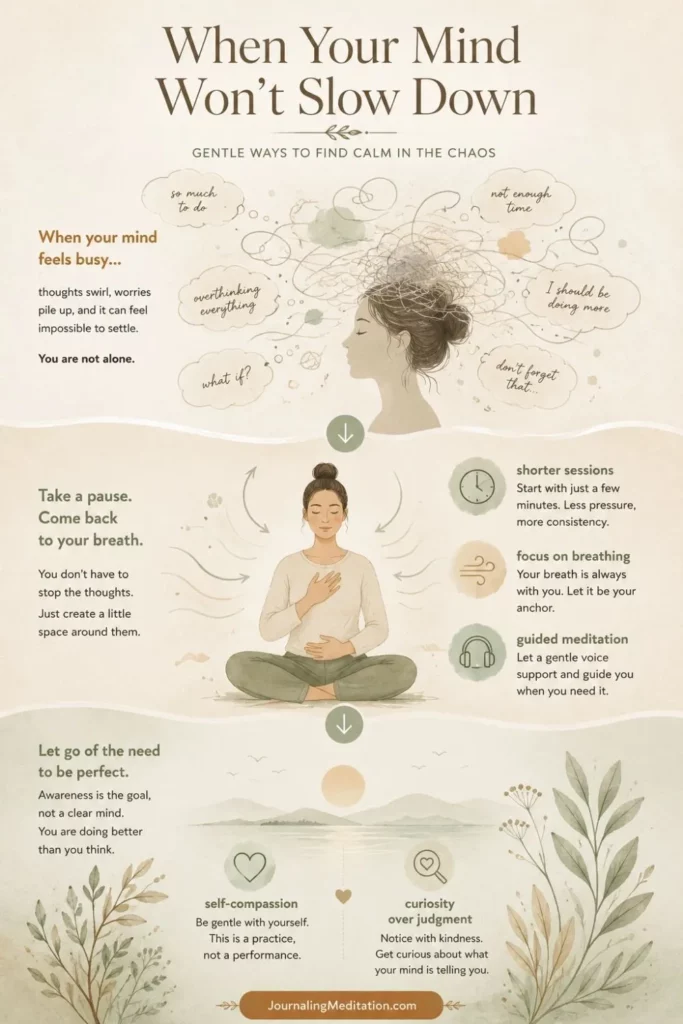
- try a shorter session
- focus only on breathing
- try guided meditation
- practice walking meditation
- be self compassionate
If you need to settle yourself before trying to meditate, these spiritual grounding techniques can help bring your attention back to your breath, body, and surroundings first.
One thing that helped me personally was understanding meditation is not about forcing calm. It’s allowing the calm to come to you.
Trying to forcefully “shut your brain off” only creates more frustration. Try holding water as tight as you can. It’s the same result
Instead, approach meditation with curiosity and notice:
- thoughts
- tension
- distractions
- emotions
without treating them like the enemy.
That change in perspective can turn the entire experience around.
Common Meditation Mistakes Beginners Make
Most meditation mistakes come from trying too hard. Patience can be one of your greatest allies.
Expecting immediate transformation
Meditation is very subtle at first.
The benefits usually build gradually through consistency. Keeping a journal can help you see the progress.
Judging yourself constantly
Beginners often think:
“I’m terrible at meditation.”
But noticing distraction is actually part of meditation.
Overcomplicating everything
You don’t need:
- special techniques
- expensive apps
- the “right” equipment
- spiritual expertise
Simple breathing awareness is enough to start.
Quitting too quickly
Meditation feels awkward before it feels natural. You’re sitting alone with yourself and your thoughts, most likely aware of it for the first time.
That’s completely normal.
But an important part of meditation is showing up for yourself, so even just 2 minutes can make a difference.
Comparing yourself to others
Your practice does not need to look like someone else’s. And it never will
Meditation is personal. Make it yours.
How Long Should Beginners Meditate?
This question comes up all the time.
And honestly? There’s no right answer for everyone.
For beginners:
- 2–5 minutes is enough
- 10 minutes is great
- consistency matters more than how long your session is
Meditating briefly but regularly works much better than forcing long sessions that you eventually dread.
You want sustainability, not intensity.
Guided vs Unguided Meditation
Both types of meditations are extremely helpful.
Guided Meditation Pros
- easier for beginners
- more structure
- less intimidating
- helps keep attention focused
Unguided Meditation Pros
- quieter
- simpler
- flexible
- more personal
Many beginners start with guided meditation and slowly experiment with unguided meditation later.
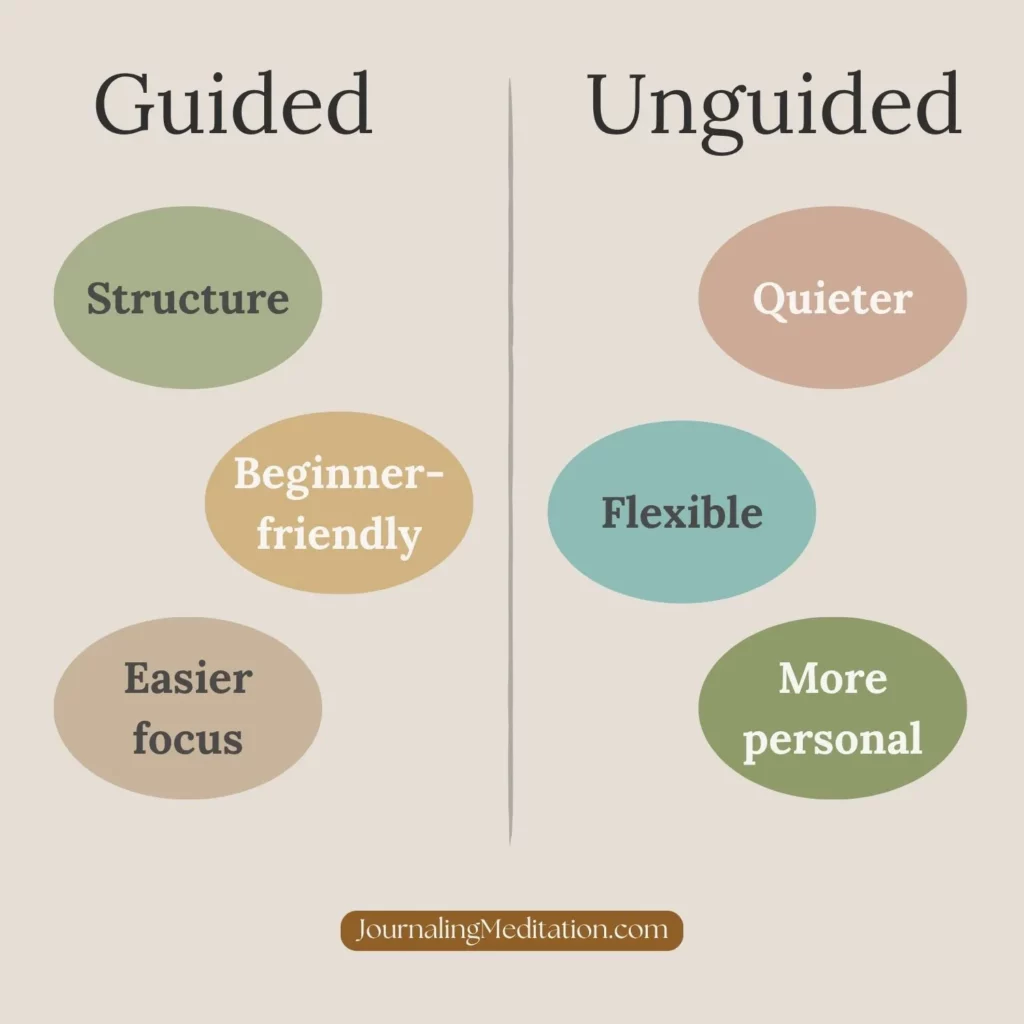
There’s no “correct” type. Only preference.
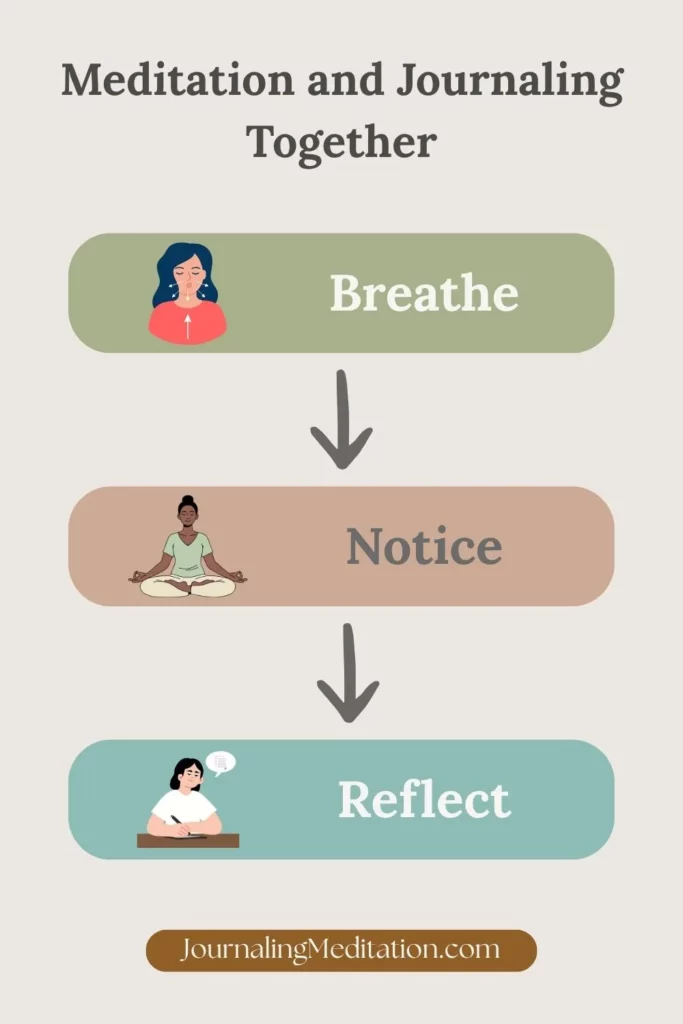
Meditation and Journaling Together
Meditation and journaling work surprisingly well together because they support different parts of self-awareness.
Meditation helps you:
- slow down
- become aware
- be present
Journaling helps you:
- process
- explore thoughts and patterns more deeply
- reflect
If the writing side of that combination is new to you, my Journaling for Beginners guide walks through how to start journaling, what to write, and how to build a practice you can stick with.
If you want to track those reflections over time, a meditation journal gives you a dedicated place to record what happens during and after your sessions.
A simple mindfulness routine might look like:
- Sit quietly for a few minutes
- Focus on breathing
- Notice your thoughts and emotions
- Journal briefly and unedited afterward, or use meditation journal prompts when you’re not sure what to write.
This combination can feel especially grounding during stressful or emotionally overwhelming periods.
It also pairs naturally with:
depending on what you’re exploring emotionally.
Simple Meditation Routine for Beginners
If you want a very simple starting point, try this:
Beginner Meditation Routine
1. Sit comfortably
No perfect posture or equipment needed.
2. Take a few slow breaths
In through the nose and out through the mount, slowly and intentional.
3. Notice your breathing
Bring your attention to your inhale and exhale.
4. When your mind wanders, return attention
Without criticizing yourself, bring your attention back to your breath.
5. Sit for 2–5 minutes
That’s enough to start.
6. Reflect briefly afterward
You can even journal a few thoughts if it helps.
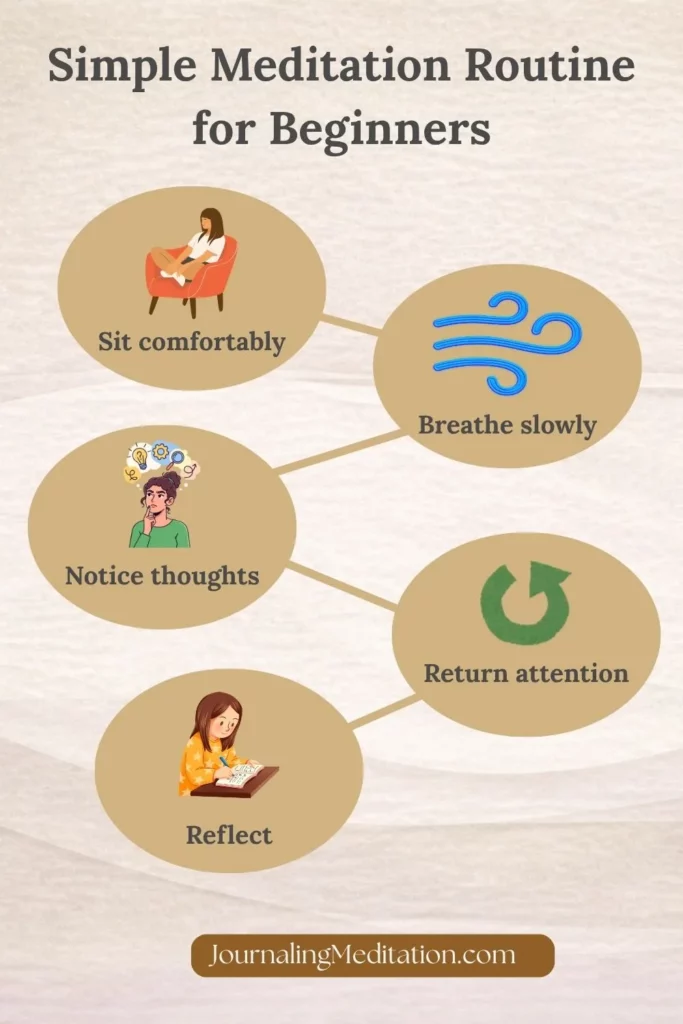
Simple routines are usually the easiest to keep going.
What If Meditation Doesn’t Feel Relaxing?
This is important because many people automatically assume something is wrong when meditation feels uncomfortable.
Sometimes meditation brings awareness to:
- stress
- emotional tension
- difficult thoughts
- restlessness
That doesn’t mean the practice isn’t working. Sometimes awareness itself can feel uncomfortable before it feels calming.
If meditation feels emotionally intense:
- shorten sessions
- focus on grounding
- try walking meditation
- use guided meditations
- keep expectations gentle
Meditation should support awareness. Not become something you make yourself to do perfectly. Be gentle with yourself and your practice will unfold as it should.
Helpful Meditation Tools and Resources
You really don’t need much to start meditating. Just you, your breath and a few minutes.
But a few simple tools can help make the experience feel more comfortable.
Helpful beginner tools:
- comfortable headphones
- calming meditation music
- binaural beats
- meditation cushions
- journals for reflection
- guided meditation apps
The most important thing, though, is consistency. Not gear.
A few minutes of quiet matters more than having the “perfect” meditation setup.

Meditation for Beginners FAQ
🧘 Is meditation supposed to stop thoughts?
No. Meditation is about noticing thoughts without getting completely carried away by them.
⏱️ How long should beginners meditate?
Even just 2–5 minutes is enough to start building practice of consistency and awareness.
😟 Why does meditation feel hard sometimes?
Because slowing down and being alone your thoughts can feel uncomfortable. That’s completely normal.
🫁 Is focusing on breathing enough?
Yes. Simple breathing awareness is one of the most effective beginner meditation techniques. I use it every day.
Your breath isn’t the only anchor you can use, either. Repeating one of these mantras for meditation can give your attention another simple place to return when your mind wanders.
🎧 Are guided meditations better for beginners?
Most times, yes. Guided meditations provide structure and direction and can help make the practice feel less intimidating.
📓 Should I journal after meditating?
You can, but it’s not necessary. That being said, journaling after meditation can help deepen reflection, notice patterns and improve emotional awareness.
Final Thoughts: Meditation Doesn’t Need to Be Perfect to Help
One of the most helpful things I’ve learned about meditation is that it doesn’t need to feel deep or profound to be significant.
Some sessions feel calm.
Some feel restless.
Some feel emotional.
Some feel ordinary.
That’s all part of the practice.
Meditation isn’t about becoming a perfectly peaceful person.
It’s about creating small moments where you pause long enough to notice what’s happening in and around you instead of constantly reacting automatically.
And honestly, even a few quiet minutes can matter more than people think.
You do not need:
- perfect focus
- long sessions
- advanced techniques
- a completely silent mind
You just need to begin.
I’d genuinely love to know:
What’s been the biggest challenge, or surprise you’ve experienced while trying meditation for the first time?