You know that feeling when your brain just won’t shut up? Thoughts bouncing around like ping pong balls, heart racing for no good reason and you just start sweating for no particular reason? That’s anxiety. And it’s exhausting.
But here’s the good news: there’s a simple, research-backed tool that can help calm your mind and regulate your emotions. Journaling.

That being said, we’re not just talking about every day affirmations or “Dear Diary” entries. We’re talking about the real, evidence-based science of expressive writing, and how it helps your brain (and body) manage anxiety.
Writing for Mental Health: What the Science Says
One of the most well-known researchers in this field, Dr. James Pennebaker, discovered something pretty incredible back in the 1980s: writing about your thoughts and feelings for just 15–20 minutes a day can lead to measurable improvements in physical and mental health.
People who practiced expressive writing reported:
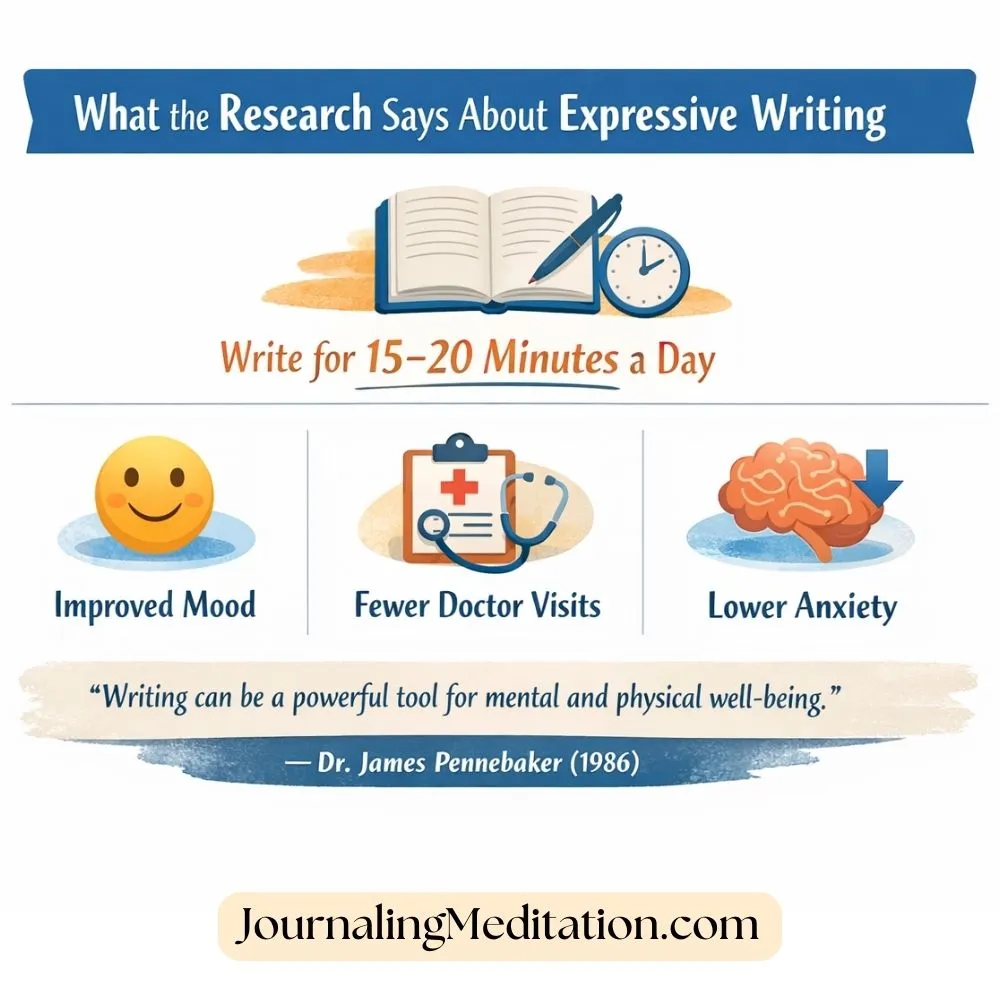
- Lower anxiety and depression
- Improved mood and emotional resilience
- Even fewer doctor visits!
Why? Because when we write, we are able to process emotions, label experiences, and organize chaotic thoughts. This helps our brain make sense of stress and “move” it out of our nervous system. And that’s exactly what anxiety needs. A safe place to go.
How Journaling Calms the Anxious Brain
Let’s jump into some science for a bit.
When we’re anxious, the amygdala, the part of the brain responsible for fear and stress, goes into overdrive. But when we take the time and label emotions through writing, studies show that the prefrontal cortex (the rational part of the brain) kicks in and helps soothe that stress response.
Basically, journaling helps you move from panic to problem-solving. If anxiety feels like a storm in your mind, journaling can be your anchor.
And if you want a deeper dive into how journaling helps with overall stress, not just anxiety, I break that down here:
👉 Does Journaling Help with Stress?

How to Start Expressive Journaling for Anxiety Relief
Here’s how to do it:
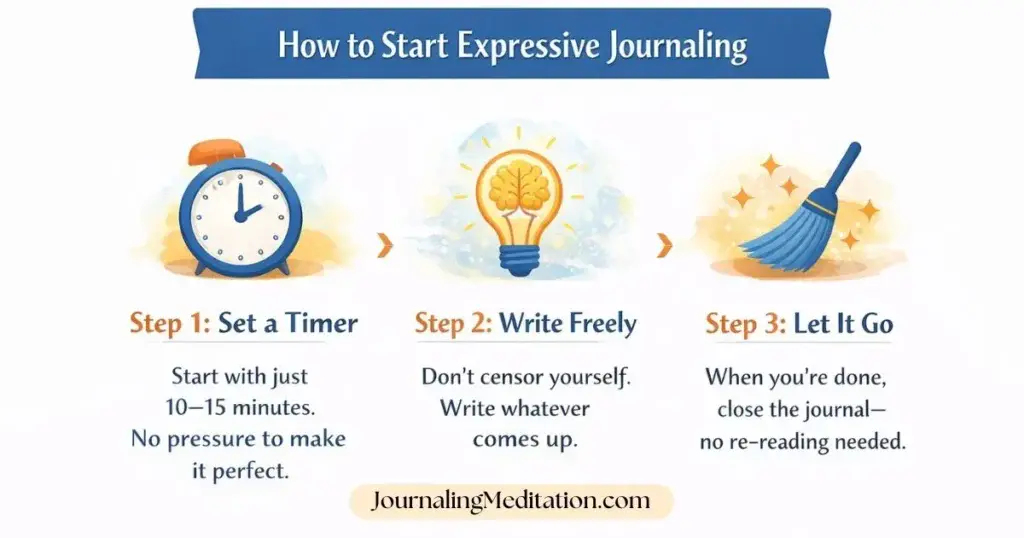
⏰ Step 1: Set a Timer
Start with just 5-10 minutes. You can always add time to your session. No pressure to make it perfect.
💡 Step 2: Write Freely
Don’t censor yourself. Write whatever comes up. Your fears, frustrations, random thoughts, anything. This is for you, and can help with discovering underlying issues.
🧹 Step 3: Let It Go
When you’re done, close the journal. You don’t even need to read it back. The benefit is in the process, not the product.
FAQ: Journaling for Anxiety Relief
✍️ Can journaling actually help with anxiety disorders?
Journaling isn’t a cure, but it’s a powerful tool in helping to manage anxiety symptoms. Many therapists recommend expressive writing as a supportive practice alongside other treatments like CBT or medication.
🧠 What should I write about when I feel anxious?
Start with what you’re feeling in the moment. Try prompts like “What’s making me anxious right now?” or even “How are these feelings helping me right now?” Writing can help you reframe those thoughts and assist in calming the spiral.
🕔 Is there a best time of day to journal for anxiety?
Whenever your anxiety pops peaking is a great time to write. Many people journal in the morning to clear their mind, or at night to let go of racing thoughts before bed. But keeping it close at hand and using it when the moment presents itself can also be highly beneficial.
🌿 Need help building a calming habit?
Join my 21-Day Meditation Challenge to train your mind, reduce anxiety, and create a daily ritual that actually sticks.
Final Thought
Journaling isn’t just soothing. It’s scientifically proven to help your brain regulate emotions, lower stress hormones, and increase clarity.

So the next time your chest tightens or your thoughts won’t stop looping, grab a notebook. Let it out on the page so your mind doesn’t have to hold it anymore.
Want a deeper look at the connection between journaling and stress relief?
👉 Check out the full post here.
And if you’ve tried expressive writing, I’d love to hear about your experience. What’s helped you most when anxiety hits? Please, drop a comment and share your thoughts!