Choosing a meditation app should be simple. After all, isn’t meditation supposed to help us relax?
Yet searching for the best meditation app can leave you trying to compare dozens of options, hundreds of guided sessions and subscription plans that make inner peace feel surprisingly expensive.
Here’s what I recommend: Choose an app based on what you actually need.
Are you learning to meditate, struggling to fall asleep or trying to build a daily habit? Different apps serve different purposes. And different intentions require different apps.
In this guide, I’ll compare seven popular meditation apps, explain their strengths and share a simple seven-day test to help you choose without throwing any money away.
How I Evaluated These Meditation Apps
Instead of looking at apps based on popularity, I focused on how well their features matched common meditation goals.
My comparison looked at four things:
- Ease of use: Is the app a good fit for beginners?
- Features: Does it offer guided sessions, sleep content, timers, or structured lessons?
- Cost: Is there a useful free option, or does most content require a subscription?
- Practical value: Does the app help to make regular meditation easier?
This is a feature-based comparison, not a hands-on performance test. I haven’t independently tested each app or verified their latest subscription offers.
Features, pricing, and free trials can change, so I recommend checking each app’s official website before subscribing.
I also don’t rank these apps by health outcomes. Meditation apps can support a wellness routine, but they aren’t substitutes for professional care.
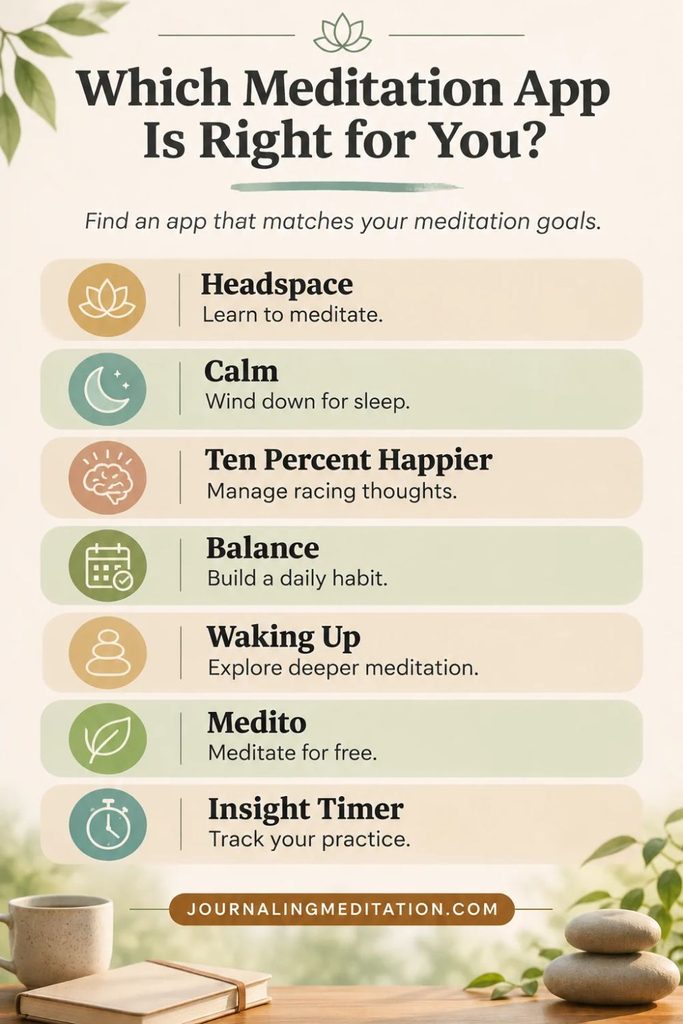
7 Best Meditation Apps at a Glance
| Your Goal | Best App to Consider | Main Strength |
|---|---|---|
| Learning meditation | Headspace | Structured beginner lessons |
| Better sleep | Calm | Sleep stories and relaxing audio |
| Racing thoughts | Ten Percent Happier | Practical, teacher-led instruction |
| Daily consistency | Balance | Personalized sessions |
| Deeper meditation | Waking Up | Mindfulness and philosophy |
| Free meditation | Medito | Free guided sessions |
| Tracking progress | Insight Timer | Timer, statistics, and free content |
Most of these apps cover several goals. The table just helps highlight where each one stands out.
1. Headspace: Best for Beginners
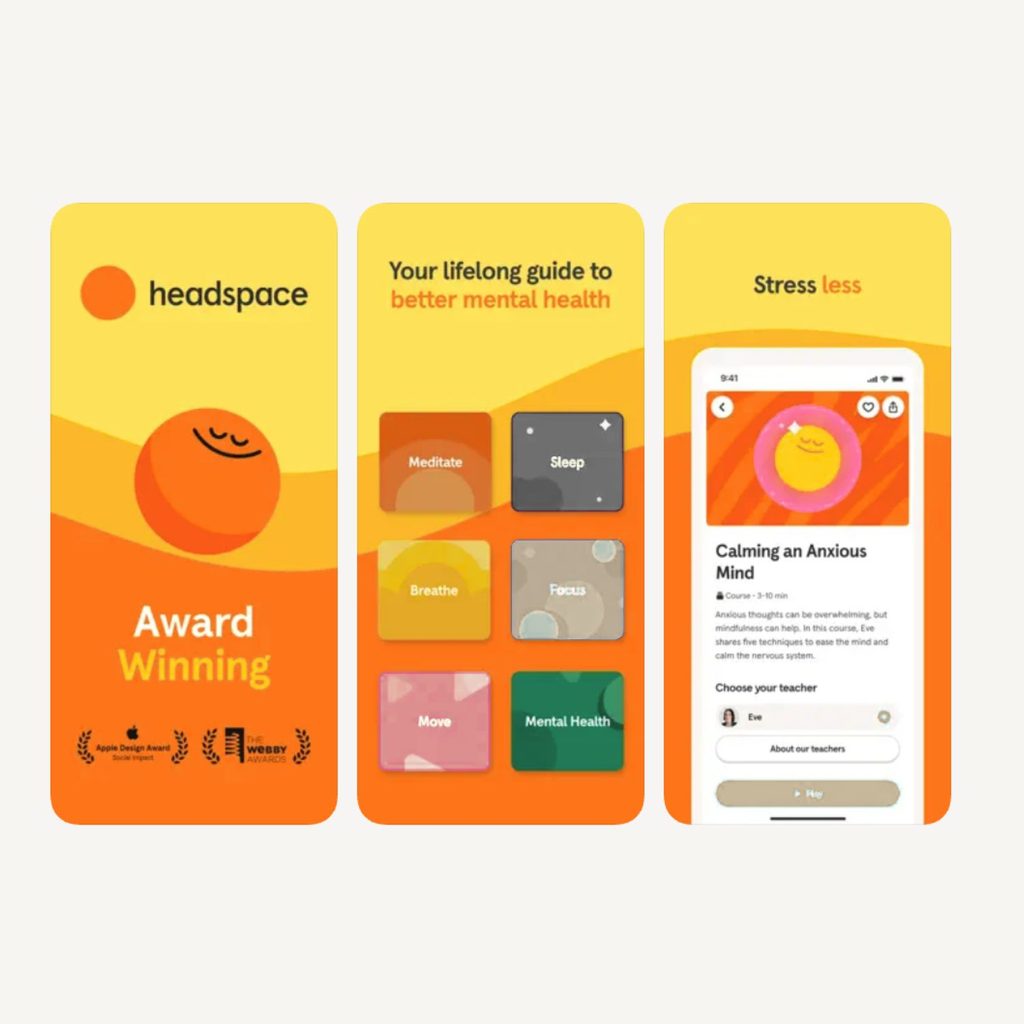
If you’ve never meditated, Headspace is a good starting point.
Its structured beginner lessons explain how to meditate, what to focus on, and what to do when your attention wanders.
I like this approach because beginners don’t need hundreds of choices. They need clear instructions and a place to start.
Why consider Headspace?
- Short, guided beginner sessions
- Step-by-step instruction
- Structured meditation courses
The downside: Full access generally requires a subscription.
My recommendation: Try the introductory content before paying. If you like the teaching style, Headspace could help you start your own routine.
You can also start with my Meditation for Beginners: Tips and Techniques guide.
Official website: https://www.headspace.com/
2. Calm: Best for Sleep
Ever lie down exhausted, only to have your brain suddenly remember everything on tomorrow’s to-do list?
That’s where Calm may be able to help.
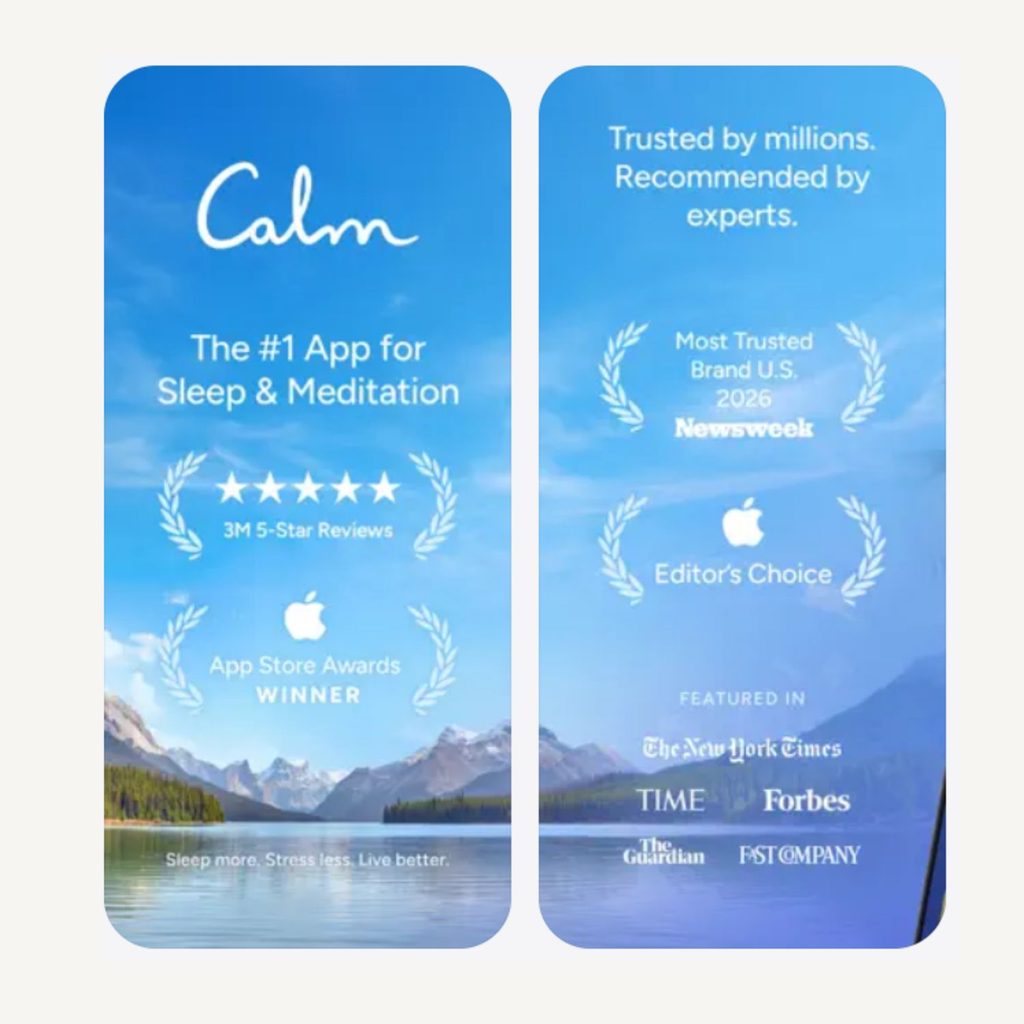
Calm is known for sleep stories, relaxing music, breathing exercises, and guided meditations designed to help you unwind.
You don’t necessarily need a traditional meditation session at bedtime. Sometimes, listening to something relaxing is enough to begin winding down.
Why consider Calm?
- Narrated sleep stories
- Relaxing music and soundscapes
- Guided breathing and relaxation sessions
The downside: Most content requires paid access.
My recommendation: Try to catch a free offer before subscribing. Some people love narrated stories; others prefer silence or background sounds.
Official website: https://www.calm.com/
3. Ten Percent Happier: Best for Racing Thoughts
If meditation sounds a little too mystical for your taste, Ten Percent Happier takes a more practical approach.
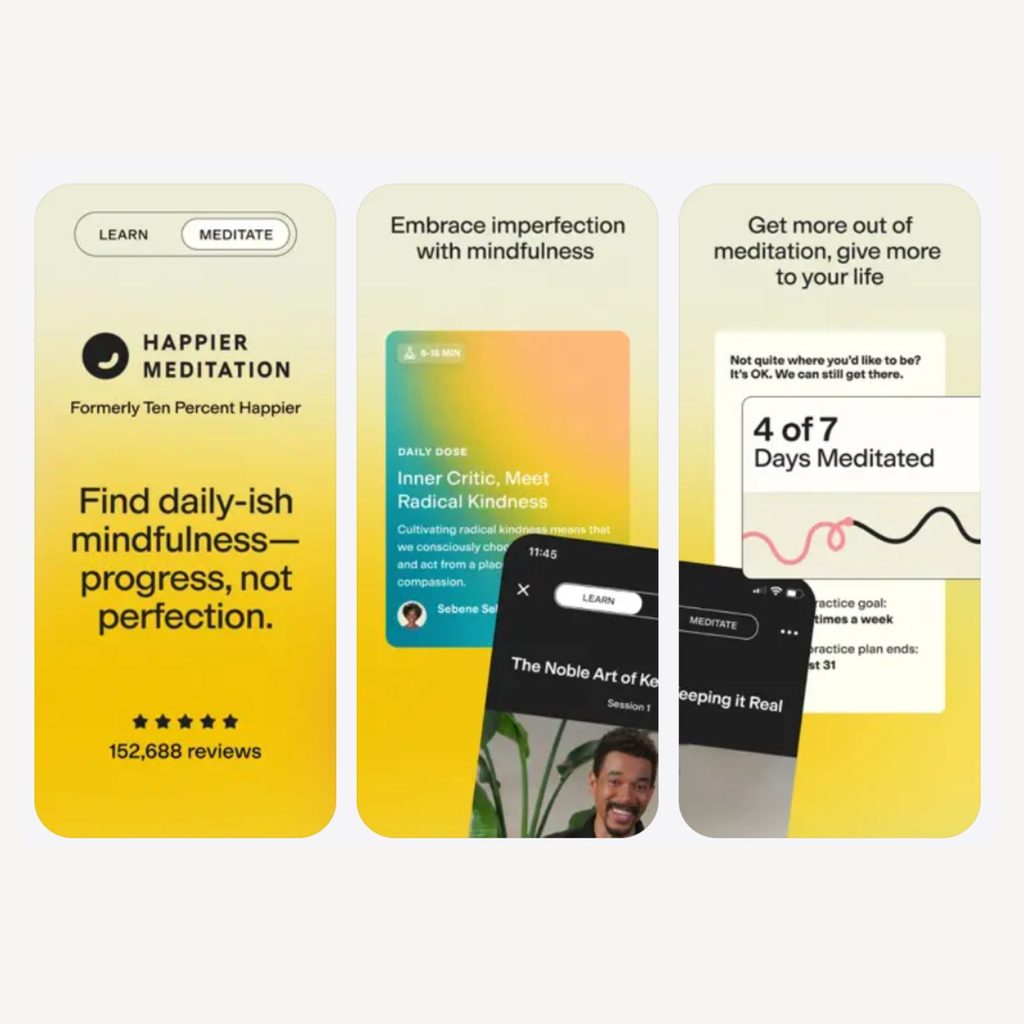
Its teacher-led lessons focus on meditation techniques and everyday challenges without feeling like you need a spiritual background.
The straightforward style shows meditation doesn’t need to be complicated to be useful.
Why consider Ten Percent Happier?
- Practical meditation instruction
- Experienced teachers
- Lessons focused on everyday concerns
The downside: Check its current course availability and subscription requirements.
My recommendation: Consider it if you’re looking for a clear explanations instead of a spiritual approach.
Remember, meditation can support stress management, but persistent anxiety deserves professional attention.
Official website: https://www.tenpercent.com/
4. Balance: Best for Daily Meditation Habits
Starting meditation is easy. Remembering to practice tomorrow can be the tricky part.
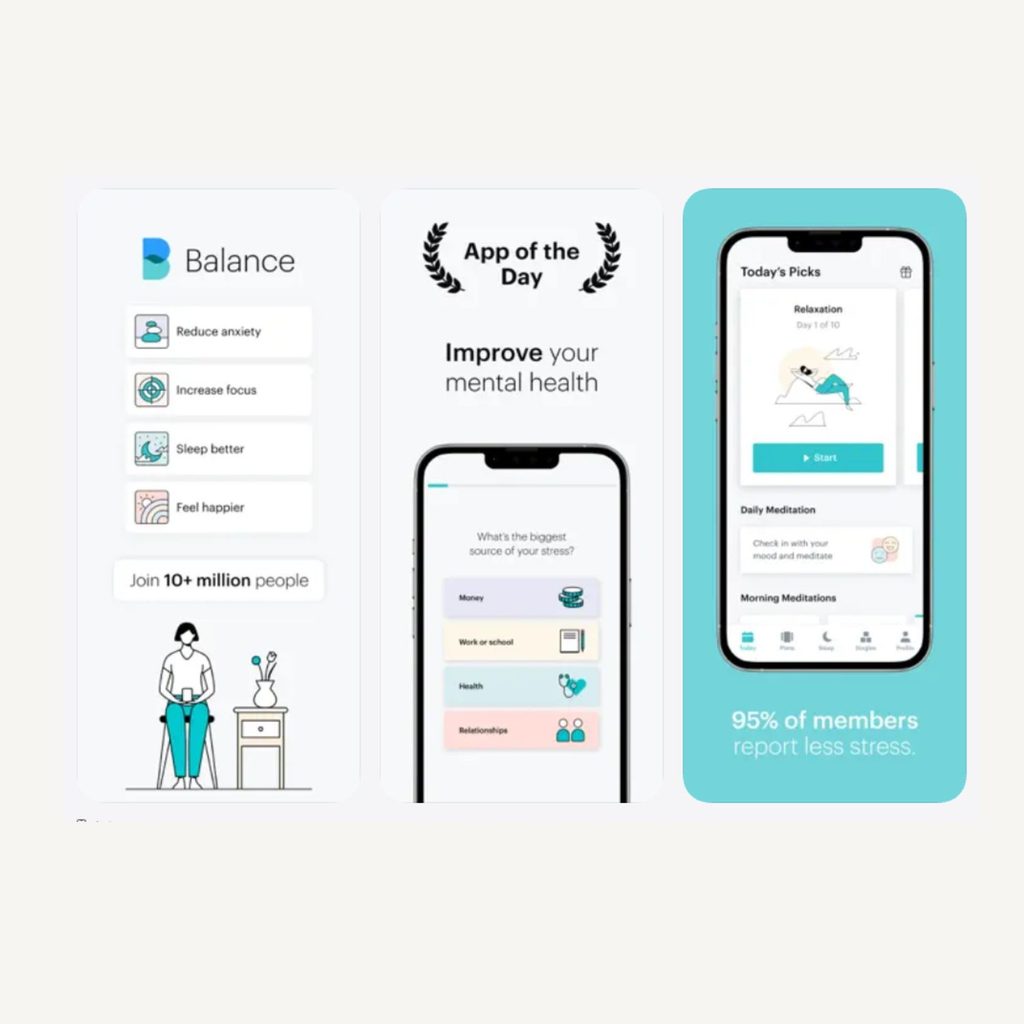
Balance focuses on personalized sessions based on your goals and experience.
Instead of searching through a large library, you can follow suggested daily meditations.
That means fewer decisions and one less excuse to skip your practice.
Why consider Balance?
- Personalized recommendations
- Daily guided sessions
- Beginner-friendly instruction
The downside: Subscription and promotional trial terms may change.
My recommendation: Balance is worth exploring if you want structure without spending time choosing what sessions to use.
Whatever app you use, try connecting meditation to an existing habit, such as drinking your morning coffee. It can help anchor a ritual.
And start with five minutes. You can always increase the time later.
Official website: https://balanceapp.com/
5. Waking Up: Best for Deeper Meditation

Once you’ve learned the basics, you may want to understand meditation beyond simply following your breath.
Waking Up combines guided sessions with lessons about attention, awareness, and the mind.
Its approach is more philosophical than what you may find in beginner focused apps.
Why consider Waking Up?
- Guided meditation
- Lessons on mindfulness and awareness
- Opportunities to explore deeper practices
The downside: Some beginners may find the philosophical content overwhelming.
My recommendation: Consider Waking Up if you already meditate regularly and want to explore the practice a little bit deeper.
Check its website for current subscription and financial assistance options.
Official website: https://www.wakingup.com/
6. Medito: Best Free Meditation App
Medito provides free guided meditation resources, with optional donations supporting its work.
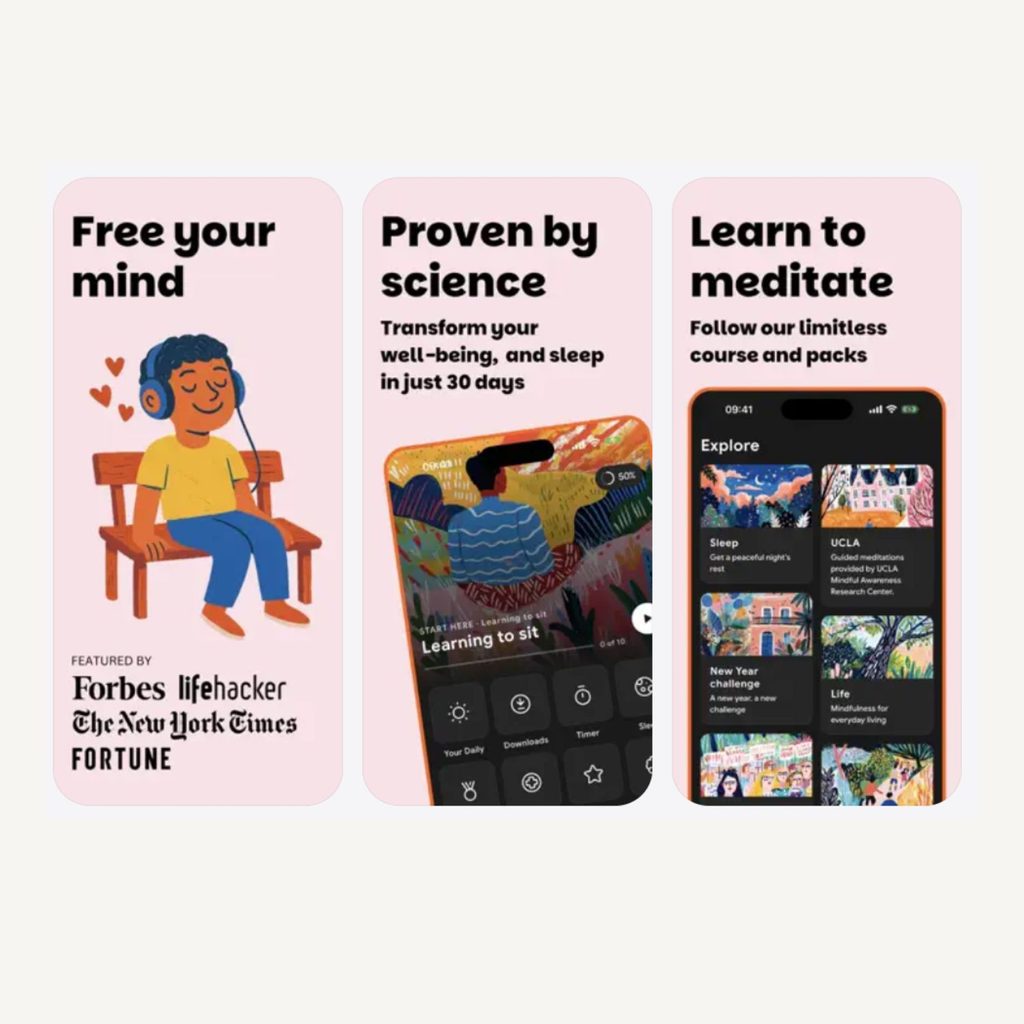
Here’s something worth remembering: You don’t need a subscription to meditate.
It’s an excellent option to consider if you’re beginning or simply don’t want another monthly bill.
Why consider Medito?
- Free guided sessions
- Beginner-friendly content
- No standard subscription required
The downside: It may lack some premium features and personalization found in other paid apps.
My recommendation: Try Medito before paying for a meditation subscription. You might discover that free is all you need.
Official website: https://meditofoundation.org/
7. Insight Timer: Best for Tracking Progress
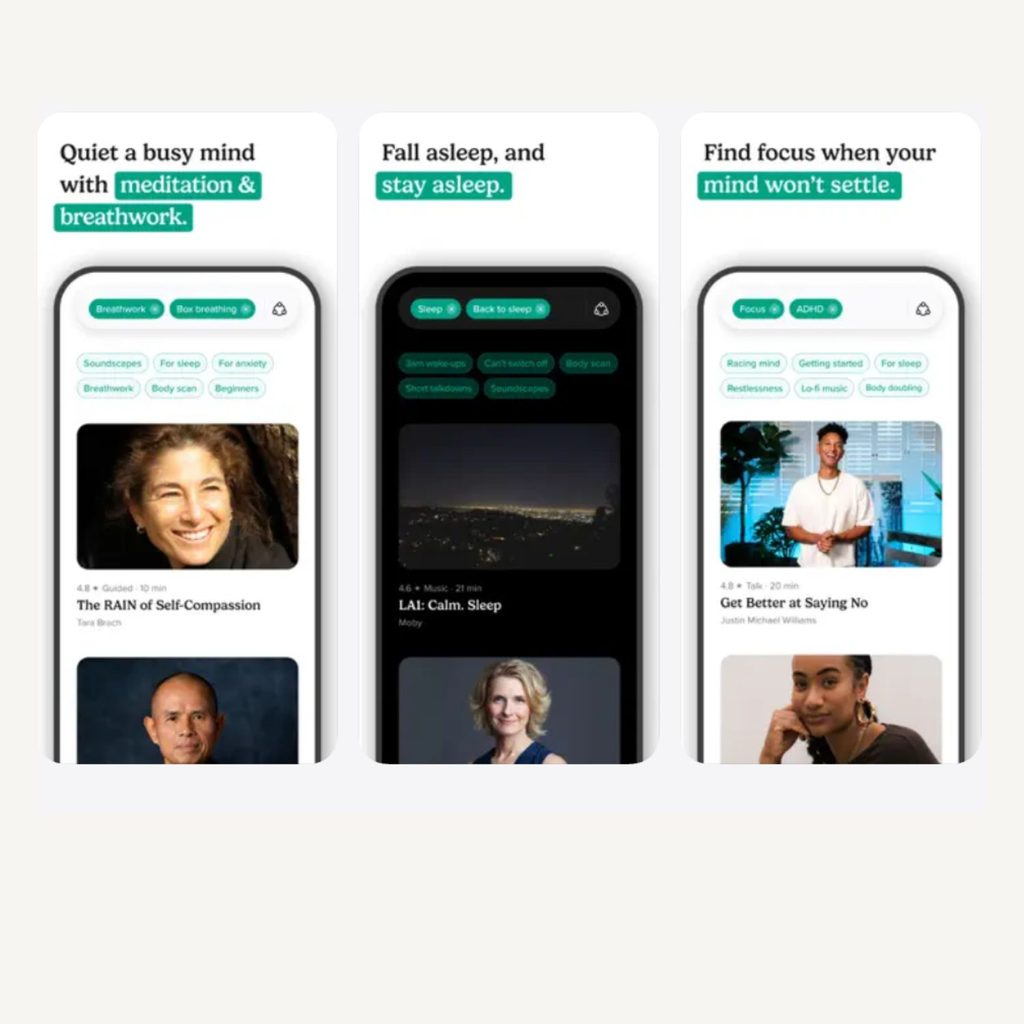
If you enjoy seeing how often you meditate, Insight Timer is worth exploring.
It offers a meditation timer, practice statistics, and a large library of guided sessions.
What can be appealing is the flexibility of using a timer without needing someone to guide every breath.
Why consider Insight Timer?
- Meditation timer
- Practice tracking
- Large free meditation library
The downside: The vast number of available sessions can feel overwhelming.
My recommendation: Find a few teachers you enjoy rather than constantly looking for something new.
Official website: https://insighttimer.com/
Free vs. Paid Meditation Apps: Are Subscriptions Worth It?
My answer is simple: Only if you’re using the extra features.
Free apps can help with everything you need to start that meditation practice. Paid apps may offer more structured courses, specialized content, and personalized recommendations.
Here’s how the options generally compare:
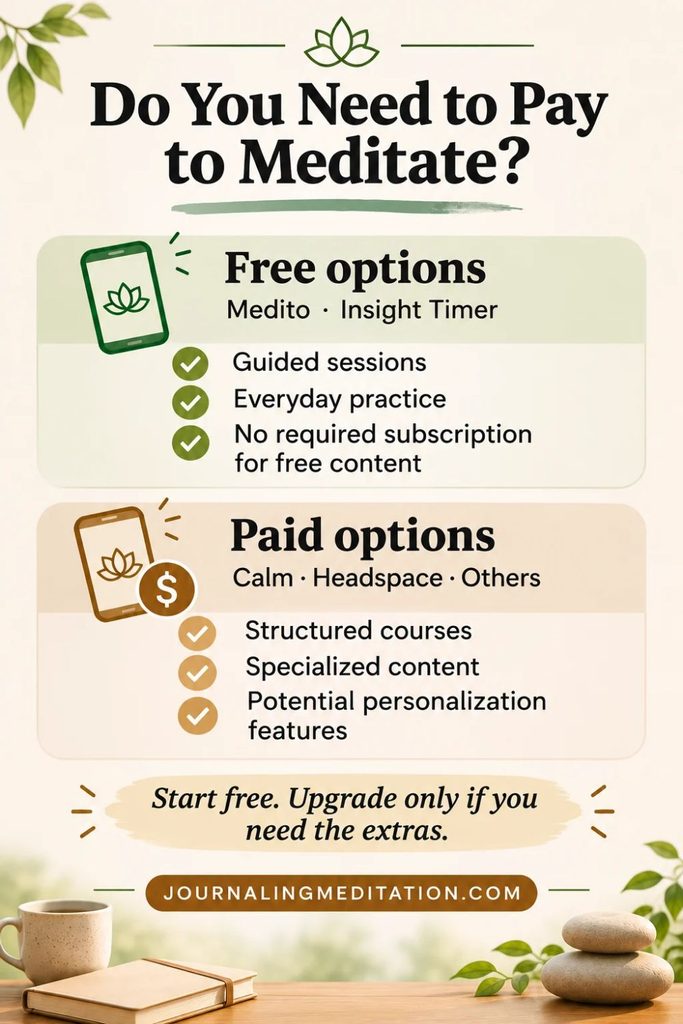
| Pricing Model | Apps |
|---|---|
| Free-focused | Medito |
| Free content with paid extras | Insight Timer |
| Subscription-focused | Headspace, Calm, Ten Percent Happier, Balance, Waking Up |
Before subscribing, check the current price, free-trial period (if there is one), how automatic renewals work and the cancellation process.
I’d also recommend first trying a monthly plan before committing to an annual subscription.
A discounted annual membership isn’t much of a bargain if you stop meditating after two weeks.
My 7-Day Test for Choosing a Meditation App
You don’t need to test every app on this list.
Pick two: one that matches your main goal and one free option, such as Medito or Insight Timer.
Then follow this simple plan.
| Day | What to Do |
|---|---|
| 1 | Try a five-minute session with App A. |
| 2 | Try a similar session with App B. |
| 3–4 | Alternate apps and note what you like or dislike. |
| 5 | Test the feature you need most, such as sleep audio or daily lessons. |
| 6 | Use whichever app you’ve enjoyed more. |
| 7 | Review your experience and decide whether paying is worthwhile. |
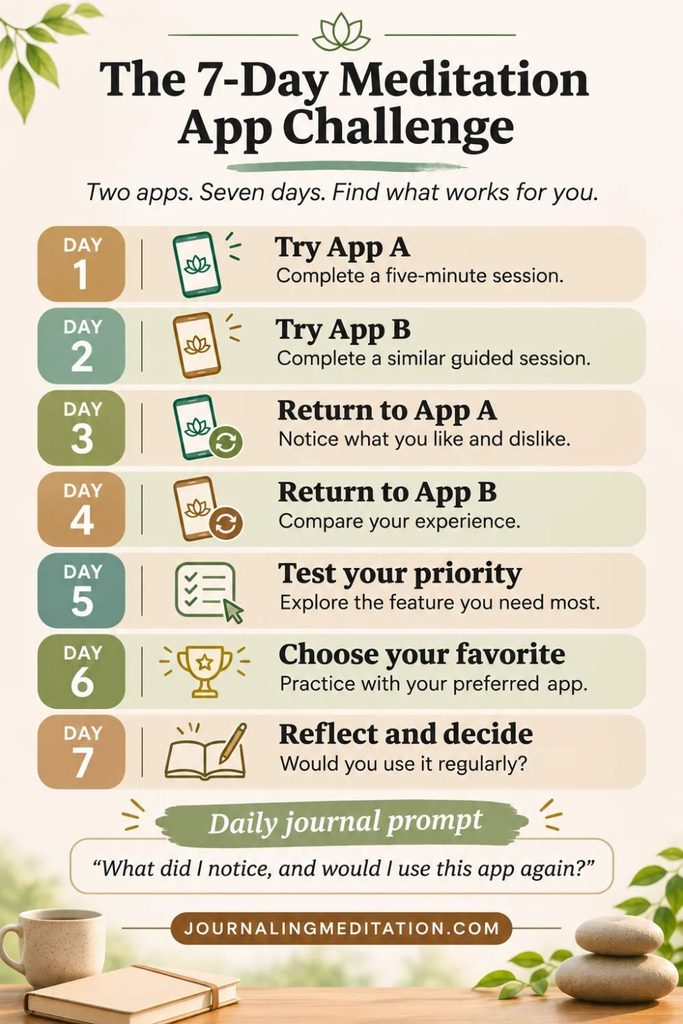
After each session, write down one sentence about your experience.
Did you enjoy the narrator? Was the session easy to follow? Would you use the app again?
Don’t judge the app solely by how relaxed you feel afterward. Meditation doesn’t guarantee instant calm.
The real question is whether the app helps you practice regularly.
Create a Space That Makes Meditation Easier
Even the best meditation app won’t take away every distraction.
I recommend choosing a quiet, comfortable spot where you can practice regularly. It doesn’t need to be an entire room.
A chair, cushion, or small corner of your bedroom can work.
My guide on How to Create a Meditation Space at Home explains how to you can get started.
You can also keep a journal nearby to record what you notice during your sessions.

Even a sentence like “My mind wandered today, but I finished my five minutes” can help you reflect on your practice and even track progress.
Final Thoughts: Which Meditation App Should You Choose?
After comparing these seven apps, my advice is to keep your decision simple.
Choose Headspace if you’re learning the basics, Calm if bedtime relaxation is your priority, or Balance if you need help building consistency.
For deeper practice, consider Waking Up. If you prefer practical instruction, explore Ten Percent Happier.
And if you’d rather avoid subscriptions, start with Medito or Insight Timer.
Start with five minutes, give yourself a week, and see what works.
After all, the goal isn’t to become an expert at meditation apps.
The goal is to meditate.
Which Meditation App Will You Try?
Have you tried any of these apps? Do you prefer guided meditation, sleep stories, or a simple timer?
Share your experience in the comments below. Your recommendation might help someone else find the right app to start their meditation practice. And thanks for reading!